Satya (1998)
Director: Ram Gopal Varma; Writer: Saurabh Shukla, Anurag Kashyap; Producer: Bharat Shah; Cinematographer: Gerard Hooper, Mazhar Kamran; Editor: Apurva, Bhanodaya; Cast: J.D Chakravarthy, Urmila Matondkar, Paresh Rawal, Aditya Srivastava, Manoj Bajpai, Saurabh Shukla, Govind Namdeo, Makrand Deshpande, Shefali Chhaya, Sanjai Mishra
Duration: 02:52:30; Aspect Ratio: 1.905:1; Hue: 341.766; Saturation: 0.056; Lightness: 0.301; Volume: 0.115; Cuts per Minute: 22.249
Summary: A young man named Satya (J.D Chakravarthy) comes to Mumbai from South India in search of a job. Jailed for something he did not do, the once-honest young man meets an underworld boss, Bhiku Mhatre (Manoj Bajpai) in jail and joins his gang. He lives in a poor neighborhood, where he meets, Vidya (Urmila Matondkar), who lives next door. She is not aware of his underworld connections. Satya slowly rises up the ranks of his gang, and becomes the most influential person. Satya is torn between his girlfriend and his gangster life.

Annotations from Ranjani Mazumdar, 'Bombay Cinema: An Archive of the City', Minnespolis and London: The University of Minnesota Press/Ranikhet: Permanent Black, 2007)
Cities are built structures that dissect open space with buildings, flyovers, bridges, and streets. In any context, built structures create in their wake a series of spaces on the margins that cannot be incorporated within the master design plan. Such spaces, the leftovers and the discarded, can be called residual space. The residual constitutes “elements of the world that are engulfed by the process of capital, turned into waste or left-overs, even thrown away” (Raqs Media Collective). The discarded space then becomes important for us to understand the nature of contemporary modernity. In a poetic evocation of residual space, the Raqs Media Collective provides the following description:
'What happens to people in the places that fall off the map? Where do they go? They are forced, of course, to go in search of the map that has abandoned them. But when they leave everything behind and venture into a new life they do not do so entirely alone. They go with the net- worked histories of other voyages and transgressions, and are able at any point to deploy the insistent, ubiquitous insider knowledge of today’s networked world'. (221)
This description of people who have fallen off the map evokes the space of contemporary Central Bombay described by Blom Hansen (179–85). Blom Hansen’s evocation of density and despair provides us with a con- centrated vignette of the city’s residual spaces and the logic of sustenance and survival that drives the underworld. Residual spaces do not fit into any vision of the planned city because they take a life of their own. It is this space of the residual that is inventively evoked in the mise-en-scène of Satya.
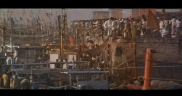
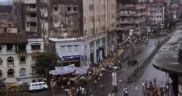
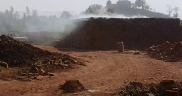
Bombay in Satya looks almost like a documentary montage of claustrophobic spaces, chawls, crowded streets, and traffic. Like Parinda, there is a desire to present a counternarrative to tourism photography, but as we discover, this counternarrative is not influenced or coded by the dramatic aesthetics of light and shadow found in Parinda. Satya moves deliberately with the aesthetics of shabbiness, television reportage, and documentary-style visuals—but these elements are combined with the dramatic use of the steady cam and spectacular editing strategies that provide the film with a remarkably different aesthetic mode. Reviewers responding to Parinda immediately after its release expressed a guarded appreciation, but accused the filmmaker of resorting to an open aestheticization of violence. Satya, on the other hand, was hailed for its “real- ism.” Gerrard Hooper, the main cameraman for Satya, brought his own influences as a documentary filmmaker in the United States. He saw Satya’s shooting style as a form that resembled the work of American independent cinema. Hooper used very little light and tried to create a dynamic movement of the camera in claustrophobic situations. Hooper’s own vision of Bombay seeped through his cinematography. He was struck by Bombay’s extreme congestion, its appearance as a city bursting at the seams and yet bustling and functioning, unkempt and out of bounds. Entering the city from the airport, Hooper was astounded by the packed streets — people sleeping and working in the same place. Bombay didn’t appear sprawling, but compacted. Hooper was responsible for the look of the film—an experimental documentary-style look that used very little artificial light to create a mise-en-scène of urban detritus.
Satya is a hard-hitting story of gangsters involved in gang wars, extortion, and encounter killings. The film takes us through the streets of Bombay to narrate a violent and tragic story of everyday survival in the city. In a review of the film, Shobha De wrote, “Satya spoke the lan- guage of the streets — rough, crude, brutal. And yet, did not offend sen- sibilities. It perfectly captured the savagery of what has become our daily reality while also uncovering the final futility and pathos of mind- less gang wars.”27 Another reviewer referred to Satya as a “no punches pulled movie mirroring, authentically, the visage of a sick society.”28 In
an interview about the film, Ram Gopal Varma said,
'Actually I decided to make Satya as an action film since I had not made one for quite a long time. Mumbai has always attracted me because it is a fascinating city. In the process of making an action film, I bumped into some of the people in the underworld. And I realized that the human side of theirs attracted me much more than what they did. It never occurs to us that anyone who is shot dead in an encounter by the police has a face. To us he is just a name in print to be forgotten the very next day. Satya is the story of people who are put in a position that the average man may not be able to identify with'.
The reviewers’ perceptions and the director’s own commentary suggest that what was seen as a situation gripped by the city needed to be creatively portrayed. Satya succeeded in presenting a gritty and innovative narrative on the underworld. In this powerful depiction of gangland Bombay, we see a particular vision of the city that is not marked by the uncanny but by the excessive logic of survival that takes place in the residual city. Representing the residual requires an aesthetic mode that evokes disenchantment, without falling into a clichéd sentimentalism of poverty images. What makes Satya particularly interesting is its aesthetic strategy, which establishes Bombay as a giant garbage dump.
Bombay Cinema: An Archive of the City, Pgs 173-175
Bombay Description

broken cars

Bombay arguments

Bombay Cinema: An Archive of the City
The underworld in Satya is portrayed as a community of men, operating from different parts of the city. As the emblematic spatial symbol of the city, the street becomes a place of violent crime, with gangs seeking to make their home on the margins of the street. This is why Satya’s architectural mise-en-scène is so interesting. At no point in the film are we dazzled by light. The flush of commodities so intrinsic to family films is crucially absent. We move instead through the bylanes and dark interiors of slums, half-constructed buildings, dingy rooms, street corners, a car park, and a prison. Varma uses the steady cam creatively to navigate the decrepit landscape of the city. In one of the major chase sequences early in the film, two gang members on a scooter kill a film producer at close range while he sits in his Ambassador car. As the gang members run from the police, the camera follows them moving across spaces of Bombay that look horrifyingly shabby. Crossing walls, train tracks, narrow alleys, and open drains—the camera captures the chase in real locations, providing a fairly detailed account of the city’s spatial topography. Hooper recalls that artificial rain was used for the entire chase sequence, because the film was supposed to be set during the monsoons. The rain seemed to add to the documentary effect of the film, enhancing the spatial metaphor of the city as garbage dump.
Bombay Cinema: An Archive of the City, Pgs 175-176

biswa

car, scooter, auto

car

auto

cat

The alternative ethical world mounted in Satya is a recurring theme throughout the film elaborated through a sense of community and famiial bonding. Kallu Mama’s presence as the head of a family of men is deployed inventively to craft the gang’s interpersonal relationships and camaraderie. As the wise and humane father figure in the gang, Kallu Mama (played by Saurabh Shukla), evokes the bonds of family life. In a spectacular rendering of this community, the song “Kallu Mama” projects the idea of a different kind of family through an overwhelmingly male space. In the song, Varma deploys the perfomative mode of street theater to conduct a conversation between gang members. Shot inventively through what can be described as a swaying camera, the song, with its mood lighting, drunken disposition, sense of irreverence, and conversational lyrics, projects a world of male friendship and bonding.
Bombay Cinema: An Archive of the City, Pg 180

biswa
Satya killed a gangster named Jagga.
Bombay Cinema: An Archive of the City
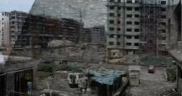
Satya’s little one-room apartment is placed next to a darkly lit corridor with clothes hanging against both walls. The shortage of indoor space forces people out into this shared corridor space. All the apartments convey a shortage of space, and the camera almost always presents the busy street outside as a backdrop. These are the chawls in the most crowded parts of Bombay, and Satya attempts to make sure our eye connects the outside to the inside, rather than create a wedge be- tween these spaces. The space from which the gang operates is located inside an empty half-constructed building with dark alleys, wooden poles, a little table with a few phones, and old chairs strewn about. This is a space that is hidden from the “public,” but it is a space that exists in almost every other corner of the city. Almost like a counterspace to the brightly lit wealthy spaces of the designed city, the gang’s interior space is bereft of all commodities.
In a sense, the mise-en-scène of Satya also recalls Rahul Mehrotra’s elaboration of the “kinetic city.” Mehrotra notes that most South Asian cities comprise two elements in the same space. The first is the “static city,” or the permanent city, which is immovable. Made of concrete, brick, and steel, this static city is monumental and can be traced on maps. The other city is the kinetic city, which is a city in motion—“a three- dimensional construct of a fragmented ground reality” (97).
'Built of recycled waste, plastic sheets, scrap metal, canvas, waste wood — all juxtaposed with dish antennas, webs of electric wire, cable, et al. — it is a kaleidoscope of the past, present and future compressed into an organic fabric of alleys, dead ends and a labyrinth-like, mysterious streetscape that, like any organism, constantly modifies and reinvents itself'. (Mehrotra, 97)
The kinetic city cannot be detected or understood through its architectural design. In the kinetic city, space is marked by its relationship to people. Large processions, festivals, hawkers, street vendors, and dwellers are all part of this streetscape that is in constant motion. The kinetic city is energetic and dense; space and the urban crowd converge here, creating a unique site of tension that is both productive and unproductive.
Bombay Cinema: An Archive of the City, Pg 176

car, cycle

car
car

biswa

Bombay Cinema: An Archive of the City
The modus operandi of the gang is driven by a logic of survival. In the disenchanted city of Satya, it is survival and not a great desire for wealth that constitutes the heart of the gang’s operation. This is conveyed throughout the film, from its spaces, to its people, to the desires of the gang members. Even technology is deployed for survival. Cell phones aid in the chain of communication that connects all the gang members and they inevitably play a crucial role in either planning an assassination or planning some form of intervention. The role of technological debris is also crafted through a conscious effort to dot the film with second-grade technology. Instead of new cars, which flooded the market after globalization, we see aging Fiats, Ambassadors (India’s eternal version of the Oxford Morris), auto-rickshaws, and a Maruti (Suzuki) van. The car as an emblematic symbol of freedom and fantasy is deliberately undercut.33 Cars do not glint, their texture is not fetishized—rather, they perform the role of mundane technology and its use value. A music director threatened by the gang is shown with a harmonium, as opposed to the giant music mixer we usually associate with contemporary music production. Satya’s hesitancy about his ability to shoot and kill is countered by the gang leader, who says, “You don’t need to win a competition; all you need to do is place the gun close to the head.” The vehicles used by the assassins are a two-wheeler and an auto-rickshaw. This effort to downsize the paraphernalia within which the narrative of crime unfolds in the film becomes part of the larger context of the residual city. None of the gang members are experts at anything in particular. What binds them together is their will to survive. Their identity and friendship is based on an association within the city. Where and how did these people get together? What is their past? How did they come to the city? The film steers clear of this kind of sociological analysis, moving instead in the direction of a psychological narrative of violence.
Bombay Cinema: An Archive of the City, Pg 177-178

Police

biswa
intense moment of violence and interrogation.

taxi

Bombay Cinema: An Archive of the City
The romance between Satya and Vidya runs almost parallel to the rest of the narrative. Satya’s relationship with Vidya is fragile, since Vidya has no access or knowledge of Satya’s gang life. Within the context of the narrative, the deception works like in many other gangster films, with the yearning to start a family presented as an impossible dream. The impossibility of intimacy is also spatially suggested. Vidya’s home is a small room, but the camera almost never provides us access to the whole space. When Vidya comes into Satya’s apartment, the two look out of the window, and Vidya talks of the lost view of the sea because of the tall building now standing opposite their apartment. This passing remark mounts the idea of a city constantly changing through building construction, disrupting both the perception of expanse and also the lives of the inhabitants. The most private moments between the couple take place on the terrace of their building. Even the street is not a place that provides any freedom from claustrophobic space. During the two love songs, the couple romance against a tranquil backdrop that is almost deliberately separated from the density of the city. The Bombay Poona Highway and tunnel, the beach and the rocks, the terrace and the gardens — these are the spaces within which romance is possible. Since the city cannot offer leisure spaces to its residents, romance is virtually a problem of space. An alternative topography of space needs to be pro- duced for the performance of romance, since Satya’s overall screen space is decrepit and dirty.
Bombay Cinema: An Archive of the City, Pgs 181-182

taxi, buses, car

car

cars

When a rival gangster creates problems for Satya’s gang, Varma stages an elaborate shootout sequence in an apartment block. The presence of children in the enclosed playground of the apartment block provides a routine, everyday space of playfulness as the backdrop. The shootout here between two gangs is a speedy combination of dynamic steady- cam movements and stillness, with corridors, stairways, and railings becoming the stage for the action. Like a theatrical performance, the play of bodies in this space presents a violent narrative inside an innocu- ous building. Instead of car chases, which inform many action films, Satya’s action sequences are deliberately played out as “realistic,” “routine,” and “everyday.”
The action is not spectacularized through technological extravaganza; rather, the brutality of the violence becomes excruciating because of its existence within the banality of everyday routine. The theatricality that marks the ritual act of killing in action films is deliberately undercut. With a decrepit city as the backdrop, purged of all spectacular commodities and the conscious use of an aesthetics of decay, we are in many ways provided with a metaphor of the city as garbage dump, a metaphor that treats the bodies as unwashed, unruly, and irrational, walking through a space of abundant waste. Instead of mounting the idea of a “speed city,” Satya plays out a spatial topography of slums, chawls, and dark alleys, invoking the plebeian world of violence and vernacular modernity that Blom Hansen so skillfully recounts. In Satya, Bombay is a disenchanted city where the gang becomes part of an everyday violence that can help them escape the boredom of their existence, the banality of their situation, and the degradation befalling each one of them. By philo- sophically approaching death as the climactic theatrical performance of urban violence, Satya constantly thwarts the desire for a healing touch that can help provide closure. All the protagonists, except one, die at the end of the film.
Bombay Cinema: An Archive of the City, Pgs 178-179

biswa
gangwar between Bhiku and Guru.

chase sequence

car
car

car
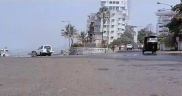
cars, auto
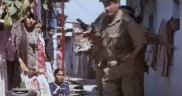
biswa
Operation clean up: Police started killing underworld gang leaders and members, but identities of the most of those killed are absent.

car

auto

When the couple decides to negotiate the city for their romantic pursuit, we are taken into a vortex of violence. This is precisely what happens when Satya takes Vidya to the theater to watch a film called Border (ironically, a patriotic film). As Border’s nationalist and patriotic zeal unfolds on-screen, a crisis lurks within the crowd watching the film. During the film’s interval, a rival gang member who spots Satya, calls the police. Soon the cops are swarming the theater. All the exits to the theater are blocked, barring one. The inspector makes an announcement for the crowd inside, asking people to be calm and to leave in an orderly fashion. At the exit, the rival gang member is waiting to identify Satya for the police. Knowing that he will be caught unless he acts, Satya fires a shot in the ground. In the panic and turmoil that follows, Satya manages to escape with Vidya, but a stampede leaves thirteen people dead and several injured. The violence inside the movie theater becomes the turning point for Satya. Tired of deception, Satya wants to confess to Vidya and then leave the gang. At this point, however, Mahatre stops him, suggesting that Satya instead leave for Dubai, where he will be ensured a legal job. But such endings are never really possible within the genre of the gangster film
In many ways, Satya plays out a romantic track within a classical format. Romance brings out the good person, the tender and nurturing personality. It also makes Satya dislike his own identity as a gang member, leading to deception. The proximity to violence makes him fear not so much for himself, but for his beloved. The desperation to end this life of deception and ensure a safe life for Vidya makes Satya yearn for escape from the brutal existence he has become part of. Romance be- comes a process through which Satya wants to redeem himself. Satya’s journey in the film, then, becomes the story of a migrant, his involvement with a gang, and his subsequent desire for escape and redemption. Within the framework of the film, this is an impossible dream. You can never return to the space of legality after having crossed it to the extent Satya does. In the film, Satya’s demise takes place in tandem with the collapse of the gang.
Bombay Cinema: An Archive of the City, Pg 182-183

auto
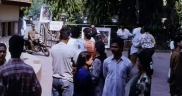
police cars

A stampede at a movie theatre left several people dead, and their identities remain unknown.
biswa

police cars

If the presence of Kallu Mama helps evoke a family-like space, then the friendship between Bhiku Mahatre and Satya encapsulates the experience of brotherhood in the gang. Satya’s friendship with Mahatre and his romantic involvement with Vidya function in the best tradition of the genre to express a restless inner world. The friendship track and the romance track alternate in the narrative, providing us access to Satya’s insecurities, anxieties, and inner life. Satya’s friendship with Mahatre operates in a sense as a microcosm of the bond that keeps the community of the gang together. The friendship narrative operates as a journey that begins with Satya and Mahatre’s encounter in prison, fol- lowed by their developing closeness and Satya’s induction into the gang.
Some of the most interesting conversations between the two men are staged against a mise-en-scène that depicts a longing for a romantic myth of the city on the sea. There are two moments staged against the land- scape of the sea and Bombay’s faded skyline. In the first of these scenes, the skyline is not clearly visible and we just see some dilapidated buildings against the water. Mahatre expresses his anger at having been pre- vented by Bhau Thakarey from killing a rival. Satya listens, and persuades Mahatre to take revenge. This is played out against the seascape, with Mahatre’s raw and insecure masculinity on display through his perfor- mance. It is immediately followed by a shootout sequence in which a rival gang member is killed on a railway bridge.
The landscape of the sea is enhanced in a later sequence, with more expansive shots of the skyline and sea. In the earlier sequence, Satya expresses his solidarity with Mahatre and persuades him to take revenge; in the second sequence, the roles are reversed. Satya wants to confess to Vidya about his profession. He is worried about Vidya’s safety and wants to exit the gang. Mahatre takes the active role here, persuading Satya to not say anything. Mahatre wants him to go away to Dubai with Vidya. Like an older brother, Mahatre seems to oversee Satya’s interests through- out the film. There is homoerotic energy friendship. Both men are not only drawn to each other but also trust each other. Mahatre’s constant concern for Satya’s safety and Satya’s desire to support Mahatre’s anxieties function within the structure of a romantic relationship. The friendship narrative in Satya is given a spatial language wherein the poetics of the sea provide the space for the development of the bond, while at the same time introducing the cityscape as the site of violence. The inexplicable bond between the two men symbolizes both the desire for community and the community’s insecure formation in the gang. The friendship signals both the high point and the crisis point for the gang, ultimately leading to mayhem in the city.
Bombay Cinema: An Archive of the City, Pgs 180-181

car
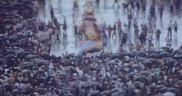
Bombay Cinema: An Archive of the City
It is the kinetic city that struggles for visibility in Satya. For instance, the use of the Ganesh Festival procession at the end of the film to stage Bhau Thakarey’s death evocatively highlights the place of the kinetic city. Varma’s choreography combines the urban crowd with religious fervor and emotional intensity to stage the murder. Thakarey is performing religious rites at the Ganesh Festival procession. Holding a knife, Satya moves through the dense crowd of the festival. Aerial shots of the festival and religious chanting add to the tension. He finally reaches the site where Thakarey is praying, and he kills him with the knife. Within the din of the dense crowd, Satya not only manages to kill but also to escape. The killing sequence suggests that in the kinetic city, motion and density both produce and hide the spectacle of violence. The entire narrative presents an urbanscape of alleys, religious proces- sions, and makeshift dwellings to play out the everyday world of urban living and survival.
Bombay Cinema: An Archive of the City, Pgs 176-177

biswa
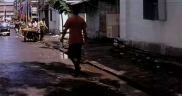
taxi
Indiancine.ma requires JavaScript.
