The Neighbour Before the House (2011)
Director: CAMP; Producer: CAMP; Editor: Shaina Anand, Ashok Sukumaran, Aarthi Parthasarathy
Duration: 01:00:00; Aspect Ratio: 1.366:1; Hue: 41.010; Saturation: 0.026; Lightness: 0.469; Volume: 0.075; Cuts per Minute: 4.000; Words per Minute: 63.799
Summary: Palestinian families in Jerusalem / Al Quds look out and speak from their homes using a CCTV camera in 2009. The film was made in 2011.
The material for this film was generated by eight Palestinian families living in various neighborhoods in the city of Jerusalam/Al Quds, a place where the usual sense of "neighborhood" is broken by occupation and conflict. It was filmed over a month in September-October 2009, with a PTZ (pan-tilt-zoom) CCTV camera that the residents installed on their own homes, (or in the case of evicted families on nearby houses), at a point of vantage. The commentary heard is that of people speaking over the video live as they watched, and controlled the camera from inside their homes. Sometimes the voice looks for an image, at other times image provokes voice, or they separate into distant landscapes and innermost thoughts.
More:
https://www.moderntimes.review/staying-with-the-trouble-the-radical-work-of-camp/https://studio.camp/projects/neighbour1/ The footage was edited into this feature-length film in 2011
Selected screenings:
Jerusalem Lives: Tahya Al Quds, Palestine Museum Opening, Brizeit, 2017
Palestine: Territory, Memory, Projections, MUCEM, Marseille, 2017
As If II - Flight of the Black Boxes 2015, New Delhi
Unravelling Documentarism, Flaherty at Helsinki, 2014
Flaherty Seminar, NY 2014
Tales From the Networked Neighbourhood: The Cinema of Camp: Filmmaker Festival, Milan, 2014
Cork Film Festival, Ireland; 2013
Cinema Project, Portland; 2013
Filament: Experimenter Gallery, 2012
New Museum Triennial, 2012
The Matter Within, Yerba Buena Center for Art, San Francisco, 2011
Sharjah Biennale X, 2011
Liverpool Biennale, 2010
The Jerusalem Show, 2009
 In the July 2000 negotiations in Camp David, President Clinton’s outline for the partition of Jerusalem was based on the territorial/demographic status quo in declaring that whatever part of the city is inhabited by Jews will be Israeli and whatever part is inhabited by Palestinians will belong to the Palestinian state. […] Clinton’s principle of partition also meant that some buildings in the Old City would be vertically divided between the two states, with the ground floor and the basement being entered from the Muslim Quarter and used by Palestinian shop-owners belonging to the Palestinian state, and the upper floors being entered from the direction of the Jewish Quarter, used by Jews belonging to the Jewish state. Clinton also sincerely believed that three-dimensional borders could resolve the problem of partitioning the Temple Mount from Haram al-Sharif (for all others – the very same place). According to this plan Palestinians would control the surface of the Haram al-Sharif, the Dome of the Rock and Al-Aqsa mosque on top of it, while Israeli sovereignty would extend to the ‘depth of the ground’ underneath, where the temples were presumed to have lain.
Excerpt from"The Politics of Verticality", Hollow Land, Eyal Weizman
three-dimensionality of occupation
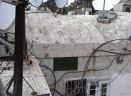
The Galicia Courtyard, is a rooftop with interconnected pathways connecting the Yeshiva, the synagogue and Jewish homes on top of the old market in the Muslim quarter of the Old City, here abutting the mosque. The imam is guiding the camera.
Accumulation by dispossesion
 At first glance, the idea of a neighbourhood appears as the most obvious contradiction to the series of displacements, deferrals, distortions and fault lines existing on the surface of this highly volatile, contested and segmented city.
Neighbours are supposed to know each other. The neighbourhood is that part of the otherwise anonymous cityscape, where one is recognised, or where the subject is hailed. Neighbours can encounter each other without technical mediation; they meet and greet face to face, everything is within walking distance; Such a more or less homogenous local environment is ruled by specific circumstances that are characterised precisely by the fact that they are not globally valid, that are not exchangeable or even communicable.
[...]
What we can see in the video project Al Jaar Qabla Al Daar, is a neighbourhood in a state of permanent crisis. Spatial proximity does not produce any sense of community, but does the opposite. What was private space becomes public; what was private life becomes political. Al Jaar Qabla Al Daar; sets out to reverse engineer the neighbourhood as a machine for self-monitoring and surveillance, one that normally turns contingency into consistency and the visible into the sensible. Here the neighbourhood can only be encountered through a technological device that produces closeness and remoteness, which would otherwise remain entirely abstract. The constant zooming in and zooming out of the camera constitutes a rather peculiar artificiality of the picture: operational by a factor X that multiplies the amount of detailed information at the price of context. This is a regime of visibility that promises to provide access to what would otherwise, and in the true sense of the word, be inaccessible, since one would not be allowed to go there, or know how to understand what is going on.</i>From a text by Florian Schneider
https://studio.camp/works/aljaar/
Accumulation by dispossesion
BDS
BTS
In the previous clip, we shared two "working stills", or BTS pics; the Hannoun family huddled over the screen and PTZ (Pan-Tilt-Zoom) Joystick, and the CCTV camera housed in a wooden case on the roof of their neighbours home. We had purchased a single PTZ camera on Edgware Road in August 2009 for 350 GBP (after watching the city through the world of the CCTV operators, and their many cameras) and taken it to Al Quds, where one of the rules for the filming (there were three rules in all) was to not seek permission to film from the Jerusalem Police.
In Sheikh Jarrah, both the Hannoun and Gawi families had been evicted from their homes by the storming in of police in August 2009. 19 members of Hannoun family and more than 30 members from the Gawi joint family were thrown out on the street, and small single family units of settlers were moved in.
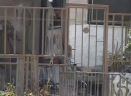
Mr. Gawi here was filming from a solidarity tent across the road from his home. The camera did not have a vantage, and instead it was kept upside down (yani, dome facing up) on the ledge of the compound wall. This gave him an eye level view of this home, but it also meant that that his joystick controls were reversed - to Pan left, he had to move right, to tilt down he had to tilt up, the zoom functions also became counter-clock and so on. It took Gawi less then a min to figure this out. This poignant scene of details of his family home under occupation is from the first few minutes of him filming.
A few days later a group of us were huddled in a room at the Jerusalem Hotel, transcribing and translating footage.
A friend of a friend landed up to help us. He said, "Oh is that the Gawi house? A few weeks ago I rode past with my helmet on and ripped off the CCTV cameras that the settlers had installed!"
In 2009, when this was filmed 88 Palestincian families in the Al-Bustan/Silwan neighbourhood were served eviction notices. The City of David theme park by the right wing settler organisation ELAD was going to be built.
Last October Zip line rides were launched.
City of David
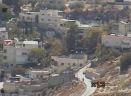
A film programmer friend calls this scene
The Scream 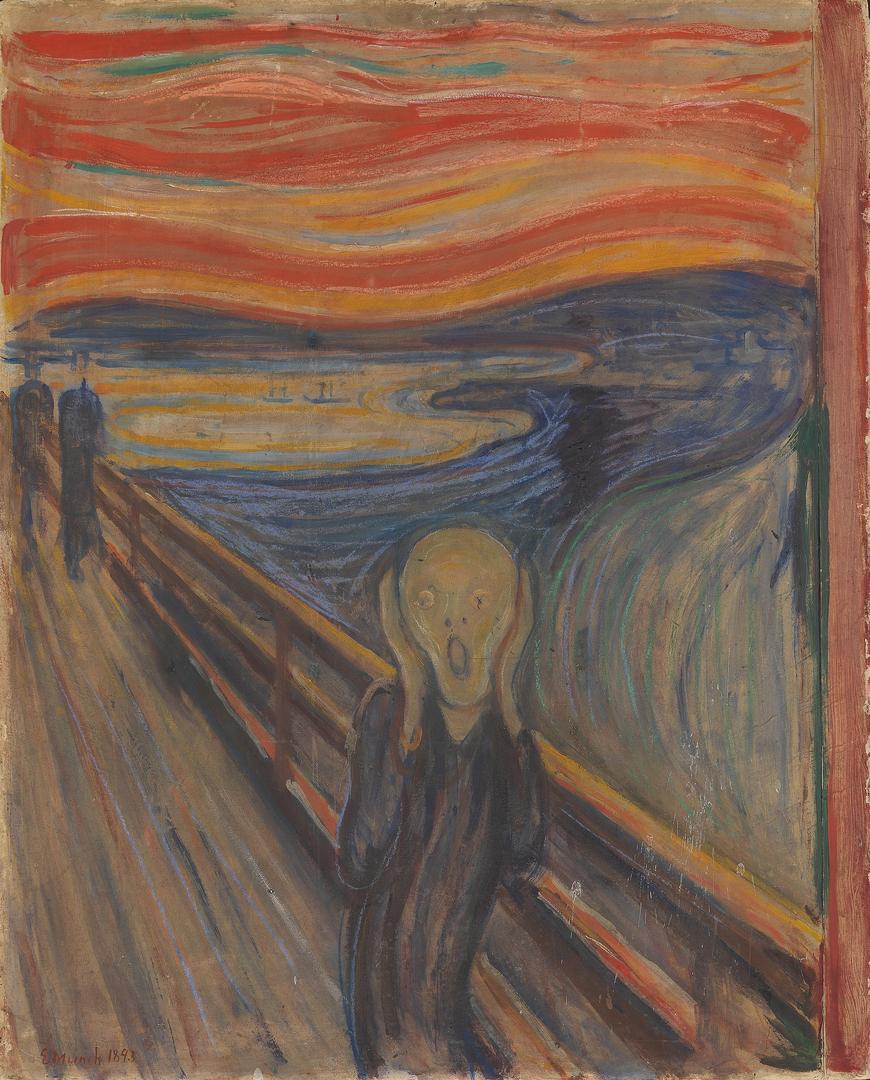
The Scream
Children of stones
first intifada
To hear the 88 year old grandmother speak, strips away any romance Palestinians and an outside audience may have about stone intifada.
She takes a little skip.
Separation Wall
We are in Mazen's house in Al Ezariya/Bethany. Many parts of this suburb of Greater Jerusalem were thrown into the West Bank; people abandoned their homes along the wall and rented in Jerusalem in order to keep the Jerusalem ID's and not become West Bank 'citizens'. He has traced the wall and shown us how parts of West-bank territory were also taken into Jerusalem by the gerrymandering Separation Wall. We are now skirting along the wall and looking at his neighbours house.
gerrymandering
Wall of Apartheid
West Bank Barrier
Footage from the 8 locations and families that filmed is here.
https://pad.ma/grid/title/project==The_Neighbour_Before_the_House It was editing into the feature-length film The Neighbour before the house in 2011.
Laura Marks, wrote a warm text about this footage, and the film in her book
Hanan al Cinema . She triangulates, and includes the audience via a
Rear Window comparison:
“...The Palestinian families are Jeffries, (the photographer in Hitchcocks film) observing a murder but incapable of intervening from their immobilized vantage point. Hitchcock anticipated the translation of social relations into information, and there’s no going back to a simpler time. Images circulate by becoming valued as knowledge to be executed. The character of Lisa, of course, is us, the audience…. Like her, WE should act when people are in danger.“
In
AKA Serial Killer, we do not witness the murders or the murderer, but Masao Adachi et al (filmcritic Matsuda Masao, directors Kōji Wakamatsu and Nagisa Ōshima, screenwriter Mamoru Sasaki) trace the killers footsteps with a camera and film the landscapes he may have encountered. This was their ‘landscape theory’ in practice.
In
Al Jaar Qabla Al Daar, the camera is on the roofs of Palestinian families in East Jerusalem, the scene of crime is their own home and neighbourhood.
Coming back to the audience...
Be moved.
Move.
Mazen prompts us to see the house (that has become a wall) from the other side of the wall, from the West bank. We take a long route, via a checkpoint to get to Mazen's cousin Rinad's house.
rear window
Seperation Wall
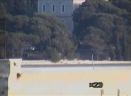
Camera zooms out and we are back in the Old City of Jerusalem/Al Quds gliding along the Western Wall.
Al Aqsa Intifada
Buraq Wall
See also: Remembering the Maghrabi Quarter
https://phantas.ma/56/
Waling Wall
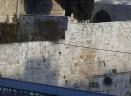
This temporary ramp, Mughrabi bridge was built in 2007, giving direct access to Israeli tourists to enter the Temple Mount, or Haram al-Sharif.
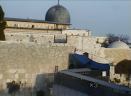
Denying young Muslims entry to Masjid Al Aqsa and the Haram courtyard is a recurring escalation in the daily lives of Palestinians, who live in a permanent state of exception in Jerusalem. Haifa is talking about the month of Ramzan in 2009.
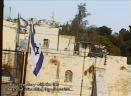
Just after Eid, on the eve of Yom Kippur, 27 September 2009 a few weeks before this was filmed, 15 zionists entered the Haram area accompanied by a 70 strong police force. Clashes between the Police and Palestinian Muslims followed. Again, a cyclical occurrence in the forever suspended and interned everyday life of Palestinians in Jerusalem and occupied territories of Palestine.
Haifa Khalidi and Shereen Barakat zoom into details of the mashrabiyas underneath the iron-clad dome of the Masjid Al-Aqsa, a vantage, and a rare image.
Indiancine.ma requires JavaScript.


