Director: Shyam Benegal; Writer: Vasant Dev, Ashok Mishra, Sandeep Pendse, Sunil Shanbag, Shama Zaidi, Jawaharlal Nehru; Producer: Prasar Bharti; Cinematographer: V.K. Murthy; Editor: Sutanu Gupta, Deepak Segal; Cast: Roshan Seth, Kulbhushan Kharbanda, Ila Arun, Vijay Arora, Pankaj Berry, Vinod Rathod, Surendar Pal, Aparajita, Ranajay Bahadur, Irrfan Khan
Duration: 00:58:35; Aspect Ratio: 1.321:1; Hue: 313.780; Saturation: 0.069; Lightness: 0.248; Volume: 0.225; Cuts per Minute: 1.417; Words per Minute: 44.258
Summary: Based on Jawaharlal Nehru's Discovery of India
Episode 33 (Akbar, Part II)
With Kulbhushan Kharbanda as Akbar, Ila Arun as Jodhabai, Vijay Arora as Salim, Pankaj Berry as Abul Fazal, Vinod Rathod as Tansen, Surendar Pal as Man Singh, Aparajita as Salima, and Ranajay Bahadur as Azeez Koka.
Nehru mentions that Babur is an attractive person, bold and adventurous, fond of art and literature. Akbar, his grandson, is even more adventurous and had greater qualities, daring and reckless, an able general, and yet gentle and compassionate, an idealist and a dreamer, but also a man of action and a leader of men who roused passionate loyalty in his followers. No wonder, he had a brilliant reign, under which the Mughal Empire flourished the most.
In the ensuing drama, we see Akbar in the sunset years of his life, missing some of his intimate courtiers like Birbal. He diverts his mind by listening to Mian Tansen extolling raga Mian-ki Malhar. He suddenly takes ill and poisoning is suspected, as Akbar’s many conquests are now overshadowed by rivalry and rebellion. In Salim’s camp, the prince is reluctant to quell the unrest in Bengal, despite Raja Man Singh’s exhortation. Instead, he proceeds to Allahabad to be near Agra, the seat of power. Akbar is surprised at this move and also worried about the unrest in Ahmadnagar. He sends Abdur Rahim there to support prince Murad. The unconcerned Murad is immersed in wine and alcohol, and Akbar tries to retrieve the situation by calling him back.
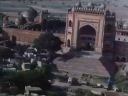
Akbar is seen enjoying Tansen’s rendering of raga Jai Jaiwanti when he hears the news of Murad’s demise, brought by Abul-Fazl from Deccan. The bereaved king seeks solace from queen Jodhabai by presenting her a portrait of Murad. At the cost of enraging Akbar, Salim proceeds to Agra with a large army and, in a blatant assumption of Indian sovereignty, has his own genealogy inscribed on an Ashoka pillar, Abul-Fazl, sent to deal with the prince, is murdered. Akbar receives the sad news while listening to Tansen’s soothing raga Darbari Kanada. While Jodhabai remonstrates with him to control Salim, the latter’s rare encounter with the father results in Salim getting resoundingly slapped and being interned. Akbar’s extra indulgence for his eldest grandson Khusrau over Salim’s head gets unstuck and there is no counting on the third son Daniyal either. Salim furtively resorts to alcoholism again. The rest is painfully brief, with a critically-ill Akbar breathing his last, while hearing Tansen’s raga Bhairavi in the background and a joyous Salim assuming the throne. The visuals capture the panorama of Akbar’s monumental architecture of Fatehpur Sikri and Buland Darwaza.
Nehru concludes that Akbar, in his long reign from 1556-1605, had erected edifices that lasted for another 100 years, in spite of inadequate successors.
(Prasar Bharti Archives)
Bharat Ek Khoj was a 53-episode Indian historical drama based on the book "The Discovery of India" (1946) by Jawaharlal Nehru, written by Sunil Shanbag, Shama Zaidi and others and directed by Shyam Benegal. It was telecast in 1988-1988 on State-owned Doordarshan National Network.
In the concluding scene of this episode, a critically-ill Akbar breathes his last, while hearing Tansen’s raga Bhairavi in the background and as a joyous Salim assumes the throne. Aerial shots leave the Buland Darwaza and the courtyard of Salim Chisti' tomb within, and we see once again a panorama of the abandoned city Fatehpur Sikri.
Indiancine.ma requires JavaScript.


