Sikandar (1941)
Director: Sohrab Modi; Writer: Sudarshan; Cinematographer: Y.D. Sarpotdar; Editor: D.D. SHIRDHANKAR, MADHUKAR GULGULE; Cast: Sohrab Modi, Prithviraj Kapoor, Vanamala, Meena, Sheela, Sadiq Ali, Zahur Raja, Shakir, K.N. Singh, Jilloo
Duration: 02:15:19; Aspect Ratio: 1.333:1; Hue: 81.660; Saturation: 0.041; Lightness: 0.319; Volume: 0.489; Cuts per Minute: 9.665; Words per Minute: 54.792
Summary: Modi's military epic is set in 326BC when Alexander the Great aka Sikandar (Kapoor), having conquered Persia and the Kabul valley, descends to the Indian border at Jhelum with his Macedonian army and encounters King Porus (Modi) of the Punjab who stops the advance with his troops. The plot has Sikandar ignoring his teacher Aristotle's (Shakir) advice and he falls for a Persian woman, Rukhsana (Vanamala). Fearing for Sikandar's life, she goes to Porus's court and extracts a promise that he shall not harm Sikandar. In the battle with the Macedonian army, Porus loses his son Amar (Raja) and meets Sikandar face to face. An elaborate verbal duel follows, then the two kings become friends and Sikandar withdraws. The stilted, declamatory dialogue was pure Parsee Theatre as Modi and Kapoor, wellknown Shakespearean actors, give free reign to their histrionic proclivities. Highlights including the scenes of battle on horses and elephants. The film was later dubbed in Persian.
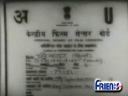
censor certificate

In this sequence, Aristotle, Alexander’s teacher, warns him about the hazards of female company. It could be related to the lessons of his Brahmacharya Gandhi incorporated in the Swadeshi Movement. (‘Those who want to perform national service, or have a gleam of the religious life, must lead a celibate life, whether married or unmarried’ Gandhi)
But whether Modi merely draws from it, or critiques it, is problematic. Modi has been criticised for his misogyny, but whether in this instance he departs from it, is to be noticed. Towards the end of the film Alexander does unite with his beloved and gets married to her. It probably is a comedy, (one of the criterions of comedy being, it ends in marriage) with a hint of tragedy. (tragedy ends in death, and the popular imagination is aware of Alexander death, post his departure from India). The figure of the woman is then problematised. As the sister, however, her role is that of a damsel-in-distress in the film. This complication is not unique to this film alone.
"In Amar Jyoti, Azad (Hindi Acharya,1940),
Chandidas, Kunku/Duniya na mane (Marathi/Hindi,Shantaram,1937), Pukar and Sikandar,Female protagonists are portrayed as willing or unwitting agents who test a man and the laws of his community." (Cinema at the end of Empire:A Politics of transition in Britain and India, Priya Jaikumar)
Indiancine.ma requires JavaScript.