Vidyasagar (1950)
Director: Kaliprasad Ghosh; Writer: Kaliprasad Ghosh; Cinematographer: Bibhuti Laha; Editor: Kamal Ganguly; Cast: Pahadi Sanyal, Chhabi Biswas, Ahindra Choudhury, Molina Devi, Kamal Mitra, Gurudas Bannerjee, Tarakumar Bhaduri, Harimohan Bose, Sukhen Das, Nibhanani Devi, Sandhya Devi, Utpal Dutt, Anup Kumar, Haridhan Mukherjee, Jahar Roy, Ranjit Roy, Renuka Roy, Sova Sen, Santosh Singha
Duration: 02:06:45; Aspect Ratio: 1.333:1; Hue: 240.000; Saturation: 0.000; Lightness: 0.335; Volume: 0.247; Cuts per Minute: 5.175; Words per Minute: 90.433
Summary: Based on the life of eminent Bengali polymath, educator, linguist and social reformer, Ishwar Chandra Vidyasagar (1820-1891), M. P. Productions' 'Vidyasagar' had Pahari Sanyal in the title role. A simple straight-forward narrative that highlights key aspects and events from Vidyasagar's life, especially his fight against social evils like child marriage and oppression of widows, the film was subject to much controversy at the time of its release due to allegations of alleged plagiarism and the strong-arming tactics of Mr. Muralidhar Chattapadhyay who was, curiously, both chairman of the production studio and President of the Bengal Motion Pictures Association (BMPA), making the case a startling conflict of various interests.
Released: 29 September, 1950 (Uttara, Purabi, Ujjala)
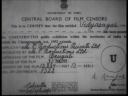
censor certificate

Work on a biopic on Ishwar Chandra Vidyasagar had been on for some years till M. P. Productions released their film version of the reformer's life in 1950, titled 'Vidyasagar. Sagar's role was played by thespian Pahari Sanyal. Other famous figures of his time - Governor Halliday, Rev. Krishnamohan, Sri Ramakrishna, Michael Madhusudhan Dutta - were played by Chhabi Biswas, Kamal Mitra, Gurudas Bandyopadhyay, Utpal Dutta. Very importantly, the ethos of the film is decidedly Hindu - a factor that sits quite well the socio-political context of the film (Independence, the Partition) and its subject matter (the Bengal Renaissance and the central role of the brahmin ideologue in Hindu society). This crucial factor, which has interesting contemporary resonances especially regarding the rise of Hindutwa on a nationalist level, frames the entire film in very many ways and when coupled with the reformist and humanist drive of the nineteenth century, raises interesting questions.
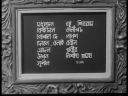
The presence of Agradoot as overseers of the project is important. Agradoot was part of a phenomenon unique to Bengali Cinema where a group of technicians signed off as directors. The core group consisted of Bibhuti Laha (camera), Jatin Dutta (sound), Sailen Ghosal (lab work), Nitai Bhattacharya (scenarist) and Bimal Ghosh (production).
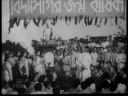
The film is mostly annecdotal, depicting moments from Vidyasagar's life in a linear narrative. In fact, this annecdotal nature is perfectly showcased in the opening scene. The scene has been shot in a studio space making the place unrecognisable. The space, with the big statue of Vidyasagar in the background, is clearly deified and its sets the tone of the film as that of veneration. This unique thematic bracket frames the entire film.
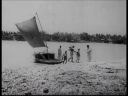
Young Vidyasagar is seen on his way to Calcutta for his education with his father Thakurdas Bandyopadhyay. The tone of veneration is established right at the outset with the young boy seen as an extremely serious and thoughtful child. He is also shown to have an eidetic memory and is very intelligent, especially given the way he learns the number system in English just by looking at the milestones.
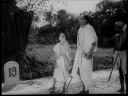
deleteme
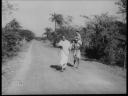
The father, wishing to test the boy's claims, keeps him distracted so he does not notice the milestone. The boy, though fooled, accordingly corrects the next milestone, proving his claim.
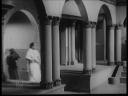
In Calcutta, in the house of Bhagabat Charan in Burrabazar where Thakurdas had already been staying for some time for work. It is generally believed that Bhagabat's youngest daughter Raimoni's kindness and generosity had a strong influence on Vidyasagar.
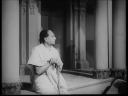
With English education gradually gaining a stronghold, the suggestion that Vidyasagar learn English from the Hindu college is not surprising. One must note that this would be the year 1826. In another nine years Macaulay would publish his famous Minutes On Indian Education (1835) which would change the course of education in colonial India.
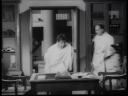
At the Sanskrit Pathsala where young Vidyasagar again proves his new knowledge of the English number system by solving a complicated multiplication problem.
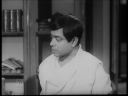
Rather than the boy, the camera cuts to two successive shots of the teacher and the father as they express their shock and surprise over Vidyasagar's abilities. When the shot cuts back to the boy, as expected, he has solved the problem correctly.
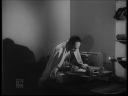
This idea of Vidyasagar as a child prodigy is something that the film firmly establishes in various ways. Here, for example, the eight year old boy offers to help his father with the ledgers after he learns about them by asking key questions.

Many famous anecdotes from Vidyasagar's life are depicted in the film, a lot of which have generally existed as popular stories in the public domain. Not all these stories are, however, possible to verify. Two such instances from his early childhood include: the fact that he would tie his sikha to the ceiling to prevent himself from falling asleep while studying and, more famously, how he would study under the light of the gaslamps of the street outside the house for nights on end.
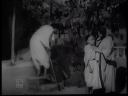
Vidyasagar's mother Bhagabati devi, played by Molina Debi. Bhagabati devi was supposed to have been the source of much of Vidyasagar's ideals and inspired him in many of his endeavours. Here, she supports his desire to donate clothes to the poor children of his village from the money he used to receive as a scholarship.
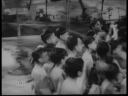
Vidyasagar's generosity is highlighted in the scene, especially when he takes off his own cloth to give to the boy who had not been able to turn up in time. Also important is the introduction of Surobala, who would become a crucial factor later on in his crusade against the oppression of widows.
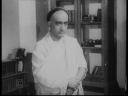
The scene dissolves to some years later to an adult Ishwar Chandra receiving the famous title of Vidyasagar from the Sanskrit College on the occasion of his graduation.
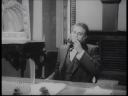
Vidyasagar's conversation with Mr. Marshall, the principle of the Fort William College, reveals the two crucial thematic threads along which the narrative will progress - his reformist ideals concerning the treatment of women in society, and his emphasis on education. The question of caste-discrimination is also mentioned but barring a few comments at certain junctures, the film steers largely clear of the question of caste in the context of Vidyasagar. Vidyasagar joined Fort William college in 1841 when he was 21 years old. Pahari Sanyal, who plays Vidyasagar, was 44 when the film was made.
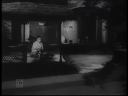
Tarkabachaspati, a famous Sanskrit scholar. The archetype of the genius scholar who, nonetheless, faces abject poverty but lives with immense pride is a familiar theme in literary fiction. At the same time, the character also stands for the image of a ideal brahmin, one who is supposed to have no desires or greed.
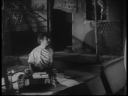
Consequently, Tarkabachaspati's character serves to highlight these characteristics of the ideal brahmin in Vidyasagar. Vidyasagar's humility and magnanimity are also foregrounded here when he offers his job to the old man because the latter is far senior to him. This scene is first of a larger series of scenes on Vidyasagar's generosity and greatness that will be used as narrative bridges at crucial junctures throughout the film.
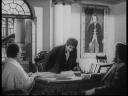
The fact that he is appointed principal of the Sanskrit College means that the narrative has shited to about ten years later. In between he had already joined the college but had resigned due to his conflict with Secretary Rashomoy Dutta over admission of lower-castes into the college. The narrative collates a series of incidents, perhaps for the sake of brevity.
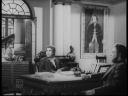
Vidyasagar's honesty and righteousness are foregrounded here when he sternly refuses to make exams easier so that Englishmen can easily pass in them.
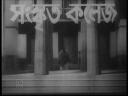
One factor that has always been commented upon is that Vidyasagar's tenure in the Sanskrit College as principal saw the institution morph into a centre of reform. This anecdotal episode shows the new principal at the main gates of the college, annoyed by his teachers who are habitually late. What is significant is that all these senior pundits had also been his teachers during his tenure as a student there.
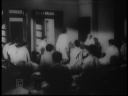
The image of a Sanskrit (rarely, Bengali) pundit, snoring at his desk, as his students go about their own merry ways is a much celebrated one, a target of much ridicule and satire, in numerous places in Bangla literature - examples abound in Sukumar Ray, Bankim Chandra Chattopadhyay, Sarat Chandra Chattopadhyay, Rabindranath Tagore, Bibhutibhusan Bandyopadhyay, among others. This iconic image is used in this sequence to underline the state of indolence that Vidyasagar encountered during his early years at the Sanskrit College.
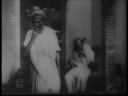
The teachers express their indignance over what they perceive are insults by someone who was once a student. One gets the feeling that a lot of the resentment stems from this last factor. Importantly, it is mentioned that Vidyasagar has been encouraging students from the lower classes to learn the scriptures there, much to the annoyance of the teachers. This issue, however, does not really reappear in the narrative.

A famous anecdote from Vidyasagar's life though the film takes a fair bit of creative license to shift the timeline of the incident. This meeting with Mr. Carr, of the Hindu College (now the Presidency University), had originally occured when Vidyasagar had been the assistant secretary of the Sanskrit College and not when he was principal. The incident in retaliation of the insult by Mr. Carr, took place some days later and not immediately. The incident, in fact, had made Vidyasagar extremely popular among the students and a lot of the staff of the Sanskrit College.
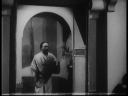
Vidyasagar's devotion to his family, especially his mother, has been a much discussed topic. Here, he threatens to resign from the post of principal when he is denied leave for his brother's marriage.

Perhaps one of the most widely circulated stories about Vidyasagar's personal life, one can almost be certain that this story is mostly apocryphal, especially, given the physical impossibility of actually having performed such a feat. Adamant about following his mother's orders about coming home for the wedding, Vidyasagar had apparently swam across a storm-swept Damodar to reach his village. The rapid shots of the storm, and the cleverly superimposed shots as early examples of special effects, make this scene suitably fantastic.
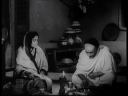
Bhagabati Debi was instrumental in shaping Vidyasagar's humanist outlook. These two scenes showcase her own points-of-view on things were in many ways similar to Vidyasagar's own. She wishes to feed the poor villagers during her younger son's marriage rather than spend money on a musical troupe. Then, later, she confesses to have given away all the warm blankets he had sent for her to the villagers.
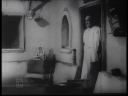
One of the few scenes in the film that features Vidyasagar's wife, Dinamani Devi, or his son, Narayan. Interestingly, the fable he sits down to write, as his wife attempts to cajole him to come to bed, is his translation of Kalidas's 'Abhignyanamsakuntalam'. It is the tale of King Dushanta who forgets his lover Shakuntala after the latter is cursed by the sage Durbasa and her efforts to make him remember her.
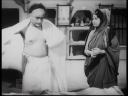
The cries are probably the wails of a grieving family member in the cobblers' colony where a typhoid epidemic has struck. Vidyasagar sets out to help the people there.
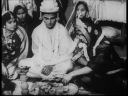
His younger brother has come back home with his new bride, but the traditional blessings cannot be given until Vidyasagar, the eldest son, gets back. Vidyasagar has been in the cobblers' colony, and he comes back in time and says he has been able to help the suffering man.
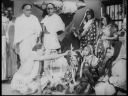
The newlyweds are traditionally blessed by each family member, beginning with the eldest.
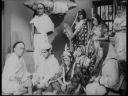
This is an important sequence which acts as a sort of thematic prelude to what will be a major arc of the film - Vidyasagar's efforts to eradicate polygamy and child marriage and to establish widow remarriage. In fact, the first two are mentioned in his monologue, where he speaks on female infanticide, the polygamous practices of the kulin brahmin samaj, and the oppressive lives of the widows of all ages.
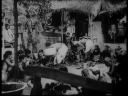
In honour of his promise to his mother, Vidyasagar is shown feeding the poor people of the village.
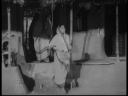
A neighbours wife and daughter had been thrown out of their home by their sisters-in-law. The neighbour, their husband and father, had been unable to do anything as per the customs of a kulin household. The kulin brahmins were the highest strata of brahmins who had to marry among other kulins in order to maintain their status. Thus many old men would marry several young girls and have several wives. Many of them became widows and these kulin widows led lives of abject misery.
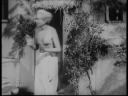
Many sources have discussed how Vidyasagar used to pay monthly stipends to members of his joint family, his servants, poor villagers and many other people in need.
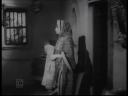
Dinanmani Debi herself was not educated and here Vidyasagar is seen regretting that fact. He also mentions John Drinkwater Bethune's (1762-1844) efforts to establish a system of education for women in India, which would later create the Bethune College. Till then women's education had been mired in superstitions like the one Dinamani Debi mentions: that educated women become widows.
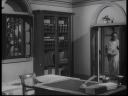
Vidyasagar is seen discussing the various oppressive institutions plaguing society with Bhudeb Mukhopadhyay, the staunchly nationalist thinker and writer. Mukhopadhyay mentions he cannot eat because he has not performed his evening rituals. He had been a part of the Young Bengal movement and had also been reputed to be extremely conservative like many of the members of the movement later on. Though his ideas about polygamy were similar to that of Vidyasagar as we see here, yet, unlike Vidyasagar, he was staunchly anti-British and anti-Christian.

Rev. Krishna Mohan Bandyopadhyay, the first president of the Bengal Christian Association, was himself a part of Young Bengal and had converted to Christianity. His conversation with Bhudeb, foregrounds the various criticisms labelled at Hinduism, both as a practice and as a blanket term for a diversity of practices. The scene is framed in such a way that it mimics the larger debate of the time regarding the question of reforms and the role of religion in it with Bhudeb representing the Brahmin/Hindu point-of-view, Vidyasagar the reformer and humanist, and the reverend as the Christian Evangelist.
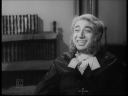
In fact, without Vidyasagar, the debate becomes even more concise: the quintessential conflict between the conservative brahmin and the liberal christian who is on a mission of conversion. This debate will be referred to in more detail a few scenes later.
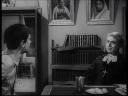
Rev. Krishna Mohan mentions that the scriptures do allow the consumtion of beef, in fact, they celebrate it. This fact, which has been meticulously proven by various scholars, has often been used to critique the constructed nature of what came to be established as Hinduism.
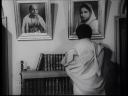
The book Vidyasagar talks about writing is his work on Sanskrit grammar in Bengali, Upakramanica. However, it could be apocryphal that he had written it in the space of a night.
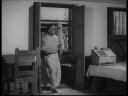
As mentioned before, John Bethune's contribution to women's education India is widely documented. The sight of Bethune playing at being a toy horse with his first two students is quite humanising and fits with the tenor of the narrative which has largely underplayed Vidyasagar's open admiration for the British and their policies of social reform. This is aided by references to the various nasty local rumours that used to circulate about Bethune and his students.
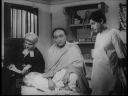
Madan Mohan Tarkalankar was a renowned Sanskrit scholar and Vidyasagar's colleague in the Sanskrit College. They were friends for a long time before having a bitter fall-out much later in their lives.
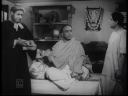
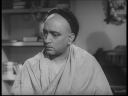
While there have been various references thus far to Vidyasagar's views on the condition of widows, this scene is crucial because for the first time it is discussed in some detail. As Tarkalankar mentions his widowed relative who has just been found to be pregnant, the camera zooms in on Vidyasagar. The rest of the shot, justifiably, holds only him in the frame as he delivers his monologue. What is to be noted also is that the monologue and Rev. Krishna Mohan's response to it raises important questions regarding women's sexuality and sexual health in the context of their abject conditions, though this is done quite implicitly and within the ambit of monogamy and procreation. Control of this sexuality and its redirecting to more race-conducive ends will become a key feature of the reformist ideals.
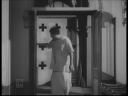
The widow in question has been insulted and she is seen running out, presumably to commit suicide.
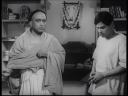
The conflict implicitly referred to earlier between the Hindu ideologue and the Christian missionary takes on a charged context here. The Christian missionaries had been very successful in their conversion mission because they offered a liberal space that was posited as inherently antithetical to the oppressive nature of brahmin-dominated society. The reverend's offer of asylum to the girl and her acceptance is a crucial moment that pushes Vidyasagar towards his project of widow remarriage.
Vidyasagar is seen pouring over scriptures - the vedas, the itihasas, the puranas - in his search for scriptural validation of widow remarriage. The dramatic tension of the scene is heightened by the fast, orchestrated background score dominated by violins and a series of rudimentary visual effects - superimposed shots of a row of books flowing by, stacks of books and scriptures gathering and almost filling up half the screen.
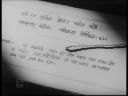
Scriptural validation of widow remarriage came at the behest of one of the central verses of Parasar Samhita which explains that a brahmin woman is allowed to remarry under five conditions: if the husband is missing, dead, impotent, had fallen socially or become a sanyasi.
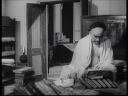
The conflict between the Christian missionaries and the Brahmin ideologues has already been alluded to. Vidysagar's concerned comment that women of Bengal will convert to Christianity or Islam if the oppressive social customs continue throws a critical light on the impulse behind the reform movements of the time. This concern will be elaborated upon in a later scene.
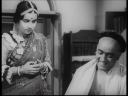
Surobala's appearance has mostly remained unchanged from what we had seen when they were children. Besides, her frankness and her innocence are also hightlighted in this scene, along with her easy relationship with Vidyasagar.
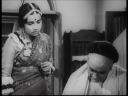
That Surobala seems unaware of the oppressive nature of Hindu society's attitudes towards widows in not so much a criticism as it is a foregrounding of the fact that such practices were so intrinsic to the social matrix that they seemed almost naturalised. Thus her claim, that they don't want their rights as long as the husbands take care of everything, is extremely ironic since it automatically excludes the widows from the debate on rights.
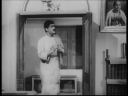
Sris Vidyaratna's eight year old niece had been married to an ailing old man to preserve her kulin status. The man's death means that the child is now a widow. As Vidyasagar rebukes him, it is also revealed that the young girl, unaware of her changed social status, has become a source of immense sorrow for her family.
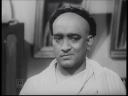
Expanding on the impulses behind the social reforms alluded to earlier, Vidyasagar explains how the fact that Islam and Christianity have no such sanctions against widows makes them powerful races who have been able to spread across the world. Infact, the whole conversation foregrounds how an anxiety over depleting racial strength can be found at the heart of most reform movements in nineteenth century Bengal. This idea that changing the status of the widows and rejection of destructive practices like child marriage and polygamy would ultimately benefit the Hindu/Brahmin race resonates in various junctures of the narrative henceforth.
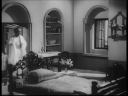
The charged nature of the earlier scene is perfectly offset by the quaintly domestic nature of this one, especially Vidyasagar's interactions with Surobala. Her childlike behaviour with Vidyasagar, anger that he will not listen to her, and her understanding nature regarding his work and impulses serve to highlight this further.
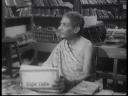
Pandit Taranath Tarkabachaspati corroborates Vidyasagar's discovery regarding the scriptural sanctions of widow remarriage. They both cite examples of vedic customs which support such an endeavour. Interesting, Vidyasagar also cites examples from the Buddhist canon despite the staunch disregard for Buddhist philosophy at the time among the learned pandits. In this context, a crucial point is made that such strictures came into Brahminism perhaps to counter the growing influence of Theravad Buddhism - this argument has been at the centre of many academic debates in the twentieth century concerning the origin and history of Hinduism.
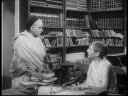
Pandit Taranath reveals how Raja Rajballav of Dhaka had chanced upon similar sanctions in the scriptures to get his own widowed daughter remarried. But Raja Krishnachandra of Nabadwip, out of his rivalry with Rajballav, had coerced the pandits to declare that despite such sanctions the practice is forbidden because it was against custom. This revelation, crucially, places at least a part of the blame on a single selfish individual, thus absolving the Brahmin body social of some of the immediate responsibilities.
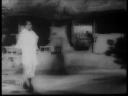
The reaction of Vidyasagar's family concerning the issue at hand. His father is anxious about his actions concerning widow remarriage while his mother, expectedly, is elated by the news.
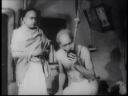
As it turns out, Thakur Das's ire was all for show as he had been testing his son's resilience regarding the side-effects of such an uphill task and that Vidyasagar would be alienating a large number of people. Once he is convinced of Vidyasagar's convictions, he gladly gives the latter his blessings.
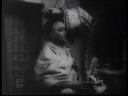
Bhagabati Devi's agreement has already been made clear. The use of the term Sudra is important here: it is used pejoratively to refer to those brahmins who had failed to stand up to Raja Krishnachandra's selfishness. When this use of the term is taken in conjunction with Vidyasagar's monologue on the role of the true brahmin in society, one gets a clearer picture of the inherently brahminical impulses behind many of the reforms during the Bengal Renaissance. Their conversation is interesting primarily because it throws light on the notion of reform shorn of simplified humanist ideas, to look at certain sociological or ideological impulses at its core - namely, the preservation of the brahmin/Hindu race and the reformation of brahminism itself to adapt to the changed socio-political scenario of colonialism.
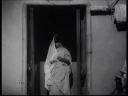
It is revealed that Surobala, Vidyasagar's childhood companion, has been widowed and her in-laws have sent her back to her father's home. The close-up shots of Surobala, dressed in the course white of the widows, heightens the overall emotional intensity of this long sequence, providing the final push for Vidyasagar to put his plans in action.
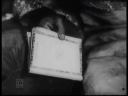
The court of Raja Radhakanta Dev Bahadur, one of the founders of the Hindu college, and one of the most powerful men of his time. His world being akin to law amidst the superstitious native population, it is obvious that the brahmins will choose to have their meeting in his presence. Before Vidyasagar's arrival, the scheming Brahmins are seen trying to figure out what his stand on the issue is, according to which they will change their decision. The Raja himself is undecided, leaving it on the brahmins to fight it out.
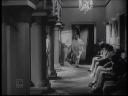
The pandits point out various problems in Vidyasagar's formulations: wrong interpretation of grammar of the sanskrit verses, the verse being intended only for unmarried but betrothed women, the unwritten bits of the verses being a result of it being part of a mostly aural/oral tradition, so on and so forth. Vidyasagar effortlessly counters each and every one of these arguments.
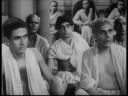
The character of Vidyabagish, play by Haridhan Mukhopadhyay, is meant to be a symbolic referent of the vapid and empty brahmins Vidyasagar had lamented about to his mother. He is seen dozing, agreeing or disagreeing with whoever seems to have the upperhand, does not seem to know much about any of the things being talked about, and in a final gesture, admits to them being at a serious disadvantage.
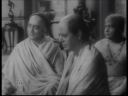
Vidyasagar furnishes further proof of his claims, citing the Narad Samhita which has the same set of slokas and which explicitly makes it clear that it is meant for married women.
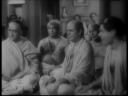
Accordingly, Vidyasagar also claims there are scriptural sanctions for divorce should the five principal conditions be applicable for a married woman.
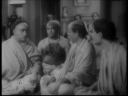
The other pandits are angry at what they perceive to be an assault on ideas of feminine purity and chastity, some of the central tenets of brahminism. Vidyasagar's vitriolic response foregrounds previously raised questions regarding feminine sexuality. Making a case for desire and claiming that the vedic sages gave it immense importance, he goes on to explain the Four Principal Ashrams in order to underline how proceative sexuality was central to the order of society and the idea of renunciation was predominantly a Buddhist notion. The narrative justifiably underplays the fact that brahminism had adopted these Buddhist ideas predominantly to counter growing Buddhist influence among the populace.
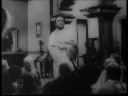
An impassioned monologue where Vidyasagar asks the men gathered there to consider the sociological and emotional ramifications of such a oppressive system.
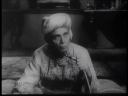
Important concerns are raised about the legal effects of such a ruling since no law existed regarding widow remarriage. This also foregrounds pressing questions regarding the relationship between law and customs and whether a change in the latter can be used to effect the former. The Raja's concern regarding public opinion also points towards the difficulty in changing long-established customs.
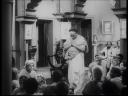
Unable to counter any of Vidyasagar's arguments, the brahmin pandits resort to libel and insinuate that his impulses may have something to do with his relationship with Surobala. Angered, Vidyasagar claims his impulses have to do with the fate of all suffering women in Bengal. Directly accusing the two pandits of actively persecuting and exploiting their widowed relatives, he asserts he will go ahead with his plans regardless of their support or lack thereof.
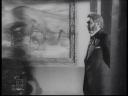
Mr. Halliday, the then Governor of Bengal, suggests that Vidyasagar organize a signature campaign larger than the one organized by the pandits if he wishes for his appeal to be changed to law.
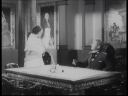
A famous anecdote from Vidyasagar's life where Mr. Halliday had apparently asked him to adopt western clothing in such places in order to fit in. Vidyasagar, tersely, had offered to stay away rather than compromise on traditions and the Governor, chastised, had relented.
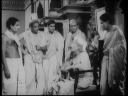
Raja Radhakanta Dev Bahadur is seen consulting with his brahmins to ensure that Vidyasagar's plans never succeed.
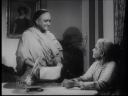
Vidyasagar, collecting signatures in support of his campaign, from various eminent personalities, with a voice-over announcing the names of the people who endorsed his campaign. Shots of parchments with the signatures are superimposed on close-up shots of hands signing. The last name mentioned and the last person shown are Maharaja Srishchandra of Nabadwip, descendant of Maharaja Krishnachandra who had originally opposed widow remarriage.
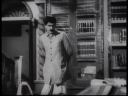
Though the number of signatures gathered by Radhakanta Dev and his brahmins were much more, a deciding factor was that the people who had signed for them were mostly common people from the suburbs while most of the people who had endorsed Vidyasagar had been the eminent learned men of the time.
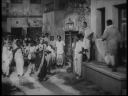
A burlesque or traditional 'shong' performance, used to lampoon specific people. The 'Shong' was generally meant to be rude and/or offensive, and quite often public. However, the 'shong' could also be a purely public performance, meant just to entertain, generally on the most talked about topic or gossip doing the rounds. The performer on the right is in fact Jahar Roy.
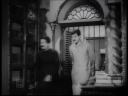
The discussion on the topic of a ban on polygamy underplays the role of the British in the social policies of the colonies. What they call an emphasis on free will and choice, was in fact a carefully constructed policy of non-interference for the British. With widow remarriage, since the latter is a sanction and not a prohibition, they were in safer waters.

Vidyasagar arrives to get the signatures of Ramgopal Ghosh and Bhudeb Mukhopadhyay. The latter refuses on ideological grounds, saying he feels no person should get married twice. Vidyasagar confidently claims that a few less signatures will not affect the passing of the law.
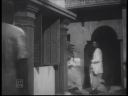
Almost immediately we cut to street vendors rushing with copies of newspapers like the Tatwabodhini Patrika, Sanskrit Samachar, The Hindu Patriot, declaring that the law has been passed. We also see reactions of people, ranging from shock and disbelief to outright praise. The Hindu Widows' Remarriage Act was enacted on 25 july, 1856.
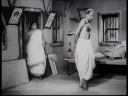
The law causes major differences of opinion among Thakurdas and Bhagabati Debi. Both are proud, but while Thakurdas is worried about Vidyasagar's safety because of his altercation with Raja Radhakanta Deb, Bhagabati Debi is unmoved and completely confident about his him.
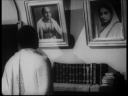
Vidyasagar is seen acknowledging his parents as his primary source of inspiration. With the law having been passed, they are onto their next hurdle - the first widow remarriage. The first person Vidyasagar has convinced to be part of such a historic event is Sris Vidyaratna.
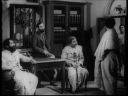
Many renowned men of the time had shown their support of widow remarriage by actively participating in the events. Here we see Kaliprasanna Singha, the author of the seminal Hootom Pnachar Naksha (Sketches by the Barn Owl), coming forward with the offer to pay a part of the expenses for the ceremony. Incidentally, this is Anup Kumar in one of his early film roles.
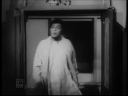
Madanmohan Tarkalankar arrives with the news that he has finalised the bride for the wedding too. They are all remarkably upbeat about their mission ahead, despite being aware of the fact that they will face the strictest of oppositions en route.
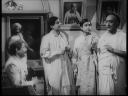
Thakurdas Bandypadhyay, worried over his son's safety, has sent Chiru from the village to guard him. Chiru, incidentally, is part of the Bagdi caste. Their occupation would mostly be related to fishing and water resources and because of their physical strength they would also be employed as stick fighters and guards.
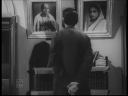
Thakurdas has been supportive of his son throughout, as we have already scene in the earlier scene where Vidyasagar had gone to him for permission.
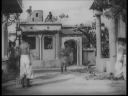
Sris Vidyaratna has been attacked because he agreed to marry a widow. It's a group of stick fighters, probably employed by the brahmins working with Raja Radhakanta Deb.
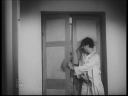
He manages to somehow escape, though he is severely wounded, and reaches Vidyasagar's house. Badly beaten and scared, he understandably wishes to change his mind about marriage.
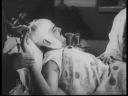
Being declared an outcaste, and outright physical violence were only some of the impediments to the early years of child marriage even after the law had been passed. In fact, one of the major reasons was the difficulty of breaking the stronhold of custom even when scriptural law completely validated the practice. Vidyasagar convinces Sris that the latter will be considered a vanguard if he were to fearless go ahead with it.
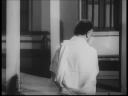
The opposing brahmins had organised a huge army of stick-fighters to stop the first marriage. The Governor, Mr. Halliday had offered to be present in person in order to ensure everything goes as planned, but, Vidyasagar turns it down so that the ceremony is not compromised by the notion that it is an act of colonial intervention and not something that the scriptures permitted.
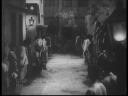
The wedding procession of the groom; soldiers of the Company flank both sides of the road to ensure law and order. Parallel shots of people having gathered to watch the profession and some of their reactions, especially at the sheer grandeur and public nature of the ceremony.
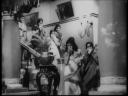
Long tracking shots reveal the numerous important men and pandits who have attended the ceremony.
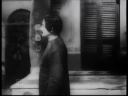
The men gathered there, along with the newly-weds, express their gratitude for Vidyasagar. The term used to address the later is important: 'the composer of samhitas for a new Bharat' immediately foregrounds the brahminical thrust behind the endeavour, albeit implicitly.
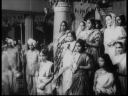
With the superstitious sanctions against widow remarriage having been removed, a number of widows are seen attending the wedding, including Surobala.
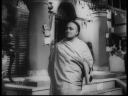
With the first brahmin widow remarriage having taken place, they discuss the future of the movement and also Vidyasagar's hopes that if not him then at least the successive generations will take his work forward. As discussed before, polygamy would face prohibition much later, in keeping with the colonial policies of non-interference. The Hindu Code Bills would only come into force in the 1950s.
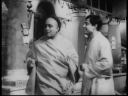
The traditional 'bashar' ceremony that takes place after every hindu marriage. Exclusively organised by the bride's family, and attended mostly by the young people involved in the wedding, the 'bashar' is an overnight programme meant to tease the groom or generally make merry with music and dance. The fact that this 'bashar' is the outcome of a widow's remarriage is especially significant in this case, underlined by how Vidyasagar and Madanmohan Tarkalankar happily eavesdrop on the proceedings. The rest of the scene will alternate between parallel cuts of the 'bashar' room and the song and the two figures listening contentedly.

The scene is set in an obscure studio setting, signifying the new paths Vidyasagar has set upon as he walks up a hill and looks around. The obscure setting is further justified by the reference to 1857 and the Sepoy Mutiny. Nothing about the Mutiny is seen or said as we just see the burning letters of 1857 with the rest of the screen dark. Since the film has constantly underplayed the pro-colonial stance of Vidyasagar, this is a necessary narrative device.
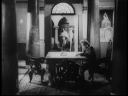
Consequently, without any reference to unrest the scene shifts to the immediate aftermath of the Mutiny. The colonial goverment has cancelled all grants to women's education to make up for the huge expenses incurred during the Mutiny. Vidyasagar's ire is directed precisely at this.
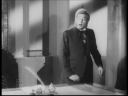
The Governor, Mr. Halliday, suggests that Vidyasagar lodge a complaint against him regarding non-payment of dues, to defend which the Company will have to clear all the money to the girls' schools and colleges set up in the past six months. This incident is perhaps apocryphal with no records precisely of this though Vidyasagar's resignation on this issue is documented. This is first instance of any critique by Vidyasagar regarding colonial policies.
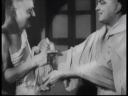
As per his promise in the earlier scene, Vidyasagar is seen giving away his wealth to keep the girls' schools running. The three rapid scenes are accompanied by his impassioned speech on women's education.
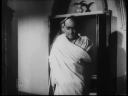
There are no records as such of Vidyasagar having become a pauper after giving away most of his wealth. In fact, the sale of his books, especially the primer 'Barnaparichaya', were quite high. Of course, having come from a poor brahmin family he lived frugally, with not much show of his wealth. There are multiple records also of the regular pensioners who were dependant on him in various ways.
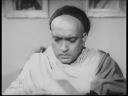
The anecdote of his help to Michael Madhusudhan Dutta is something the latter himself has written on. While away in France with Henrietta Sophia White, Dutta fell into extreme debt and wrote to Vidysagar. Vidyasagar worked to ensure that sums of money owed to Dutta from his property at home were remitted to him and sent him a large sum of money to France. Michael would henceforth refer to Vidyasagar as Dayar Sagar (Sea of Mercy).

Utpal Dutta plays Michael Madhusudhan Dutta in a short sequence. This sequence itself seems to have been shot in soft focus to heighten the implied change in the location, with Michael in Versaille at the moment. Utpal Dutta's debut film was the biopic of Michael Madhusudhan Dutta directed by Madhu Bose which released on the same year as 'Vidyasagar' and he later wrote and perfomed a play on the poet too.

The sequence of Vidyasagar's help is heavily dramatised with the money arriving just at the moment when Michael Madhusudhan is about to be arrested by the French police. The lines Michael Madhusudhan recites are in fact from the poem 'Ishwar Chandra Vidyasagar' written by him in acknowledgement of the incident.

One major effect of the kulin brahmin system had been that a lot of the young widows would run away from home unable to bear ill-treatment, and, with no other means available, turn to prostitution. Here, Vidyasagar is seen first giving money to one such woman and sending her inside. A little later he is seen helping in nursing a young woman in the throws of fever. It would seem there is a crucial scene missing in this print where he gets up to confront the rich landlords' revelries near the sick woman's room. The scene had Renuka Roy presumably playing a courtesan named Prasanna and the production stills of the scene are still available.

The previous two scenes, and perhaps the missing one especially, form a crucial narrative bridge that seemingly propels him to concentrate with renewed vigour on his fight against child marriage and his stress on women's education.
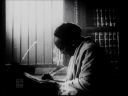
Thus, henceforth, he is seen concentrating on writing and publishing in order to be better able to support the schools and colleges he had opened. Though the names of the texts as they appear superimposed on the shot are not clear, some of what he wrote during the time include 'Sitar Banabas' (1860), 'Bhrantibilas' (1869), 'Basudev Charit', 'Vidyasundar', and his controversial, two-part treatises 'Bahu Bibaha'.
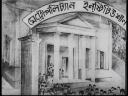
Cut to two shots of hand-drawn images of the two major institutions established by him in 1872 in support of his goal to protect the Hindu widow and to foster education: The Metropolitan Instituition which became the Vidyasagar College in 1917, and the Hindu Family Annuity Fund which was to help those families whose head of the household and only earning member had passed away.
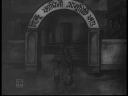
The scene cuts to a final shot of Vidyasagar, now in his old age, working at his desk.
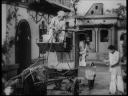
The final sequence of the film with Vidyasagar is also a well-known anecdote, where Sri Ramakrishna, an ardent admirer, had come to visit him. Gurudas Bandyopadhyay would later achieve immense popularity with his portrayals of Ramakrishna (and sometimes Sadhak Bamakhyapa) in almost seven films for the next thirty years.
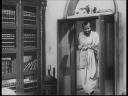
The scene is also a final reference to the now-deceased Bhagabati Debi, asserting her influence on his career as a reformer and educationist. The scene, by deifying her through Sri Ramkrishna, serves as the final scene of the fable-like narrative with the next scene dissolving into the statue and the gathering seen in the beginning where this note of veneration originates.
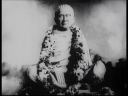
Immediately, the voice-over starts. This is accompanied by an almost exactly reverse movement of the camera from the first scene as it tracks out. Just as in the end of fables, the voice-over ends on a didactic note enumerating the duties of the citizens of the country in furthering Vidyasagar's vision.
Indiancine.ma requires JavaScript.
