Kati Patang (1970)
Director: Shakti Samanta; Writer: Vrajendra Gaur, Gulshan Nanda; Producer: Shakti Samanta; Cinematographer: V. Gopi Krishna; Editor: Govind Dalwadi; Cast: Rajesh Khanna, Asha Parekh, Prem Chopra, Bindu, Nasir Hussain, Sulochana (Latkar), Chandrashekhar, Madan Puri, Daisy Irani, Honey Irani, Sadhana Patel, Kanchan Mattu, Gurnam Singh, Birbal, Ramayan Tiwari, Lalita Kumari, Satyendra Kapoor, Kundan, Moppet Pooran, Mehmood Jr., Harbans Darshan M. Arora, Kumari Naaz
Duration: 02:34:06; Aspect Ratio: 1.328:1; Hue: 20.284; Saturation: 0.085; Lightness: 0.028; Volume: 0.224; Cuts per Minute: 8.565
From Ranjani Mazumdar, 'Bombay Cinema: An Archive of the City' (2007), pg 90-91).
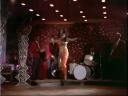
Kati Patang had a famous dance by Bindu (a popular vamp) in a nightclub. Here a play of opposites is set up as body attire and movement are contrasted throughout the performance. The film’s protagonist, Madhavi (played by Asha Parekh), is sitting with her boyfriend (Rajesh Khanna) at a table. She is clad in a white sari, which signifies widowhood. Although Madhavi is not really a widow in the film but only poses as one, her expression of shock when she sees the dancer Bindu (a woman who knows Madhavi’s past) is presented through a series of alternating shots. While the shock on her face is supposed to create a new twist in the narrative, the dance in the club appears to present its own logic.

The sequence opens with the camera focusing on the lower part of Bindu’s wriggling body as she looks down at a man moving on the floor. This rather explicit movement is then contrasted with Madhavi’s static position and shocked expression, signaling both her recognition of the woman and the “decadence” of the performance. Bindu never really looked westernized, but she carries the Western image in films through her body attire, gestures, and performance. Her supposed westernization in Kati Patang (as Shabnam) is contrasted with Madhavi’s “Indianness” (rendered most explicitly in her white sari).

Bindu performs for the people sitting in the nightclub, but also for the ilm audience who now have an independent relationship to the dance. The entire performance is laced with hyperbolic emotions, exaggerated body gestures, and bizarre costumes. The contrasting images of femininity and the heroine’s restraint and control over her own desires and sexuality became the vehicles through which female sexuality was negotiated in the city. This dichotomized narrative of sexuality presented through a tableau framing the “westernized vamp” and the “Indian woman” was common in many films.
Indiancine.ma requires JavaScript.
