Atithi (1974)
Director: K.P. Kumaran; Cast: P.J. Anthony, Sheela, Balan K. Nair, Kottarakkara Sridharan Nair
Duration: 01:52:01; Aspect Ratio: 1.300:1; Hue: 180.000; Saturation: 0.010; Lightness: 0.150; Volume: 0.204; Cuts per Minute: 8.677; Words per Minute: 43.340
Summary: Told in the nature of an existential fable, K.P. Kumaran's debut is a saga of a family comprising the dysfunctional and failed businessman Karunan (P.J. Anthony), his wife and in many ways the film's protagonist Ramani (Sheela), her sister Latha who is expected to marry the garage mechanic Raghavan (Balan K. Nair), and Karunan's father-in-law (Kottarakkara Sridharan Nair). Each of these are condemned to their respective fates, the only hope being the expected arrival of a family member named Sridharan, who has apparently made his fortune elsewhere and will now return. Sridharan never arrives, forcing different members of the family to descend into hopelessness. The eventual exceptions are Ramani and Raghavan, who appear in the end to realize their dreams in each other's arms. Released a scant month before G. Aravindan's legendary debut Uttarayanam, this film has been read as displaying diverse modernist impacts (from Samuel Beckett to Harold Pinter). It has been largely ignored by film historians, overshadowed by Adoor Gopalakrishnan's Swayamvaram (co-scripted by Atithi's director Kumaran), and was believed lost until a VHS tape was discovered in Dubai.

Censor certificate
K P Kumaran’s debut feature film; Athithi comes at a politically turbulent period in Kerala that also witnessed radical churning in the region’s arts and literature.
On the political front, the influence of Maoist and Leninist thoughts on a group of dissidents from the official CPI (M) led to the formation of Communist Party of India (Marxist-Leninist) in 1969 in Calcutta – a development that reflected directly on the political landscape in the region. The late 1960s witnessed armed rebellions by militant Naxalite activists against landlords and the state police in Northern Kerala, and the state repression of this movement. K P Kumaran, in an interview, remembers that the students’ protests in France of 1968 had become a talking point among the youth in the region. The euphoric visions about the modern Malayali nation founded under the aegis of the Left had begun to fade. The resulting political-cultural milieu was backdrop to the aesthetic experimentations in the arts and literature during the late 1960s and the 1970s.
In literature, O V Vijayan’s hugely influential existentialist novel Khasakkinte Ithihasam (The Legends of Khasak) was published in 1969, heralding a movement away from the ‘Modernist literature’ in Malayalam. In cinema, the initiatives under the tutelage of the first graduates from the Pune Film Institute (FTII), like Adoor Gopalakrishnan, paved way for a new wave of cinema to emerge: Chitralekha Film Society was formed in 1965 under the leadership of Adoor Gopalakrishnan with a view to produce and distribute ‘better cinema’; Chitralekha’s first film
Swayamvaram (Adoor Gopalakrishnan, 1972) won the national awards for direction and best feature film in 1973, bringing tremendous impetus to the emergence of a director-centred, parallel cinema movement in the region. Actively functioning film societies organized screenings of films from Germany, Hungary, Poland, Canada, Russia, France, Italy, Czechoslovakia, Latin America, etc., across the region. New aesthetic directions were being explored in theatre in the region too, drawing inspiration from experiments in international theatre, as well as in Kannada, Marathi and Hindi beginning from the late 1960s. Thanathu Naatakavedi (Indigenous Theatre Forum) was one result of such experiments, drawing inspiration from playwrights like Artaud, as well as the ritual theatre forms like the Japanese Kabuki and Balinese dance-forms.
Athithi was released in May 1974 – just a month after the release of G Aravindan’s
Uttarayanam and a year before the Emergency (1975-77) was declared in India. A few years before, Kumaran had a falling out with Adoor Gopalakrishnan and Chitralekha film society, after his short film Rock won a gold medal at the Expo'72 Film Festival in Tokyo (just before Adoor’s
Swayamvaram shot to glory by bagging national and state awards). Earlier, Kumaran co-wrote
Swayamvaram with Adoor. Athithi was initially written as a play and was performed in Trivandrum in 1972.

The opening sequence states its overtly metaphoric intentions: camera panning over sand mining on a desertscape cuts to a shot of Karunan watching from a window. Both the metaphors of barrenness and of waiting introduced. The heavy commentative music track already evident. The use of sound would be what announces Kumara'ns distance from the Adoor Gopalakrishnan mode and towards what both Backer and John Abraham (and T.V. Chandran) would use.

Brief but poignant outdoor shots of a site of labour, before the film withdraws almost entirely into the interiors... The landscape here – a sand mining quarry – is rather disorienting, thus hinting at the very beginning of the film its desire to distance itself from the common trope of rendering the 'authentic region' in idyllic rural landscapes, which was a discernible tendency in social realist films and the emerging parallel cinema of the time.. The anchor-less, vast, muted space of physical labour also avoids elevating the exterior as realism's privileged sphere of 'real-politics'.
In his
article, Radhakrishnan observes: "While
Swayamvaram began by locating its own time-space structure in the very first sequence of the bus ride, both Athithi and
Kabani start by dislocating their frames from such co-ordinates. The dislocation (...) is in relation to a hierarchical structure (...) which makes possible a recognizable realist aesthetic in Malayalam cinema. These films, with their emphasis on the significance of melodrama and associated cinephilia, are deemed unreadable and hence unaccountable under the privileged realist contract.
Athithi starts with a sequence of a sand dune being mined. The expansive sand dune does not provide any specific codes as to the context of the film, like urban-rural, modern-traditional. The sequence is cut to Karunan (P.J. Antony) who, from behind the window of his house, looks at the sand dune. Even though the structuring of the inside and the outside is central to the film, its elaboration is entirely different from Swayamvaram. The inside becomes the space from which the outside is beheld, and the outside is the space of fantasy. The film revolves around the wait for Sekharan, who everyone in the house expects will solve his or her ‘problems.’ Though everyone has a materially definable problem for himself or herself, the common problem, evident from the early sequences of the film, is the lack of affective bonds between people within the domestic space. Dialogues and actions seem to be at cross-purposes in the tradition of the absurd. Sekharan arrives and leaves, never appearing on screen and not changing anything." (Radhakrishnan 2012, p. 6)
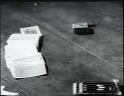
Strongly theatrical mise-en-scene introduction to all four characters living in the house. Karunan leaves the window and begins a game of cards with no other player, then tries to role and light a beedi. The two sisters, Ramani and Latha introduced, and their father. The indistinct chatter already introduces a threatening external space that will soon intrude into the house. It is perhaps of interest that P.J. Anthony's theatrical practice is attached to an Ibsenite legacy (Doll's House etc).
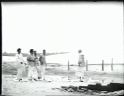
The townsfolk - the citizenry in Kumaran's conception of his moral universe - now enter: inveterate gamblers, hard-hearted gossips, the social 'commonsense'. Latha walks past them to open an entirely separate domain of subjective phantasy. Her gay and seductive walk through the village towards her dance teacher's house already presages various things to come.
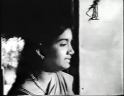
The dance class. The teacher is ill, but nevertheless works to give her student her lesson. Later in the film, when Latha does her full-scale dance performance on stage to a completely absent audience, the insertion of an absent spectator will remind us of this sequence. Radhakrishnan argues that the unseen Sekharan provides a site for an unseen spectator, which will be evidenced also in Ramani's romancing with the camera.
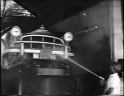
Introduction of Raghavan in the car mechanic's garage: the father (Kottarakkara) borrows money from him. Later he will pretend to forget all of these debts as he refuses to let his daughter marry Raghavan.
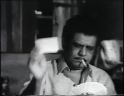
The strongly theatrical space of the home further reinforced by Ramani's first major scene. The gamblers sit in the living room, she gives them tea. One of them now comes into the kitchen soliciting her help for a problem he is having. Ramani's own transgressive tendency to 'help' now mapped onto her subjective desire, both of which will come together later in the film.
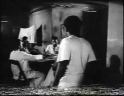
This scene in which Ramani comforts a neighbour named Ramankutty by promising to intervene in a crisis in his domestic life is one of the last in a series of establishing scenes in which male characters are shown as emotionally unstable, vulnerably fragile, excessively dependent, as well as boorish and irresponsible. In contrast, Ramani and Latha are hopeful and enchanted, as well as comforting and caring. One exception to this is Raghavan (Balan K Nair), a mechanic in a workshop in which he has shares as well. Unlike the other men, Raghavan is principled, stout, and has a plan for his future. The bond between Ramani and Raghavan is central to the film.
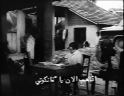
Raghavan, one of the two men outside the family - the other being the entirely absent Sekharan - is introduced. He will soon be swindled by his business partner at the garage. The fade from him to Ramani is perhaps suggestive.

Karunan reneges yet again on gambling debts. The first suggestion that his wife (Ramani) can be bartered as a gambling debt. The camera once again comes tp rest on the close-up of the tragic Karunan.
The first somewhat suspenseful arrival of the 'stranger': silhouettes of a man who turns out to be Raghavan.

This entire sequence is crucial for outlining Ramani's side of the story. She is clearly attracted to Raghavan. Their togetherness in the kitchen is intercut with Karunan's isolation, until Latha comes in and asks Raghavan what he is doing in the kitchen. Raghavan now grabs Latha somewhat aggressively promising/threatening to marry her. Ramani meanwhile is stuck with the ranting of a drunken and impotent husband who promises to make good. Some similarity between this love triangle, Ramani's own divided sense of her loyalty to her husband and her sister and desire for Raghavan.
The contrast between the failed businessman Karanan, and the effervescent Raghavan...
Through these sequences, the film establishes explorations into Ramani's psyche as a possible means of making sense of the absurdities that are to follow in the narrative.

Ramani watches Raghavan romance Latha. Spectacular shot of a sand dune, as the two lovers are seen in the distance and Ramani looking on. Ramani returns, sees her drunken husband, stares at him with hatred and then presumably overcome with guilt, bursts into tears and falls at his feet.

Karunan's downfall - he is charged with fraud but let go because this is his first time - is intercut with Ramani's own fantasies, mostly involving Raghavan. The dissolve of his sleeping face upon hers is of interest.

In this sequence, we witness Ramani fantasizing herself in the place of her sister Lata, whom she had jealously watched in the earlier sequence romancing Raghavan on the same sand dunes at night, though here the identity of the male figure whom 'Ramani' romances is not revealed.
Ramani's constant fascination with the outer world now becomes a recurring trope, manifesting in different forms - her fascination for Raghavan, her attempt to help her husband Karanan regain his past glory, etc.

Raghavan's own persona gets intertwined with the elusive Sekharan: now almost his alter ego. He imagines himself as a possible garage owner, and a life of prosperity with Latha, when the father announces - for the first time in the film - of the imminent arrival of the mysterious guest.
Casting Balan K Nair, who was a workshop mechanic himself (with a background in theatre acting), in the role of a character finding it difficult to reconcile his ambitions to become an entrepreneur with his commitments towards the fraternity of labourers from which he can't distance himself, is significant. This also preempts the easy elevation of the worker-figure -- the holder of the privileged worldview in the Left rhetoric -- as the moral centre.
The beginning of the play of the absurd, strongly invoking Waiting For Godot.
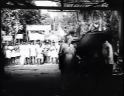
The workers' strike at the garage reveals another aspect of Raghavan's clearly compromised situation. On the one hand, he sides with them, but on the other, is dependent on George for his future. Later he will suffer at both the workers' hands and be betrayed by George.
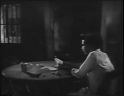
The husband Karunan sinks into a morass of depression, from which Ramani tries to get him out. He accuses her of being attracted to the missing Sekharan. the missing person now determines the lives of each of the family members.
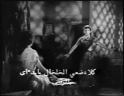
Second dance rehearsal; presaging the final performance.

The Sekharan myth now starts affecting the entire family. His untold wealth, and how he will arrtive and change everything for everyone, intercut with shots of an aeroplane taking off, what he eats and what he will bring. Raghavan arrives, and the father tries to borrow money from him. Then his fiancee Latha speaks of her own expectations of Sekharan. Raghavan now gives her an ultimatum: that she either leave with him or their relationship is over. He also accuses her of having been Sekharan's lover.
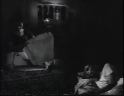
Further Sekharan problems: is he Ramani's former lover, why is he coming, just what does he want, how rich is he? Ramani, constantly facing accusations, now yields herself into the film's first completely subjective moment: one were she literally seduces the camera.

Camera romancing Ramani...
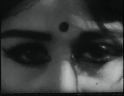
Extraordinary sequence - it is as though the camera sings the 'Seemanthini' song to her, and she romances the camera. The song sequence ends, somewhat strangely, with a flashback moment when she is with Karunan during his former days of prosperity.
The film's growing surrealism - the father goes to meet the elusive guest at the station, but the train does not stop. He nevertheless phantasises about the nephew having arrived. As the father tells all this to Karunan, Karunan suddenly reveals knowledge of a letter that Sekharan had left behind., They search for it, but it is missing.

'Aham bhramosi' - the fairground and the extraordinary sequence with the clowns. Radhakrishnan contends that the 'six clowns dancing to a song' as a voice claiming 'the position of the enlightened one' as it sings 'Aham Brahmasmi/ the fantasies of a blind man who looks for the non-existent cat in the sack of darkness/ . . . .’ - and the point when Ramani 'starts to believe that one of the clowns is Sekharan' - is an insertion of the spectator into the position of the absent Sekharan.
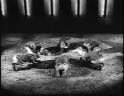
Kottarakkara Sreedharan Nair's vivacious acting accentuates the element of the absurd around "Shekharan, the guest" and his arrival.
Shekharan begins to represent various things for different characters: for the father figure, his coming back promises prosperity and wealth, but for Ramani, he is the reminder of her past capable of inducing guilt in her with just a stare. Here, in the carnival ground, Ramani is haunted by imagining Shekharan’s guilt-inducing gaze.
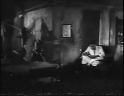
The father proposes that Latha marry the elusive Sekharan. Ramani opposes this, claiming that she is promised to Raghavan. Karunan hears of all this in silence.

Intercut with update on Raghavan's own situation with regard to his ambitions: the corrupt garage owner George has managed to get two of the union leaders arrested. Raghavan's moral crossroads.
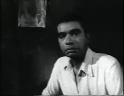
The Sekharan issue now splits Ramani's relationship with her husband. Karunan and she exchange accusations and self-recrimination. He says she is insisting on Latha marrying Raghavan only because she herself wants to be with Sekharan to revive their old affair.
Performative silences: extended sequence - Ramani sleeps, wakes and goes somewhere, Karunan follows her, then sees - or we must assume he thinks he sees - her sleeping on a luxurious four poster bed, since the entire shot is bleached out. he then sits on his chair or stands and watches from the window, his two usual activities.

Raghavan is first turned down by Latha, and then begins to realize that his dreams of prosperity with George are also not going to happen.

Latha's phantasy about the 'city' is excited by the tragic story of her dance teacher. Latha will soon descend into this phantasy herself.
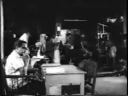
Raghavan is sacked from his job and beaten up by the workers in the garage.
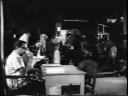
Raghavan as a character occupying the middle ground between the consolidated images of the labourers and the capitalist… This is followed by a sequence in which Karanan – the failed capitalist who has withdrawn completely from the outer world – goes out and finds himself uncomfortably isolated from the outer world.

Karunan is sent off by Ramani to once again revive his business fortunes, by turning to his old gambling friends, the citizenry, for help.
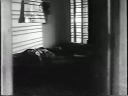
An injured and hurt Raghavan gets up, and seeks help from Ramani. This is intercut with Karunan's effort to get help from the gamblers, which ends with him being publicly humiliated by his former friends. Raghavan is lovingly tended by Ramani, who promises that the money will come - meaning effectively that she too is expecting it from the missing Sekharan - evenb as Raghavan sees himself excluded from the family by the absent Sekharan.

One of the most famous sequences in the film: Latha does a fully-fledged dance number, her ode to the 'city' that will pamper her, realize her every dream - to an auditorium of empty seats.
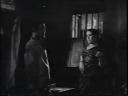
Ramani puts the injured Raghavan to sleep. The humiliated Karunan finally arrives home. he declares himself a failure, says he will now never leave this room and go anywhere. Finally, he challenges Ramani to go and find herself another man, and she says she will.
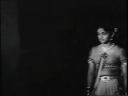
The Shekharan myth finally collapses the family. Latha returns, claiming that Shekharan took her to the city and showed her fabulous riches. Finally, Ramani leaves the entire family and walks out. Much of this sequence sees the use of negative shots on the film.

Like in Waiting for Godot, the cyclical motif of the wait for Shekharan is invoked when Raghavan asks the absurd question: ‘Who is Shekharan?’ To which Karanan responds with an account of who Shekharan is.

The climax of the film: on the sand dunes and beneath the trees, Ramani finds herself in the arms of Raghavan.

In his essay comparing Swayamvaram with Athithi and Kabani Nadi Chuvannappol, Radhakrishnan argues that in Athithi, the desire for Shekharan is the desire for realism which the film refuses to fulfil.
Quoting from the essay: "The film employs popular stars like Kottarakkara Sreedharan Nair, P.J. Antony and Sheela in central roles. The use of actors with melodramatic acting styles is radically different in Athithi compared to Swayamvaram, where it is circumscribed by the ‘outside’ and made visibly excessive. Melodrama is employed in its fullest in Athithi. Within such a structure, the distinction between the inside and outside cannot be mapped onto melodrama and realism. In a telling sequence, we see Ramani (Karunan’s wife, played by Sheela) observing her sister Latha and Raghavan (Balan K. Nair) in a moment of passion under a tree next to the sand dunes. Both Ramani and the couple are placed in the public. Later, we see Ramani observing herself dancing amorously with a man, from the same location. At the end of the film, after the father (Kottarakkara) announces that Sekharan has disappeared and all the characters realize that their plans are shattered, the shot is cut once again to the sand dunes. We see Ramani running away, followed by Raghavan. The fantasy-like resolution of the film has the two of them in a passionate embrace. With the
splintering of the melodrama/realism, inside/outside oppositions, the film proposes a third location from which we may theorize spectatorship.
I propose that the unseen Sekharan is that location for the spectator. I will point to two sequences in the film. In a flashback featuring a romantic song, we see Ramani’s unfulfilled past romance with Sekharan. Shekharan is absent in the sequence. But the song is shot in a way that presents the camera, i.e. the spectator, as Sekharan. In a series of frontal shots, Ramani literally romances the camera. The second sequence is also a flashback. Ramani and Karunan, after their marriage, visit the fair. Ramani watches six clowns dancing to a song.
The voice claims the position of the enlightened one and sings: ‘Aham Brahmasmi/ the fantasies of a blindman who looks for the non-existent cat in the sack of darkness/ . . . .’ At one
point Ramani starts to believe that one of the clowns is Sekharan. But before she can check, the clown disappears. While this sequence positions Sekharan as an absent presence (by the time we know it might be him, he disappears) who can make a judgment, the former aligns himalong with the camera, thus establishing the position of the spectator. If the sequences in the fair narratively privilege Sekharan as the moral centre of the film, the romance sequence transforms him into the position of the spectator. The absent gaze of Sekaharan then is the
central problem in the film. In another moment in Athithi we see Latha performing classical dance on stage. She is a bad dancer, her dance almost comical. She ends the dance and bows to the audience, to the camera. The shot is cut to the diegetic audience to whom she bows, but what we see is an empty auditorium. The position of the spectator, capable of aesthetic
judgment and critical of this comical performance, is once again rendered empty.
When, at the end of the film, the old man announces Sekharan’s disappearance, we have two shots in film negative, so as to indicate the visual nature of the issue at hand. Sekharan, I argue, is not a character that is awaited in the film, but the location of spectatorship that will render the disorganized world intelligible in realist terms. The promise of realism lies shattered as it shifts from being a moral placeholder to that of greed and desire for wealth represented by Sekharan who represents an economy that is founded on migration (he ran away to Bombay, we are told) to the corruptible outside. With the film collapsing the desire for Sekharan into the desire for realism, the latter is deemed obscene, a lost promise. This collapse shows up the class positioning of the realist gaze, i.e. as that of the emerging middle classes in Kerala. The moment of tragedy in the film is the realization that the agency of order, the realist gaze, is both impossible and probably undesirable. What is usually seen as the problem with Athithi is its central concern – the impossibility of a realist ordering of time and space. What remains is the fantastic, apparently conventional popular resolution on the sand dunes." (Radhakrishnan 2012: 6-7).
In another article, O K Johny reads the film as dealing with the theme of a woman's trysts to liberate herself from a world of male indifference.
Indiancine.ma requires JavaScript.
