Ek Din Pratidin (1979)
Director: Mrinal Sen; Writer: Amalendu Chakraborty, Mrinal Sen; Producer: Mrinal Sen; Cinematographer: K.K. Mahajan; Editor: Gangadhar Naskar; Cast: Satya Bannerjee, Geeta Sen, Mamata Shankar, Sreela Majumdar, Umanath Bhattacharya, Arun Mukherjee, Tapan Das, Nalini Bannerjee, Kaushik Sen, Tupur Ghosh, Gautam Chakraborty, Biplab Chatterjee
Duration: 01:20:57; Aspect Ratio: 1.467:1; Hue: 54.702; Saturation: 0.149; Lightness: 0.204; Volume: 0.149; Cuts per Minute: 6.226; Words per Minute: 58.710
Summary: Sen uses a thriller format for this tale set among Calcutta’s petty bourgeoisie. A young woman, Chinu (Mamata Shankar), is the sole breadwinner supporting a family of seven headed by a retired clerk (Satya Bandyopadhyay) and his wife (Geeta Sen). One night, she does not return home from the office and, as the hours pass, the family grows increasingly distraught as each member, including the independent-seeming university student Minu (Sreela Majumdar), begins to realise how dependent they are on Chinu’s labour. Filmed by Sen with a mastery of mise en scene in cramped surroundings, the story graphically illustrates how profound insecurities underpin a precarious, egotistical moral code that refuses to acknowledge the real place of women in the social network. When Chinu returns by taxi in the morning, nobody dares question her since this would involve each family member having to betray the selfishness of their concern. With amazing resilience, the facade is restored. There are some echoes of Sen’s previous stylistic devices (e.g. direct address to camera by the characters when they visit a hospital to check on missing persons), but the film leaves an indelible impression of the cavernous courtyard surrounded by claustrophobic apartments and, beyond the gate, a teeming and indifferent metropolis making its presence felt mainly on the soundtrack. Sen claimed that the film started his interest in the ‘inward’ investigation into middle-class life, away from the explicitly political language of his earlier 70s films.
Release date: 8 August, 1980 (Globe)
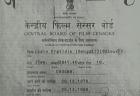
censor certificate
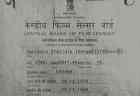
The image shows a certificate issued by the Central Board of Film Censors, dated 26.12.1979, for the film "Ekdin Pratidin" from Bengal. The certificate is marked as unrestricted for public exhibition. The film's details include a registration number, a group code, and a color code. The certificate mentions the registration number 359a, registration number 2641-40, and the group code 000088. The date of registration is 25.12.1989. The geographic location is likely in Bengal, as indicated by the film's origin.
The image shows a person standing in a natural outdoor setting, surrounded by greenery. The person appears to be wearing a light-colored shirt and dark pants. The background suggests a rural or forested area, with trees and vegetation visible. The person is standing still, facing forward.
Based on the short story 'Abirata Chenamukh' ('A Parade of Familar Faces') by Amalendu Chakraborty, 'Ek Din Pratidin' is a crucial film in Mrinal Sen's oeuvre. After the Left Front government assumed power in 1977, there was considerable shift in Sen's cinematic language with the earlier agit-prop aesthetic replaced by a slower, and more introspective look at the everyday life of the urban metropolis, with special emphasis on the Bengali middle-class. Consequently, narrative stages a come-back in this phase of Mrinal Sen's films, though in many cases in purely formal ways - that is, a semblance of a narrative is established in order to turn the authorial gaze inwards, into the inner workings of middle-class lives. In many ways, both thematically and structurally, 'Ek Din Pratidin' is first of a loosely defined trilogy on the Bengali middle-class, to be followed by 'Chaalchitra' and 'Kharij'. Consequently, questions of gender and patriarchal domination are critical in this film, much more so than the previous instances where Sen directly addresses 'feminist' or gender concerns - most notably, the famine episode of 'Calcutta 71', and Simi Garewal's character in 'Padatik'.
Sen has remarked: 'On the surface, a simple story, with plot and incident de-emphasized, Ekdin Pratidin gave me immense scope to probe, to capture every bit of movement of the arrow quivering into the flesh, and to expose the people’s connivance in a male-dominated conformist society. The attempt was to point my accusing finger at the enemy within, at my own community. All quietly, unobtrusively, furtively, as though the characters and the crowd appearing in the film were all at fault.' - (‘Always Being Born: Mrinal Sen, A Memoir’, Stellar Publishers Pvt Ltd., 2004)
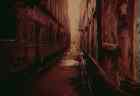
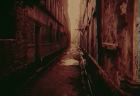
The image shows a narrow alleyway flanked by tall, weathered buildings with visible signs of age and wear. The ground is uneven, with patches of dirt and debris scattered across it. The lighting is dim, casting a warm, sepia-toned hue over the scene. The alley appears to be in an urban area, possibly in a historic or older part of a city.
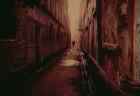
The image shows a narrow alleyway flanked by tall, weathered buildings with visible signs of decay. The ground is uneven, with a puddle of water reflecting light in the center. The alley appears to be in an urban area, possibly in a historic or older part of a city. The buildings have a rough texture, and the overall atmosphere is dim and somewhat eerie.
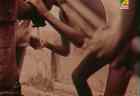
The image shows two individuals engaged in a physical interaction, possibly a confrontation or a struggle. One person is leaning forward with their hands on their head, while the other person is in a defensive posture, with their arms raised. The setting appears to be outdoors, with a wall and a pipe visible in the background. The scene seems to be in a rural or semi-urban area, possibly in a region with warm weather.
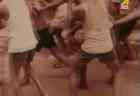
The image shows a group of people engaged in a lively activity, possibly dancing or running. They appear to be in a warm, outdoor environment, wearing casual clothing such as shorts and tank tops. The setting seems to be a rural or semi-urban area, possibly in a region with a tropical or subtropical climate.
The image shows a group of people, mostly young men, wearing light-colored tank tops and shorts, walking together in a coordinated manner. They appear to be moving towards a structure that looks like a temple or a shrine, which is visible in the background. The setting seems to be outdoors, possibly in a warm climate, as the individuals are dressed lightly. The structure in the background has a reddish-brown color and appears to be made of stone or brick. The people are walking on a paved area, and the scene has a sense of movement and purpose.
The image shows a group of people engaged in what appears to be a physical activity or task. They are wearing simple clothing, and the setting seems to be outdoors, possibly in a rural or semi-urban area. The environment looks dusty, and the people are bent over, suggesting they are working or playing.
The image shows a group of people standing in a dimly lit area, possibly outdoors. The ground appears to be dirt or sand, and the lighting suggests it might be evening or nighttime. The people are wearing casual clothing, and their posture indicates they are engaged in a conversation or activity. The text in the image is in English, and it reads "Aaj Kal" in the top right corner.
The image shows a person with dark hair, wearing a patterned shirt, standing indoors. The background appears to be a wall with a slightly worn texture. The person is holding their chin with their hand, appearing to be in thought or contemplation. The lighting is warm, giving the scene a slightly sepia tone. The setting seems to be a modest indoor space, possibly a home or a small room. The visible text in the top right corner is in a non-English script, possibly Hindi, and reads "अधिक जानकार," which translates to "More Knowledge" in English.

The image shows a group of people standing in a dimly lit area, possibly indoors. The lighting is warm, and the individuals appear to be engaged in a conversation or activity. The setting seems to be a casual or informal gathering. The background includes some blurred objects, possibly furniture or decorations. The text in the top right corner reads "Aahir" and "Aahir.com," suggesting a connection to a website or brand.

The image shows a group of people walking on a dirt path. The ground appears uneven, and there is a ball visible in the background. The people are wearing casual clothing, and the scene seems to be outdoors. The environment suggests a rural or semi-urban setting.
The image shows a group of people, mostly children, engaged in a playful activity on a dirt road. They appear to be running or playing together, with some of them in motion and others standing still. The setting seems to be rural, with a dusty road and minimal infrastructure visible. The group is dressed in simple clothing, and the overall scene suggests a casual, joyful moment.
The image shows a group of children playing on a street. The street is lined with buildings, and there is a bicycle visible in the background. The children appear to be engaged in a game or activity, with some running and others standing. The buildings have a worn appearance, and the street looks dusty. The scene seems to be in a residential area, possibly in a warm climate.
The image shows a person standing near a textured wall with a barred window. The person is wearing a light-colored sleeveless shirt and pants. The wall has a rough, stucco-like texture, and the window is covered with a metal grid. The scene appears to be outdoors, possibly in a residential or urban area. The person seems to be casually standing, with one hand near their face.
The image shows a group of people engaged in what appears to be a physical activity or a game. The individuals are wearing casual clothing, and the setting seems informal, possibly outdoors. The scene is dynamic, with arms and hands in motion, suggesting interaction or competition. The background is blurred, but it appears to be a plain wall or structure.
The image shows a narrow alleyway with brick walls on either side. A person in traditional attire is walking down the alley, holding something in their hand. The alley appears to be in an older part of a city, with buildings closely packed together. The scene has a warm, earthy tone, suggesting it might be in a region with a dry climate.
The image shows two individuals standing close to each other, facing a wall. One person has short, neatly styled hair and is wearing a white garment with decorative embroidery on the back. The other person has long, dark hair tied back and is wearing a striped shirt. The setting appears to be indoors, with a wooden door or panel visible on the right side. The lighting is warm, suggesting a cozy or intimate atmosphere. The geographic location seems to be in a region where traditional clothing is common, possibly in South Asia.
The image shows a person sitting at a table in what appears to be a small shop or store. The shelves in the background are stocked with various items, and the lighting is warm and dim. The person is wearing a long-sleeved shirt and appears to be engaged in a conversation or activity. The setting suggests a casual, local environment, possibly in a small town or village.
The image shows two individuals in what appears to be a well-organized store or shop. The shelves are filled with various items, possibly packaged goods or groceries. The person in the foreground is standing near a counter, while the other individual is reaching for something on a higher shelf. The setting suggests a traditional or local market environment. The text visible in the image includes "ZEE5," a logo indicating a streaming platform, and possibly some other text in a regional language.
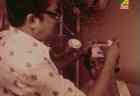
The image shows a person wearing glasses, assisting another individual with a task involving their face. The setting appears to be indoors, with a decorative wall piece visible in the background. The person assisting is wearing a patterned shirt, while the other individual is dressed in a simple garment. The scene suggests a moment of care or assistance, possibly in a domestic or medical setting. The location seems to be in a region where such attire and decor are common.
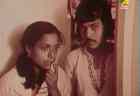
The image shows two individuals standing close to each other, with one person appearing to be a woman with long hair and earrings, and the other a man with a beard and mustache, wearing a traditional outfit. They seem to be in a domestic setting, possibly a room with a door or window frame visible in the background. The lighting suggests an indoor environment. The possible geographic location could be a region where traditional clothing is common, such as South Asia.
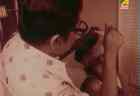
The image shows a person wearing glasses, holding a small object in their hand, and interacting with another person who appears to be smiling. The setting seems to be indoors, with a wall in the background that has some text or writing on it. The person in the foreground is wearing a patterned shirt. The text in the image includes "Aaj Kal" and "ZEE5," which suggests a connection to a media platform.
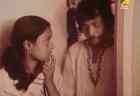
The image shows two individuals standing close to each other, engaged in a conversation. The person on the left appears to be a woman with long hair, wearing a white outfit, while the person on the right is a man with a beard, dressed in a traditional garment with intricate embroidery. The setting seems to be indoors, possibly in a residential or casual environment. The background is plain, with a visible wall and a door frame. The text in the image reads "Aaj Kal" and "Aaj Kal" in English, suggesting it might be related to a television show or a movie.
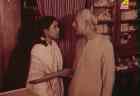
The image shows two individuals standing in what appears to be a traditional setting. The person on the left is wearing a white garment with a shawl draped over their shoulders, while the person on the right is dressed in a light-colored kurta. Behind them, there is a wooden cabinet filled with various items, possibly medicines or household goods. The setting suggests a warm, indoor environment, likely in a rural or traditional area. The text in the image reads "Aaj Kal" and "आज कल" in Hindi, indicating a possible connection to a Hindi-speaking region.
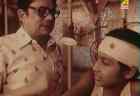
The image shows two individuals in a room with wooden walls and a window. One person is wearing a patterned shirt and glasses, while the other is wearing a headband and a sleeveless shirt. The setting appears to be rustic, possibly in a rural or traditional environment. The text visible in the image is in English, with a logo in the top right corner.
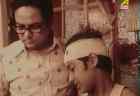
The image shows two individuals standing close to each other. One is wearing a patterned shirt with a floral design, and the other is wearing a white headband and a sleeveless shirt. The background includes a window with a decorative frame and a fan visible on the right side. The setting appears to be indoors, possibly in a residential or casual environment. The possible geographic location is a region where such attire and decor are common, possibly in South Asia.
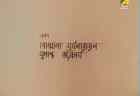
The image shows a plain beige background with a small logo in the top right corner. The logo appears to be a colorful emblem with text in Bengali. In the center of the image, there is a handwritten-style text in Bengali script. The text appears to be a title or heading, written in a traditional style. The text is written in black ink and is centered on the beige background.

The imposing mansion where the family lives is in North Calcutta and is shared by a host of other tenants. We have discussed the recurring motif of the ruins in the context of Mrinal Sen. Such mansions, dating back to the colonial period, are commonplace in the city, remnants of a certain family's prosperous past. In 'Ek Din Pratidin', the house exists as a living ruin, its glorious past now long gone.
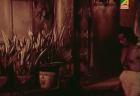
The focus of the plot is the family of seven, one of the many tenants of the house. Their mundane existence is rocked when Chinu (Mamata Shankar), their oldest daughter, the sole working-member of the family, does not return home one night after office. The sense of calm and happiness of a quiet domesticity that is evident in the beginning, slowly transmutes to anxiety, bitterness over the course of the night. The film adopts the format of a narrative, but often breaks it with interruptions, recorded footage and inserts, in a manner that is quite reminiscent of Mrinal Sen's experiments with the documentary and fictional elements in his films.
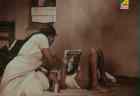
The image shows a woman leaning over a man who is lying on the floor, reading a book. The man is wearing a white shirt and shorts, and the woman is dressed in a light-colored sari. The setting appears to be a modest room with a simple bed or mattress on the floor. The walls are plain, and there is a small shelf or cabinet in the background. The text visible in the image is in a language that appears to be Hindi, and it reads "बाबा दुःख से बचें" (Save yourself from pain). The scene suggests a rural or traditional setting, possibly in India.
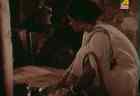
The image shows a woman in traditional attire, engaged in an activity that appears to involve cooking or preparing food. She is seated at a table or counter, with a large pot or vessel in front of her. The setting seems rustic, with a brick wall in the background and a dimly lit environment. The woman's clothing and surroundings suggest a rural or traditional setting, possibly in a village or countryside.
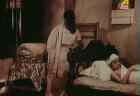
The image shows a room with a woman standing near a bed, where another person is lying down. The room has a rustic appearance, with wooden furniture and a simple bedspread. The walls appear plain, and there is a window with a curtain visible in the background. The scene seems to be set in a rural or modest environment.
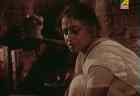
The image shows a woman sitting in a dimly lit room. She appears to be in a traditional setting, possibly a kitchen or a living area. The walls are made of stone or brick, and there is a clay pot on a wooden shelf in the background. The lighting is warm, and the atmosphere seems quiet and reflective. The woman is dressed in traditional attire, and her posture suggests she might be engaged in a moment of contemplation or rest. The setting appears to be rural, likely in a region where such architecture is common.
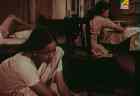
The image shows a room with three women engaged in different activities. One woman is seated on the floor, another is sitting on a chair, and the third is lying on a bed. The room appears to be modest, with wooden furniture and a simple interior. The women are dressed in traditional attire, and the setting suggests a rural or semi-urban environment. The text in the image is in English, and it reads "ZEE5," which is a streaming platform.
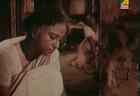
The image shows a woman sitting indoors, wearing a white garment. She appears to be engaged in a task, possibly weaving or handling some material. In the background, another person is seated on the floor, leaning against a wall. The setting seems to be a rustic or traditional environment, possibly in a rural or village area. The walls are made of stone or brick, and the lighting suggests a warm, indoor atmosphere.
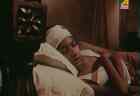
The image shows a person lying on a bed, wearing a white garment, with a pillow under their head. The room appears to have a rustic or traditional design, with wooden furniture visible in the foreground. The lighting is warm, suggesting an indoor setting. The person seems relaxed, possibly resting or sleeping. The background includes a curtain and a wall, indicating a cozy and intimate environment. The setting appears to be in a region with a warm climate, possibly in South Asia or the Middle East.
The image shows a person lying on a bed with a pillow under their head. They are wearing a white sleeveless shirt and appear relaxed, with one arm resting on the pillow. The background includes a dark, textured wall and a blanket draped over the bed. The setting suggests a modest, possibly rural environment. The text in the top right corner reads "Aahil" and "Aahil Sehgal," indicating a connection to a person or brand.
The image shows a woman sitting beside a man who appears to be lying down, possibly in a hospital or a similar setting. The woman is wearing a white sari and has a gentle expression, while the man is wearing a white shirt and a headband. The background includes a few objects like a framed picture and a lamp, suggesting a domestic or medical environment. The setting appears to be in a region where saris are commonly worn, possibly in South Asia.
The image shows a dimly lit, narrow passageway with rough stone walls. The lighting is warm, casting shadows that enhance the texture of the stone. The passageway appears to lead into darkness, suggesting it might be a tunnel or an underground passage. The walls are uneven, and the passage seems to be carved out of rock. The overall atmosphere is mysterious and slightly eerie.
A voice-over by Biplab Chakraborty, about the illustrious history of the house, rendered more ironic by its present decrepit state. Sen recounts: 'In the screenplay, a couple of minutes or three after the story began, a voice-over was planted, the voice of a commentator, and he, a sort of chronicler of history, took just two minutes to tell the story of an age-old mansion, built in 1857, the year of the Indian Mutiny – the mansion that witnessed the rule of the East India Company and the subsequent taking over of the governance by Queen Victoria, the Empress of India, followed by continuous political ups and downs; partition of Bengal, preceded and followed by meetings, processions, riots, bloodshed, famines, exodus; and also the uneventful life in the family of seven and of the fateful night of the long and frightening wait.' - (‘Always Being Born: Mrinal Sen, A Memoir’, Stellar Publishers Pvt Ltd., 2004)
The image shows a rustic room with wooden walls and a window letting in natural light. There are two beds visible, one on the left and one on the right, with bedding that appears to be made of simple materials. The room has a worn, aged appearance, suggesting it might be part of an older structure. The floor is uneven, and there are some items scattered around, possibly personal belongings or household items. The overall setting suggests a rural or less developed area.
The image shows a few pieces of cloth hanging on a line between two stone pillars. The pillars appear to be part of a building with a traditional architectural style. The background is dark, suggesting it might be nighttime. The scene appears to be in a residential area, possibly in a region with a warm climate.
The image shows a narrow alleyway with stone walls and wooden railings. The walls appear aged and weathered, with some visible wear and discoloration. The alleyway is dimly lit, with a warm, earthy tone dominating the scene. The wooden railings suggest a residential or historical area. The text in the image is in English, and it reads "ZEE5," which is a streaming platform logo.
The image shows a traditional wooden structure with intricate carvings on the eaves. Two large white cloths are hanging on the balcony, and the building appears to be elevated, with a clear sky in the background. The architectural style suggests it could be from a rural or historical area in Asia.
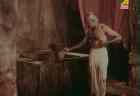
The image shows a man standing near a stone structure, possibly a well or a water tank, with a cloth draped behind him. The setting appears rustic, with a weathered wall and a dimly lit environment. The man is shirtless, wearing a white garment wrapped around his waist, and seems to be engaged in some activity involving the stone structure. The surroundings suggest a rural or traditional setting, possibly in a region where such structures are common.
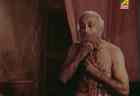
The image shows a person standing indoors, with a muscular build and a bald head. The individual is shirtless, wearing a cloth wrapped around the waist, and appears to be in a contemplative or thoughtful pose, with hands clasped near the chest. The background includes a curtain and a wooden door, suggesting a rustic or traditional setting. The lighting is warm, giving the scene a slightly reddish hue. The person's posture and attire suggest a cultural or historical context.
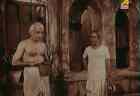
The image shows two men standing in what appears to be an old, rustic building with arched doorways and stone walls. One man is holding a metal container, while the other is standing nearby, wearing a white shirt and holding a small object. The setting suggests a warm climate, possibly in a region with historical architecture.
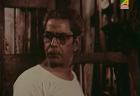
The owner/landlord, Dwarik Mullick, epitomizes the mansion ravaged by time. He is desperately attempting to hold on to his class position which is simultaneously jeopardized by his changed economic and social circumstances, causing a curious set of contradictions within the character. This tension between the past and the present, between pre-colonial glory and the ravaged present day circumstances, is also one of the most defining characteristics of the middle-class.
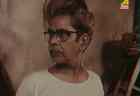
The image shows a person wearing a white shirt, standing indoors. The background includes a wall with a circular object mounted on it, and a ladder is visible to the right. The lighting is warm, and the setting appears to be rustic or traditional. The person's hair is dark and slightly curly, and they are wearing glasses. The environment suggests a rural or semi-urban area, possibly in South Asia.
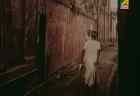
The image shows a narrow alleyway with a textured wall on the left side. A person dressed in a white garment is walking along the alley, holding an object in their hand. The surroundings appear to be urban, with some debris on the ground. The wall has a rough, carved appearance, suggesting it might be part of an older or historic structure. The lighting is dim, giving the scene a somewhat somber atmosphere. The person seems to be moving away from the camera.

The image shows a person standing in front of a rustic stone wall, wearing a light-colored shirt. The background suggests an outdoor setting, possibly in a rural or historical area. The person appears to be casually dressed, and the lighting suggests it might be daytime.
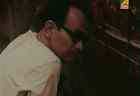
The image shows a person leaning against a wall, wearing a white garment. The wall appears to be made of stone or brick, with a rough texture. The lighting is dim, creating a shadowy atmosphere. The person seems to be in a contemplative or resting position. The scene could be located in a rural or historical area, possibly in a region with a warm climate.

The image shows a person with a mustache and glasses, standing in front of a textured wall. The lighting is warm, and the setting appears to be indoors. The person is wearing a shirt, and the background suggests a rustic or traditional environment. The text in the top right corner reads "आईआर एस" in Hindi, which translates to "Asha" in English.
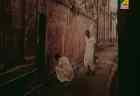
The image shows a narrow alleyway with rough, textured walls. There are two individuals in the scene, one standing and the other crouching near the wall. The alley appears to be in an urban setting, with a worn and aged appearance. The lighting suggests it might be daytime. The text in the image is in English, and there is a logo in the top right corner.
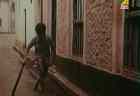
The image shows a person walking along a narrow street, carrying a long tool, possibly a broom or a stick. The street is flanked by buildings with textured walls and barred windows. The scene appears to be in a residential or urban area, with a mix of concrete and stone structures. The environment suggests a warm climate, possibly in a region with a colonial architectural influence.
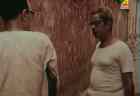
The image shows two individuals standing in a narrow alleyway. The walls are textured and appear to be made of stone or brick, with a reddish-brown hue. The person on the right is wearing a white shirt and glasses, while the person on the left is wearing a light-colored shirt and appears to be facing away. The setting suggests a warm climate, possibly in a rural or urban area with older architecture. The text in the top right corner reads "Aahil" and "Aahil Raza" in English, with a logo above it.
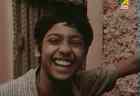
The image shows a person standing outdoors, with a textured wall behind them. The person is wearing a checkered shirt and appears to be smiling or laughing. The background suggests a rustic or urban setting, possibly in a region with warm weather. The text in the top right corner reads "आईआर ट्रेवर्स," which translates to "Airtel Traders" in English.
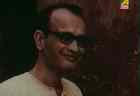
The image shows a person wearing a light-colored traditional outfit, standing in front of a textured wall. The person appears to be smiling, and the setting seems to be indoors. The background has a rustic, earthy tone, suggesting a rural or traditional environment. The person's attire and the wall's texture hint at a possible location in South Asia.
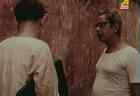
The image shows two individuals standing in front of a textured wall. One person is wearing a light-colored shirt, while the other is dressed in a darker shirt. The setting appears to be outdoors, with the wall suggesting a rustic or urban environment. The text in the image includes a logo in the top right corner, which reads "ABDUL KADER."
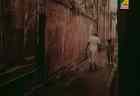
The image shows a narrow alleyway with a man and a child walking along it. The walls are worn and textured, with visible signs of age and weathering. The man is dressed in traditional attire, and the child appears to be walking alongside him. The alley seems to be in an older part of a city, possibly in a region with a warm climate. The surroundings suggest a densely populated area with closely packed buildings.
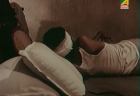
'Bolo Hari, Hari Bol' is a chant used by pall-bearers during funeral processions. 'Hari' is a moniker for Vishnu and the chant invokes Vishnu for the safe passage of the recently departed soul. The chant has both sacred and ominous associations in the everyday.
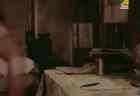
The image shows a dimly lit room with a table covered in papers and a few objects, including a small metallic container. There is a person partially visible on the left side, and the background includes a window with curtains and a door. The room appears to be in a rustic or older style, possibly in a rural or historical setting. The text in the image is in English, and it reads "AURIS ENTERPRISES."
The image shows a person wearing a light-colored shirt, with a reddish-brown garment draped over their shoulder. The background is dark, and there is a chair visible behind the person. The setting appears to be indoors, possibly in a dimly lit room. The person is facing to the right, and their posture suggests they are standing still. The image has a warm tone, and the lighting creates a soft shadow effect. The person's hair is light-colored, and they appear to be of an older age group. The chair in the background has a wooden texture and a simple design.
The image shows a group of people walking in what appears to be a dimly lit area. There is a man in the foreground wearing a light-colored shirt and a shawl draped over his shoulders. Behind him, a woman with long hair is walking, and another person is seated on a bench to the left. The setting seems to be outdoors, possibly in a rural or semi-urban area, with plants visible in the background. The overall atmosphere suggests a calm and quiet environment.
Gita Sen had not been the original choice for the role of the mother. Mrinal Sen had initially approached Tripti Mitra (renowned theatre actress and wife of playwright/director Shombhu Mitra) for the role but she had been unsure about her role and its importance in the film. Eventually, Sen himself suggested that it would perhaps be better if she did not do the role and instead offered the film to his wife Gita. Gita Sen received immense praise for her performance in the film and for her scenes with Shreela Majumdar.
The image shows a woman dressed in traditional attire, carrying a tray with items on it. She appears to be in a dimly lit room with bookshelves in the background. The setting suggests a cultural or historical context, possibly in a region with a warm climate. The woman is standing near a wall, and there is a logo in the top right corner of the image.
The image shows a person standing in a dimly lit room, partially obscured by a curtain. The person appears to be wearing traditional attire, possibly a sari, and is holding a small object in their hand. The background is dark, with some faint patterns visible on the curtain. The scene seems to be indoors, possibly in a residential or cultural setting. The person is positioned near a window or a doorway, as suggested by the light and shadows.
The image shows a dimly lit room with two individuals. One person is seated, facing away, while the other stands in the background. The room appears to have a rustic or traditional setting, with visible wooden furniture and a simple wall structure. The lighting suggests an indoor environment, possibly in a rural or older part of a town. The text in the image is in English, and it reads: "ZEE5."
The image shows a dimly lit room with a person sitting on a couch, holding a small object in their hands. The room appears to be cozy, with a warm atmosphere. The person is wearing a light-colored shirt and has a relaxed posture. The background is dark, and there is a visible logo in the top right corner.
The image shows a woman standing in the foreground, wearing a white garment with black stripes. Behind her, there is a man seated on the floor, dressed in light-colored clothing. The setting appears to be indoors, with a dimly lit room and a wooden door visible in the background. The walls are plain and slightly textured, suggesting a rustic or traditional environment. The scene seems to be set in a rural or village area, possibly in South Asia, based on the attire and architectural style.
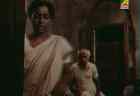
The image shows a woman in traditional attire, wearing a white sari, standing in a dimly lit room. Behind her, an older man is seated, dressed in light-colored clothing. The room appears to have a rustic, earthy aesthetic, with visible wooden doors and walls. The scene suggests a rural or traditional setting, possibly in a South Asian country.
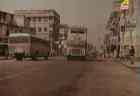
The image shows a busy street with several vehicles, including a double-decker bus and a bus in the foreground. The street is lined with buildings, some of which appear to be shops or businesses. There are people walking on the sidewalks, and the overall scene suggests a bustling urban environment. The architecture and vehicles hint at a location in South Asia, possibly India.
The image shows a group of people sitting closely together in what appears to be a crowded indoor setting. Most of them are wearing light-colored clothing, and their faces are turned towards something out of the frame. The setting seems to be informal, possibly a gathering or event. The background includes a window or a glass partition, and there is a logo in the top right corner with text in a script that appears to be Hindi.
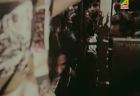
Chinu (Mamata Shankar), despite being the most discussed character in the narrative, is hardly ever seen in the film, except for this sequence and in the end when she returns. The narrative deliberately separates her from the rest of the action, making the final dramatic confrontation even more significant - even someone who is seemingly separate from the discursive limits of this social formation is not safe from its restrictive and unforgiving moral codes. The separateness which frames her character is foregrounded also by the narratorial voice which describes her everyday travails.
The image shows a group of people gathered in what appears to be a busy outdoor setting. Some individuals are holding objects, possibly tools or instruments, and there is a sense of activity and interaction among them. The background includes a structure that looks like a building or a shop, and the scene suggests a lively environment. The text in the image reads "Aaj Kal" and "Dharti Dharti Premer Kahani," which indicates that this might be a scene from a movie or a television show. The geographic location is likely in an urban area, possibly in South Asia, based on the visual cues and the text.
The image shows a person lying down, seemingly resting or sleeping, with their head tilted slightly to the side. The person appears to be wearing a light-colored garment, and the background suggests a warm, indoor setting. The lighting is soft, and the overall tone of the image is calm and serene. The person's face is partially visible, and they seem to be in a relaxed state. The setting appears to be a bedroom or a similar cozy space.
The image shows a crowded train compartment with people packed closely together. The scene appears to be from a historical period, as the clothing and setting suggest. The train is moving, and the passengers are leaning against the windows, looking outside. The environment is cramped, and the atmosphere seems tense. The text in the image is in English, and it reads: "Aaj Kal" and "Zee TV."
The image shows a group of people standing closely together in what appears to be a crowded indoor setting. The individuals are dressed in traditional attire, with some wearing sarees and others in light-colored clothing. The background includes a wall with posters or signs, and the lighting suggests an indoor environment. The setting appears to be a public place, possibly a train or bus station, given the close proximity of the people and the visible seating. The text in the image is in Bengali, and it reads: "আমার বাংলা সংগ্রহ করে" which translates to "My Bengali Collection."
The image shows a group of people standing together, with one person wearing a white garment and another in a yellow garment. The background appears to be a wall with a window, and there is a logo in the top right corner. The scene seems to be in a residential or public area, possibly in a region where traditional attire is common.
The image shows a group of people sitting together in a dimly lit setting. They appear to be wearing traditional clothing, with some wrapped in cloth and others draped in garments. The setting suggests a communal or social gathering, possibly in a rural or village environment. The people seem engaged in a shared activity or conversation.
The image shows two individuals sitting indoors, with one person wearing glasses and a traditional outfit. The background appears to be a window with a view of a rainy or misty outdoor scene. The setting suggests a modest, possibly rural or semi-urban environment.
The image shows two individuals standing close to each other. One appears to be wearing a traditional garment, while the other is partially visible in the background. The setting seems to be outdoors, with a stone structure or wall visible behind them. The overall scene suggests a rural or historical context.
The image shows a person riding a bicycle on a road. The surroundings appear to be urban, with a wall in the background. The person is wearing a white outfit, and the scene seems to be slightly blurred, suggesting motion. The geographic location appears to be in a region with a warm climate, possibly in South Asia.
The image shows a vehicle moving along a road. The vehicle appears to be an older model, possibly a jeep or similar, and is in motion. The background includes a wall and some vegetation, suggesting a rural or suburban setting. The image is slightly blurred, indicating motion. There is a logo in the top right corner with text in a non-English language.
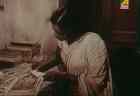
The image shows a person standing in a room, wearing a traditional garment. They are engaged in writing or drawing on a piece of paper or book. There are several stacked books or papers on a table nearby. The setting appears to be indoors, with a wooden door visible in the background. The person seems focused on their task, and the room has a rustic or simple appearance. The possible geographic location could be a rural or traditional setting, possibly in South Asia, based on the attire and surroundings.
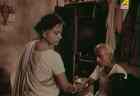
The image shows a woman and an elderly man in a modest room. The woman is dressed in traditional attire, with a sari draped over her shoulder, and she is holding a bowl. The man is seated, wearing a simple shirt, and appears to be engaged in a conversation or interaction with the woman. The room has a rustic appearance, with visible wooden furniture and a few hanging garments. The setting suggests a rural or traditional environment, possibly in South Asia.
The image shows a small room with a few people inside. There is a globe on a table, a poster on the wall, and some books scattered around. The room appears to be modest, with a bed visible in the background. The people seem to be engaged in a conversation or activity involving the globe. The poster on the wall has some text in a language that appears to be Hindi.
The image shows a group of people gathered in what appears to be a modest indoor setting. A woman in traditional attire is seated, holding a child on her lap, while an older man is seated nearby, engaging with the child. The room has a rustic appearance, with visible walls and minimal furnishings. The scene suggests a family or community gathering, possibly in a rural or semi-urban area.
The image shows a group of people gathered indoors. A woman is seated on the left, wearing a white top and a draped garment, while a man sits on the right, dressed in a white shirt. In the center, a child is being attended to by the woman, who appears to be comforting or assisting them. The room has a rustic appearance, with visible wooden furniture and a dimly lit setting. The overall atmosphere suggests a family or community gathering. The possible geographic location appears to be rural, possibly in a region where traditional attire is common.
The image shows a person standing in a rustic kitchen. The walls are made of a rough, earthen material, and there is a shelf with various containers and utensils. The person is wearing a traditional garment, and the setting appears to be in a rural or traditional environment. The lighting is dim, and the overall atmosphere suggests a modest, everyday setting.
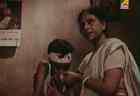
The image shows a woman in traditional attire, standing beside a young boy who appears to be injured or in need of assistance. The woman is holding the boy's head gently, and there is a bandage wrapped around his head. The setting appears to be indoors, with a wall in the background and a small shelf visible. The overall tone suggests a moment of care or concern. The woman's attire and the boy's appearance suggest a rural or traditional environment, possibly in South Asia.
The image shows a woman in a traditional sari, standing in what appears to be a kitchen. She is holding a utensil and seems to be engaged in cooking or preparing food. The kitchen has shelves with various items, including jars, pots, and other kitchenware. The setting suggests a rural or traditional environment, possibly in South Asia. The text in the image is in English, and it reads "A.B.C.S.A.D."
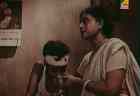
The image shows two individuals in what appears to be a modest indoor setting. One person is wearing a traditional sari, while the other is seated, leaning forward, and appears to be engaged in a conversation or activity. The walls are plain, and there is a small shelf with items on it. The setting suggests a rural or semi-urban environment, possibly in South Asia.
The image shows a person standing in a dimly lit room, possibly engaged in an activity involving a door or window. The individual appears to be wearing a dark shirt and is leaning forward, possibly looking outside or into the room. The setting seems to be indoors, with visible wooden furniture and a decorative element on the wall. The lighting is low, creating a shadowy atmosphere. The person's posture suggests they are focused on something outside or inside the room. The image also contains a logo in the top right corner, which appears to be a TV channel logo.
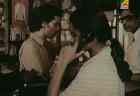
The image shows a small shop with shelves filled with various items, possibly medicines or groceries. A person is seated in a chair, and another person is standing nearby, seemingly engaged in a conversation. The setting appears to be indoors, with a warm and somewhat rustic atmosphere. The background includes a poster with an image of a person, and there is a logo in the top right corner that reads "ZEE TV."
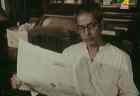
The image shows a person sitting indoors, holding a newspaper. The individual is wearing a light-colored shirt and glasses, and appears to be focused on reading the newspaper. The setting seems to be a study or office, with bookshelves and other items visible in the background. The lighting is warm, and the overall atmosphere suggests a quiet, studious environment. The geographic location appears to be in a region where English is commonly used, possibly in a country with a colonial history or a place where English is widely taught or used.
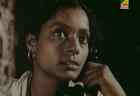
The image shows a person with dark hair, wearing a white garment, and holding a black object close to their face. The background appears to be a textured wall, possibly made of stone or brick. The person is wearing a hoop earring and has a thoughtful expression. The setting seems to be indoors, with dim lighting. The image has a logo in the top right corner, which appears to be a logo of a television network.
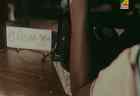
The image shows a person sitting at a desk with a black telephone receiver in hand. A handwritten sign in Bengali is visible on the desk, with the text "পার্কের সংখ্যা ৩০০০" written on it, which translates to "Price: ৩০০০". The setting appears to be indoors, possibly in a small office or shop. The person seems to be engaged in a conversation or listening on the phone. The environment suggests a modest, possibly rural or semi-urban location in India.
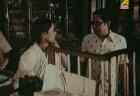
The image shows two individuals engaged in a conversation in what appears to be a small, cozy room. The person on the left is seated at a desk, while the person on the right is standing. The room has shelves filled with books or other items in the background, and there is a wooden railing separating the two individuals. The setting suggests a quiet, intellectual environment, possibly a library or study. The text visible in the image is in English, and it reads "ZEE5," indicating a connection to a streaming platform.
The image shows a person standing indoors, near a wooden door or window frame. The individual appears to be interacting with the structure, possibly opening or closing it. The setting seems to be a traditional or rustic interior, with visible wooden elements and a fan in the background. The lighting is dim, suggesting an indoor environment. The person is wearing a dark-colored shirt. The text in the image includes a logo in the top right corner, which reads "Aahil" and "Aahil Entertainment."
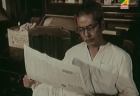
The news that Chinu has not yet returned home begins to spread, that too under the censorious and disapproving gaze of the landlord. In this case, one is not entirely sure if the excuse about 'overtime' that Minu provides is true or if its a quintessential middle-class attempt to maintain appearances in a moment of crisis.
The image shows a person sitting at a desk, holding a large piece of paper. The person is wearing a light-colored shirt and glasses. The background includes a wooden desk with papers and a box on it. The setting appears to be indoors, possibly in an office or study. The text on the paper is in a script that appears to be Hindi.
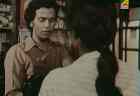
The image shows two individuals engaged in a conversation in what appears to be a small shop or store. The person on the left is wearing a light-colored shirt and has a somewhat serious expression. The person on the right, whose back is turned to the camera, has dark hair tied back in a ponytail and is wearing a striped shirt. The background includes shelves stocked with various items, possibly bottles or containers, and a signboard with text in a non-English script. The setting suggests a modest, local store, possibly in a region where the script on the signboard is spoken.
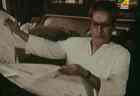
The image shows a person sitting indoors, wearing a white shirt, and holding a newspaper. The individual appears to be engaged in reading or discussing the content of the newspaper. The setting seems to be a room with wooden furniture and a desk in the background. The person is seated comfortably, with one arm resting on the newspaper and the other holding it open. The room has a warm, vintage feel, possibly indicative of a mid-20th-century setting. The text visible in the image includes a logo in the top right corner, which reads "ZEE BANK" in English.
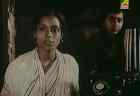
The image shows two individuals in a dimly lit room. One person is standing in the foreground, wearing a white garment with black stripes, while the other person is in the background, holding a vintage rotary telephone. The setting appears to be indoors, with a rustic or traditional aesthetic. The lighting is subdued, creating a somber atmosphere. The possible geographic location is rural or semi-urban, likely in a region where such traditional attire and decor are common.
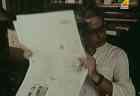
The image shows a person holding a large newspaper, reading it with focus. The individual appears to be indoors, possibly in a study or office, as there are shelves and books visible in the background. The setting suggests a quiet and studious environment. The text on the newspaper is in English, and the logo in the top right corner reads "ZEE5," indicating the possible platform or source of the content.
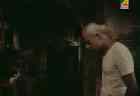
The image shows a person standing in a dimly lit room. The individual is wearing a light-colored shirt and appears to be looking down or to the side. The room has a rustic appearance, with visible wooden structures and a dark, earthy tone. The lighting is low, creating a shadowy atmosphere. The person seems to be in a space that could be a workshop or a storage area. The surroundings suggest a rural or semi-urban setting, possibly in a region where such architecture is common.
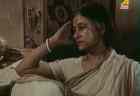
The image shows a person sitting in a room with a traditional setting. The individual is wearing a light-colored sari and has a bracelet on their wrist. The background features a wall with a floral design and some objects that appear to be household items. The person is resting their head on their hand, appearing contemplative. The setting suggests a rural or traditional environment, possibly in a region where saris are commonly worn.

The image shows a man and a child in a modest room. The man is seated on a chair, wearing a white shirt and pants, while the child is lying on a bed, dressed in light clothing. The room has a simple, rustic appearance, with visible wooden furniture and a plain wall. The lighting is soft, and the overall atmosphere appears calm and intimate. The possible geographic location seems to be a rural or semi-urban area, possibly in a region where traditional attire is common.
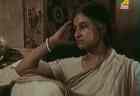
The image shows a person sitting in a room with a traditional setting. The individual is wearing a light-colored sari and has a white bangle on their wrist. The background includes a wall with a poster and a decorative circular pattern. The person appears to be in a relaxed posture, with one hand resting on their head. The room has a rustic and homely feel, suggesting a rural or traditional environment. The text in the image is in English, with a logo visible in the top right corner.
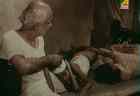
The image shows an elderly man in a white shirt sitting on a bed, holding a small child. The child appears to be lying down, possibly resting or sleeping. The room has a rustic appearance, with a simple bed and minimal furnishings. The man seems to be gently holding the child, possibly comforting or caring for them. The setting suggests a rural or modest environment, possibly in a region where traditional clothing is common. The text in the image is in English, and it reads, "ZEE5 presents."
The image shows a person sitting in a dimly lit room, dressed in traditional attire. The room has a rustic appearance, with a table covered in a patterned cloth nearby. The walls appear plain, and there are some hanging items visible in the background. The person is seated with one leg crossed over the other, and their posture suggests a relaxed or contemplative state. The setting appears to be a modest living space, possibly in a rural or semi-urban area.
The image shows a woman seated on a bed, wearing a sari, with another person lying down nearby. The room has a traditional setting, with a table covered in a cloth, a globe, and some books or papers. The walls have posters or pictures, and there is a visible logo in the top right corner. The setting appears to be in a rural or semi-urban area, possibly in South Asia.
The crisis situation also unearths already existing bitterness and hostility within the family; such episodes are integral to Sen's oeuvre, revealing the tenuous nature of families and familial ties in times of economic, social and personal stress. Other remarkable examples of such scenes are the 1943 Famine episode of 'Calcutta 71' (which had also dealt with gender and sexual mores) and the husband-wife scenes in 'Neel Akasher Niche' and 'Baishey Shravan'.
The image shows a woman sitting indoors, dressed in traditional attire, with a shawl draped over her shoulder. She appears to be engaged in a conversation or activity, with her body slightly turned to the side. The background is dimly lit, suggesting a cozy or intimate setting. The woman's posture and attire suggest a cultural or regional context, possibly from a rural or traditional community. The setting appears to be a home or a similar domestic environment.
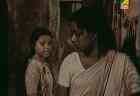
The image shows two individuals standing in what appears to be a dimly lit, rustic setting. One person is wearing a white garment, while the other is dressed in a patterned outfit. The background suggests an indoor environment with visible walls and a doorway. The lighting is subdued, creating a warm and intimate atmosphere. The setting seems to be in a rural or traditional area, possibly in South Asia, based on the attire and architectural style.
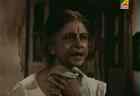
The image shows a person standing indoors, wearing a traditional outfit. The background appears to be a rustic or rural setting, with visible wooden structures and a dimly lit environment. The person is holding a cloth near their neck, and their expression suggests concern or distress. The setting seems to be in a region with a warm climate, possibly in South Asia.
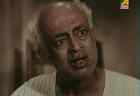
The image shows a person with light-colored hair, wearing a light-colored shirt. The background appears to be indoors, with muted tones and a slightly blurred setting. The person seems to be engaged in a conversation or reacting to something. The setting suggests a warm and possibly rural or traditional environment.
The image shows an elderly person in traditional attire, sitting in a dimly lit, rustic setting. The person is gesturing with their hand, possibly engaged in conversation or pointing towards something. The surroundings include brick walls and potted plants, suggesting an indoor or courtyard area. The lighting is subdued, creating a warm and intimate atmosphere. The text in the image is in a non-English script, and it appears to be in Hindi.
The image shows a person standing indoors, facing away from the camera. The room appears dimly lit, with a rustic and simple interior. The walls are plain, and there is a wooden ladder visible on the left side. The person is wearing a light-colored garment, and the setting suggests a modest living environment. The possible geographic location could be rural or semi-urban, with a focus on traditional or simple living.
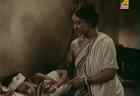
The image shows a woman in traditional attire standing beside a bed where a person is lying down. The room appears to be simple, with earthy tones and minimal furnishings. The woman is wearing a sari and has a bracelet on her wrist. The person on the bed is wearing a headband and appears to be resting. The setting suggests a rural or traditional environment, possibly in South Asia.
Tapu, the unemployed son, the oldest of all the siblings. 'Nora' is a round stone mace, used to grind spices by rolling it over a flat piece of stone called a 'sheel'. An essential component of the kitchen, it is also used in religious functions like weddings and hence using it to fix shoes would be considered an indiscretion.
The image shows a person standing in a rustic, arched hallway with exposed brick walls. The hallway appears to be part of an older building, possibly in a historical or traditional setting. The person is dressed in a patterned outfit, and there is a curtain visible in the background. The environment suggests a warm climate, possibly in a region with colonial architecture.
The image shows a person dressed in a white garment, bending over and appearing to be engaged in some activity. The setting seems to be outdoors, with a rustic background that includes a wooden structure and a stone surface. The person's posture suggests they are focused on something in front of them. The text in the image is in English, and it reads "Aaj Kal" along with a logo.
The image shows two individuals engaged in a conversation. One is a man wearing a checkered shirt, leaning forward, while the other is a woman dressed in traditional attire, including a sari, sitting on steps. The background features a rustic wall with visible wear and tear, and there is a piece of cloth hanging nearby. The setting appears to be in a rural or semi-urban area, possibly in South Asia.
The image shows a person sitting on the ground, wearing a striped shirt and sandals. They appear to be engaged in a task involving their hands, possibly working with materials or tools. The setting seems to be indoors, with a rough, earthen floor. The person's posture suggests they are focused on their task. The image has a sepia tone, giving it a vintage appearance. There is a logo in the top right corner with text in a non-English script.
The image shows a man and a woman in a rustic setting. The man is standing and leaning slightly forward, while the woman is seated on the ground, wearing traditional attire. The background appears to be a simple, rural environment with visible walls and a few household items. The woman is gesturing with her hand, possibly in conversation. The setting suggests a rural or village area, possibly in South Asia.

The image shows a dark, nighttime scene with faint light trails, possibly from vehicles or lights in the distance. The environment appears to be an open area, possibly a road or a field. The image has a logo in the top right corner with text in another language.
The image shows a dimly lit indoor setting with a person seated on a bench or chair. The person appears to be wearing a striped shirt and is facing slightly to the left. The background is dark, and there are other individuals visible, though they are not in focus. The setting seems to be a public transportation area, possibly a bus or train station. The overall atmosphere is subdued, with limited lighting.
The image shows a person sitting in a dimly lit room, possibly inside a vehicle or a small enclosed space. The person is wearing a simple shirt and appears to be looking out of a window or a glass panel. The surroundings are dark, with some visible objects like shelves or containers in the background. The setting seems to be in a rural or less urbanized area, possibly in a region where such enclosed spaces are common.
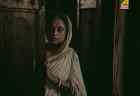
The image shows a person standing in a dimly lit room, partially hidden behind a wooden door. The person is wearing a light-colored garment and a headscarf, and appears to be peering cautiously through the door. The room has a rustic appearance, with visible wear on the wooden door and walls. The lighting is subdued, creating a somber and tense atmosphere. The person seems to be in a state of alertness or concern. The setting appears to be in a rural or traditional area, possibly in a region where such attire is common.
The image shows a person standing in a dimly lit room, facing away from the camera. The person appears to be wearing a light-colored shirt. The room has wooden walls and a rustic appearance. The lighting is low, creating a shadowy ambiance. The person seems to be engaged in a task or activity, but the exact nature of the activity is unclear. The setting suggests a rural or traditional environment, possibly in a village or countryside.
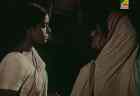
The image shows two individuals engaged in a conversation. One is wearing a white garment, while the other is draped in a light-colored shawl. The setting appears to be indoors, with dim lighting. The background is dark, and the individuals are positioned close to each other, suggesting a personal or intimate interaction. The text in the top right corner reads "ZEE BANK," which may indicate a connection to a specific region or organization.
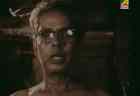
The image shows a person with a disheveled appearance, wearing glasses, and appearing to be in a dimly lit environment. The background includes wooden structures and a rustic setting. The person seems to be in a rural or traditional setting, possibly in a village or a similar location.
The image shows two individuals in a dimly lit setting. One person is facing the camera, while the other is partially visible on the left side. The person facing the camera appears to be wearing a light-colored shirt, and the lighting suggests an indoor environment. The background is dark, with some indistinct shapes that could be furniture or other objects. The overall setting appears to be simple and modest.
The inward investigation of middle-class lives that Sen claimed was at the centre of the film is most explicitly underlined in these three sequences. The other tenants have varying reactions to Chinu's disappearances, ranging from shocked concerns regarding her safety to derisive assumptions regarding her character and morals. Two things are crucial here. The old couple are another facet of the family of seven at the centre of the controversy; they are similarly trying to protect their grand-daughter and keeping up appearances regarding her possible indiscretions (the incident is only hinted at and not explicitly stated). Besides, there is a class aspect even within the gamut of people living there: Shyamal (Arun Mukherjee) is removed ideologically, and perhaps culturally too, from the rest, making his self-evaluation and critical intervention possible. He is the only one in the extended household who is not quick to jump onto the moral bandwagon, despite being part of the same social formation (in fact, he does mention being a 'bhadralok' too, like the rest). Over and above all, the most defining image of the sequence is the looming dilapidated house itself, the cramped desolate surroundings the perfect space for the engendering of a patriarchal and egotistical moral code.
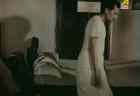
The image shows a person dressed in a white outfit walking in a dimly lit room. The room has a bed with a blanket and pillows, and there is a wooden door in the background. The person appears to be moving towards the door. The setting seems to be a modest, possibly residential space.
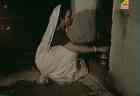
The image shows a woman dressed in traditional attire, sitting on the floor in a dimly lit room. She is holding a small metallic container, possibly a cup or a bowl, and appears to be engaged in a task, such as pouring or preparing something. The room has a rustic appearance, with visible wear and tear on the walls and floor. The woman is positioned near a wooden door, which is slightly ajar. The overall setting suggests a rural or modest living environment.
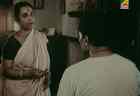
The image shows a woman dressed in traditional attire, standing indoors with a man facing her. The woman is holding a small object in her hand, and the man is wearing a light-colored shirt. The setting appears to be a modest room with wooden furniture and framed pictures on the walls. The scene seems to be from a rural or semi-urban area, possibly in South Asia.
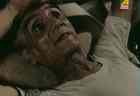
The image shows a person lying down, appearing to be in a state of distress or exhaustion. The person is wearing a light-colored shirt, and their arm is raised slightly. The setting appears to be indoors, possibly in a hospital or a similar facility. The person's face is wrinkled, and there are visible signs of sweat or moisture on their skin. The environment seems dimly lit, and the overall mood is somber.
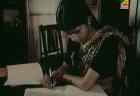
The image shows a person seated at a table, writing in a notebook with a pen. The individual is wearing a traditional sari, and the setting appears to be indoors, possibly in a modest room with wooden furniture. The lighting is dim, and the background includes a chair and a wall. The person seems focused on their task. The text in the image is in a script that appears to be Bengali, and there is a logo in the top right corner.
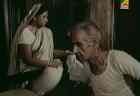
The image shows two individuals in a dimly lit room. One is an older man wearing a white shirt, sitting on the floor, and holding a cloth to his face. The other is a woman dressed in traditional attire, including a sari, standing nearby. The setting appears to be a modest, rural environment, possibly in a South Asian country, given the traditional clothing and the wooden interior.
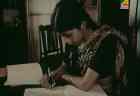
The image shows a woman seated at a table, writing in a book with a pen. She is wearing a traditional sari, and the setting appears to be indoors, possibly in a modest home. The room has wooden furniture and a simple decor. The woman seems focused on her task, and the atmosphere suggests a quiet, everyday moment. The text in the image includes a logo in the top right corner, which reads "ZEE BANK" in English.
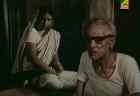
The image shows two individuals sitting in a dimly lit room. One person is wearing a white sari, while the other is dressed in a simple white shirt. The setting appears to be rustic, with wooden walls and minimal furnishings. The lighting is soft, creating a somber and intimate atmosphere. The person in the sari is seated on the floor, while the other individual is sitting on a chair. The overall scene suggests a rural or traditional environment, possibly in a region where such attire is common.
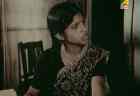
The image shows a person sitting indoors, wearing a traditional sari with intricate patterns. The background includes a wooden chair and a curtain, suggesting a domestic setting. The person appears to be engaged in a conversation or activity, with their hand raised slightly. The setting seems to be in a rural or semi-urban area, possibly in South Asia.
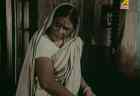
The image shows a woman wearing a traditional sari, standing indoors. She appears to be engaged in a task, possibly cooking or preparing food. The setting seems to be a modest, rustic interior, with wooden walls and a door visible in the background. The lighting is dim, suggesting an indoor environment. The woman's attire and surroundings suggest a rural or traditional setting, possibly in South Asia.
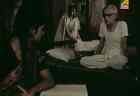
The image shows a dimly lit room with three individuals. One person is seated on a bed, wearing a white outfit, while another person is standing nearby, dressed in traditional attire. A third person is sitting on the floor, writing on a piece of paper. The room appears to be modest, with wooden walls and minimal furnishings. The setting suggests a rural or traditional environment, possibly in a South Asian country.
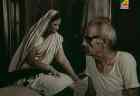
The image shows a woman dressed in traditional attire, sitting beside an elderly man who is seated on a bed. The room appears to be dimly lit, with wooden walls and minimal furnishings. The woman is leaning slightly forward, appearing to engage in conversation or caregiving. The man seems to be resting or in a state of repose. The setting suggests a rural or modest environment, possibly in a South Asian country.
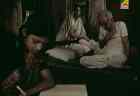
The image shows a dimly lit room with three individuals. One person is seated on a bed, appearing to be in a state of distress or contemplation, while another person is sitting nearby, possibly offering comfort. A third individual is standing and writing on a piece of paper. The room has wooden walls and appears to be rustic, suggesting a rural or traditional setting. The overall atmosphere is somber and reflective.
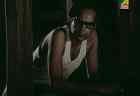
The image shows a person wearing a white sleeveless shirt, leaning forward with their arms resting on a surface. The setting appears to be dimly lit, with a dark background and wooden structures visible. The person seems to be in a relaxed or contemplative posture. The possible geographic location is rural or semi-urban, with wooden structures suggesting a traditional or rustic environment.
The image shows a person wearing a white sleeveless shirt, standing in a dimly lit room. The person is facing away from the camera, and the room appears to have wooden walls and a door in the background. The lighting is low, creating a shadowy atmosphere. The person seems to be in a residential or indoor setting. The logo in the top right corner suggests a connection to a television network.
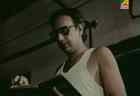
The image shows a person wearing a sleeveless white shirt, sitting indoors. They are holding a rectangular object, possibly a book or a tablet, and appear to be reading or interacting with it. The setting seems to be a dimly lit room with a rustic or industrial feel, as suggested by the visible beams and walls. The person's posture and focus on the object suggest they are engaged in a quiet activity. The logo in the top right corner indicates that this scene might be from a television show or a production.
The image shows a person with long hair, wearing a patterned garment, standing in a dimly lit environment. The person appears to be holding their head with one hand, and their expression seems contemplative or somber. The background is dark, with some vertical lines that might be part of a structure or curtain. The setting appears to be indoors, possibly in a rural or traditional area.
The image shows a person wearing a white sleeveless shirt, sitting indoors. The background appears to be a plain wall, possibly in a modest or rustic setting. The lighting is dim, suggesting an indoor environment. The person's posture and attire suggest a casual or relaxed atmosphere. The text in the image is in English, with a logo visible in the top right corner.
The image shows a person wearing traditional attire, with a patterned garment and jewelry. The person is holding their head with one hand, and the background appears to be dark, with a hint of vertical lines. The setting seems to be indoors, possibly in a rural or traditional environment. The text in the top right corner reads "अंग्रेजी बॉलीवुट" in Hindi, which translates to "English Football."
The image shows a woman in traditional attire, kneeling beside a person lying on a bed. The room appears dimly lit, with visible furniture and a patterned bedspread. The woman is wearing a checkered sari, and her posture suggests she is attending to the person on the bed. The setting seems to be a modest, possibly rural, indoor environment.
The image shows a person wearing a white sleeveless shirt, sitting in a dimly lit room. The person appears to be leaning slightly forward, with a neutral or contemplative expression. The background is plain, with a wall that looks worn or aged. The lighting is soft, creating a subdued atmosphere. The person's posture suggests they might be engaged in a quiet moment of thought or conversation. The setting appears to be indoors, possibly in a modest or residential environment.
The image shows a person lying on a bed or couch, dressed in a patterned garment. The room appears dimly lit, with a mix of furniture and decor visible in the background. The setting suggests a traditional or rural environment, possibly in a region where such attire is common.
The image shows a person wearing a checkered garment, sitting in a dimly lit room. The background appears to be a stone wall, possibly indicating an older or rustic setting. The person seems to be in a contemplative or relaxed state. The text in the image is in English, and it reads: "Aahir Channel 4."
The image shows two individuals in what appears to be a dimly lit room. One person is wearing a white sleeveless shirt and glasses, while the other is in a striped garment. The background includes a metallic object, possibly a water container, and a wall with visible wear. The setting suggests a modest or rural environment.
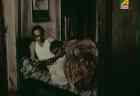
The image shows two individuals in a dimly lit room. One person is lying on a bed or couch, covered with a blanket, while the other person is sitting nearby, appearing to be engaged in a conversation or activity. The room has a rustic appearance, with visible wear and tear on the walls and furniture. A poster is visible on the wall, and there is a logo in the top right corner of the image. The setting suggests a modest living environment, possibly in a rural or older urban area.
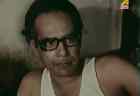
The image shows a person wearing a white sleeveless shirt, with a visible shoulder and part of the upper body. The background appears to be a plain wall with some wear and tear, suggesting an indoor setting. The person is positioned slightly to the right of the frame, with a neutral expression. The lighting is dim, giving the scene a somewhat subdued atmosphere. The person's hair is dark and neatly styled. The setting seems to be a modest or older building, possibly in a residential area.
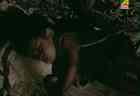
The image shows a young child lying on a bed, surrounded by soft bedding. The child is wearing a dark outfit adorned with pearls, and the room has a patterned wallpaper in the background. The lighting is dim, creating a cozy and intimate atmosphere. The setting appears to be indoors, possibly in a bedroom.
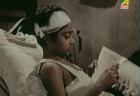
The accident at the beginning of the film has taken on more ominous dimensions when placed in the context of the subsequent events of the day; a commonplace superstition regarding how a small incident gestures towards a far bigger catastrophe. The sequence of the narrative also mimics this gradual build-up, with the film beginning with the accident with the youngest son and gradually heightening the sense of impending doom, aided and abetted by over-vigilant, gossip-mongering neighbours.
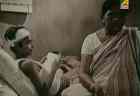
The image shows a woman sitting on a bed, wearing a white top and a colorful sari. A young boy is lying on the bed, wearing a white shirt, and appears to be holding something in his hand. The room has plain walls, and there is a blanket on the bed. The setting appears to be modest, possibly in a rural or semi-urban area. The woman seems to be engaged in a conversation with the boy.
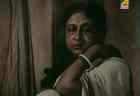
The image shows a person leaning against a wall, with their head resting on their hand. The person is wearing a white garment with red and black accents. The background appears to be a plain wall, possibly in a rustic or traditional setting. The person's posture suggests a moment of contemplation or rest. The setting seems to be indoors, possibly in a rural or traditional environment.
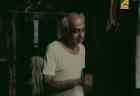
The image shows a person standing indoors, wearing a white shirt. The room appears dimly lit, with a rustic or traditional setting. The walls are dark, and there is a wooden door or window frame visible in the background. The person is standing near a wooden structure, possibly a piece of furniture or a wall. The overall ambiance suggests a rural or traditional environment.
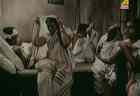
The image shows a group of people sitting in a dimly lit room. They appear to be engaged in a conversation or a gathering. The room has a rustic appearance, with simple furnishings and a muted color palette. The people are dressed in traditional attire, suggesting a rural or cultural setting. The text in the image is in English, and it reads "ZEE5," which is a streaming platform.
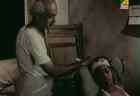
The image shows a person standing beside a bed where another person is lying down. The standing individual appears to be touching the head of the person lying down, who is wearing a headband. The room has a rustic appearance, with a wooden chair and a wall that seems to have a rough texture. The lighting is dim, giving the scene a somber tone. The setting appears to be a modest, possibly rural, environment.

The image shows a person resting their head on their hand, appearing contemplative or tired. The individual is wearing a simple white shirt, and the background is dimly lit, suggesting a quiet or intimate setting. The person's posture and expression suggest a moment of reflection or fatigue. The setting appears to be indoors, possibly in a modest or rural environment, given the simplicity of the surroundings.
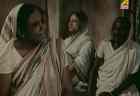
The image shows three individuals sitting in a dimly lit room. Two women are wearing traditional attire, including sarees, and one man is seated beside them. The room appears modest, with plain walls and minimal furnishings. The setting suggests a rural or semi-urban environment, possibly in South Asia.
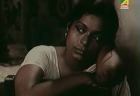
The parallels between this section of 'Ek Din Pratidin' and the famine episode from 'Calcutta 71' have been discussed previously. In the latter episode (written by Prabodh Sanyal) a family of four had been desperately trying to ensure that their secret remains hidden - that they have resorted to prostitution and petty theft in order to make ends meet. Here, the absence of the oldest daughter has engendered a similar moral conundrum, regarding respectability and honour. The father's lament that everyone has come to know everything is symptomatic of the Bengali middle class's devotion to maintaining forms and appearances even in the face of abject adversity. When the charade comes apart at the seams it lets lose a volley of accusations and an ugly confrontation, threatening to further destabilize their fragile respectability.
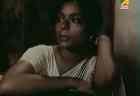
The image shows a person sitting indoors, wearing a white top and a striped garment draped over their shoulder. The lighting is dim, and the background appears to be a wall with some indistinct shapes or objects. The person is resting their head on their hand, looking contemplative. The setting seems to be a modest room, possibly in a residential area. The text in the image is in English, and it reads "Aahir Channel 4."
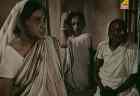
The image shows three women dressed in traditional attire, with one seated and two standing. The setting appears to be indoors, with a plain wall in the background. The women are wearing sarees, and one of them is holding her head with her hand. The overall scene suggests a casual or everyday moment. The geographic location seems to be rural, possibly in a region where traditional clothing is common.
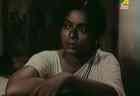
The image shows a person sitting with their arms crossed, wearing a white top and a traditional garment draped over their shoulder. The background appears to be indoors, with dim lighting and a wall visible behind the person. The setting suggests a modest or rural environment. The text in the image is in English, and there is a logo in the top right corner that reads "ABDUL KADER."
The image shows an elderly man with a bald head, wearing a light-colored shirt, reading a newspaper. He appears to be indoors, with a dark background. The man is focused on the newspaper, which is held in his hands. The setting seems to be a modest, possibly rural environment. The logo in the top right corner suggests it might be from a South Asian country.
The image shows a group of people gathered in what appears to be a modest indoor setting. A woman in traditional attire is seated on a bed or couch, while others stand around her. The room has simple furnishings, and the walls are plain. The people seem engaged in a conversation or interaction. The setting suggests a rural or traditional environment, possibly in South Asia.
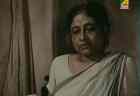
The image shows a person wearing a traditional sari, sitting indoors. The background includes curtains and a wooden chair. The person appears to be in a quiet and contemplative setting. The possible geographic location could be in a region where saris are commonly worn, such as South Asia.
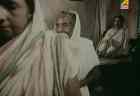
The image shows a group of people in a modest indoor setting. The room appears to have earthy tones, with a simple wooden bench visible in the background. The individuals are dressed in traditional attire, suggesting a rural or culturally specific environment. The setting appears to be a home or a small gathering space.
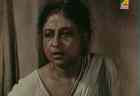
The image shows a person wearing a traditional garment, possibly a sari, with a plain background. The person appears to be indoors, and the lighting suggests a natural or ambient setting. The person's attire and surroundings hint at a rural or modest environment.
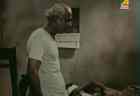
The image shows a man standing in a dimly lit room. He is wearing a white shirt and has a white beard. There is a chair to his left and a bed to his right, where a person is lying down. The walls appear to be plain and slightly worn. A small window is visible in the background, and there is a sign on the wall that reads "बाहरी स्थिति सुरक्षा कार्य."
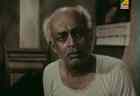
The image shows a person sitting indoors, wearing a simple white shirt. The background includes a wooden chair and a wall with a poster or paper attached to it. The setting appears to be modest and possibly rural, with a rustic ambiance. The person's expression seems contemplative or serious.
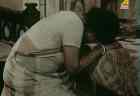
The image shows a person leaning forward, resting their head on their arm, which is placed on a surface with a patterned design. The person is wearing a traditional outfit, which appears to be a sari, and a bangle on their wrist. The setting seems to be indoors, with a wooden piece of furniture visible in the background. The overall ambiance suggests a domestic or residential environment. The person appears to be in a state of distress or contemplation.
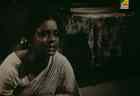
The image shows a woman sitting indoors, wearing a traditional sari. The room appears dimly lit, with a window in the background that lets in some light. The walls and surroundings suggest a modest setting, possibly in a rural or semi-urban area. The woman's expression seems contemplative or concerned.
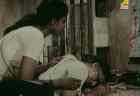
The image shows a woman sitting beside a man who appears to be lying down on a bed or a mat. The woman is wearing a white shirt and has her hair tied back. The man is wearing a light-colored shirt and seems to be resting or sleeping. The setting appears to be a modest room with a curtained window and some visible furniture. The environment suggests a rural or semi-urban location, possibly in a tropical or subtropical region.
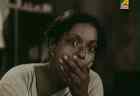
The image shows a person with dark skin, wearing a light-colored top, sitting indoors. The background is dimly lit, with shelves visible in the distance. The person appears to be in a contemplative or thoughtful pose, with one hand near their face. The setting seems to be a modest indoor space, possibly a home or a small room. The overall ambiance suggests a quiet and intimate environment.
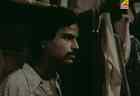
The image shows a man standing in a dimly lit area, possibly a street or alleyway. He is wearing a light-colored shirt and appears to be looking off to the side. The background includes hanging fabrics or garments, suggesting a market or residential area. The setting seems to be in a region with a warm climate, possibly in South Asia.
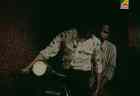
The image shows two individuals standing near a motorcycle. One person is leaning on the motorcycle, while the other is standing slightly behind. The motorcycle has a visible license plate with the number "BN1240." The background appears to be a brick wall, suggesting an urban or semi-urban setting. The lighting is dim, giving the scene a somewhat mysterious or nighttime atmosphere.
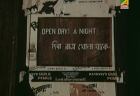
The medicine shop with its heavily ironic disclaimer that they remain open throughout the day and night - the scene suggests that the unattended phone-call may perhaps have been from Chinu, attempting to inform her family. The narrative never lets her provide an excuse for her sudden disappearance, never once attempting to assuage the middle-class audience's moral outrage by furnishing a convenient explanation.
The image shows a wooden signboard with text written in both English and Bengali. The English text reads, "OPEN DAY & NIGHT," while the Bengali text below it translates to "আমার বাড়ি সব দিনে খুব বাড়ি সব দিনে খুব বাড়ি সব দিনে খুব বাড়ি সব দিনে খুব বাড়ি সব দিনে খুব বাড়ি সব দিনে খুব বাড়ি সব দিনে খুব বাড়ি সব দিনে খুব বাড়ি সব দিনে খুব বাড়ি সব দিনে খুব বাড়ি সব দিনে খুব বাড়ি সব দিনে খুব বাড়ি সব দিনে খুব বাড়ি সব দিনে খুব বাড়ি সব �
The image shows a dimly lit room with a person lying on a table, holding a black bag. The room appears cluttered, with various objects like books, boxes, and a telephone visible in the background. The setting suggests a vintage or retro environment, possibly in a small office or study. The text in the top right corner reads "ZEE5," indicating a connection to a streaming platform.

The image shows a white surface with the word "PETROL" prominently displayed in bold, uppercase letters at the top. Below it, there is a panel with several connectors and a small label that reads "PETROL." The surface appears to be part of a fuel dispenser or a similar device. The area seems to be located in a place where fuel is dispensed, possibly in a gas station or a service station. The text "PETROL" is in English, and the connectors suggest it is a fuel-related device.
The image shows two individuals in a dimly lit setting. One person is wearing a patterned shirt, and the other is partially visible in the background. The environment appears to be indoors, possibly in a rural or semi-urban area. The lighting is low, and the overall mood seems to be serious or contemplative.
The image shows a person wearing a striped shirt, with their back turned to the camera. The background appears to be a plain, dark wall. The person seems to be indoors, possibly in a dimly lit room. The logo in the top right corner suggests this might be a scene from a television show or movie.
The image shows two individuals in a dimly lit room. One person is sitting on a bed, leaning forward with their arms resting on their knees, while the other person is lying down, partially covered by a blanket. The room appears to have a rustic and simple setting, with plain walls and minimal furnishings. The lighting is subdued, creating a somber atmosphere. The geographic location seems to be rural or modest, possibly in a region where traditional attire is common.
The image shows a woman bending over a child who is lying on the floor. The woman appears to be comforting or assisting the child, who is wearing a patterned dress. The setting seems to be indoors, with furniture like a couch and a bed visible in the background. The room has a traditional appearance, possibly indicative of a rural or modest household. The woman is dressed in a sari, and the child is lying on a patterned rug. The overall scene suggests a moment of care or concern.
The image shows a person with a bald head and a white shirt, standing indoors. The background includes wooden panels and curtains, suggesting a rustic or traditional setting. The lighting is dim, giving the scene a somber or serious tone. The person appears to be in a contemplative or serious state.
The image shows a room with a woman in traditional attire, wearing a saree, and a man sitting on a couch. The room has a rustic appearance with wooden furniture and a patterned carpet. The walls are adorned with curtains, and there is a visible poster or sign in the background. The setting appears to be a modest living space, possibly in a rural or semi-urban area.
The image shows a woman sitting indoors, wearing a traditional sari. The room has a patterned curtain in the background, and there is a table with a cloth covering it. The lighting is dim, and the setting appears to be a modest living space. The woman is seated, looking slightly to her left. The image has a warm, earthy tone, suggesting a rural or semi-urban environment. The text in the image is in English, and there is a logo in the top right corner.
The image shows a dimly lit room with three individuals lying on the floor. The person in the center appears to be a woman, with her head resting on a pillow, while the other two individuals are positioned around her. The room has a rustic appearance, with wooden furniture and a dark background. The text in the top right corner reads "ZEE5," indicating a possible connection to a streaming platform.
The image shows a person wearing a white garment, engaged in an activity involving a dark surface. The person appears to be focused on their task, with their hands positioned near the surface. The setting seems to be indoors, with dim lighting. The person's posture suggests they are working with their hands, possibly on a task that requires precision. The environment appears to be rustic or traditional, with a focus on manual labor. The text in the image is in English, and it reads "ZEE5" in the top right corner.
Unlike Sen's previous films, the city is never directly present in the film, with most of the action taking place within claustrophobic indoor settings. This is a deliberate mimicry of the mindset Sen has set out to explore. The city, when present, is the site of accidents (the youngest son's accident in the beginning) or is an uncaring, seedy, unfeeling metropolis where accidents are commonplace (the only spaces in the city that are explored are the morgue, the hospital and the police station, the latter replete with smugglers and prostitutes). The actor portraying the police-officer, Biplab Chakraborty, is also responsible for the voice-over narration used at certain points in the film. It provides a curious thrust to the proceedings, conflating the narratorial voice with that of a policeman's report that further serves to heighten the sense of doom and tragedy.
The image shows a vintage scooter parked in a dimly lit area. The scooter has a black body with a slightly worn appearance, and its front fender is rusted. The logo "Vespa" is visible on the front panel. The surrounding environment appears to be indoors, possibly a garage or storage area. The lighting is low, creating a shadowy atmosphere. The logo in the top right corner reads "ZEE5," indicating the possible source or platform of the content.
The image shows two individuals walking in a dimly lit area. One person is wearing a white outfit, while the other is dressed in a red garment. The surroundings appear to be industrial, with visible machinery and structures. The lighting is low, creating a shadowy atmosphere. The location seems to be an outdoor or semi-outdoor area, possibly near a factory or industrial facility.
The image shows a dimly lit corridor with three individuals. One person is standing in the foreground, wearing a light-colored shirt, while two others are in the background, one in a white uniform and the other in darker clothing. The corridor appears to be indoors, possibly in a residential or institutional setting. The walls are plain, and there is a door visible in the background.
The image shows a group of individuals gathered around a table, engaged in what appears to be a discussion or collaborative activity. The setting seems to be indoors, with a rustic or traditional atmosphere. The individuals are dressed in light-colored clothing, and the room has wooden furniture and walls. The text visible in the image is in English, and it reads: "ZEE5," which is a logo for a streaming platform.
The image shows a person wearing a uniform, holding a telephone receiver to their ear. The uniform appears to be a light-colored shirt with epaulettes, and the person is standing indoors, near a window with bars. The setting suggests a formal or official environment, possibly related to communication or security. The person is wearing a wristwatch, and the background has a muted, indoor ambiance.

The image shows a dark, almost black, scene with minimal visibility. There is a small logo in the top-right corner, which appears to be a colorful emblem with text. The text is not fully legible, but it seems to include the word "India" and possibly a logo or brand name. The scene appears to be indoors, with no discernible features or objects visible due to the darkness.
The image shows three individuals standing in what appears to be a modest indoor setting. The person on the left is wearing a light-colored shirt with rolled-up sleeves, while the middle individual is dressed in a patterned shirt with a floral design. The person on the right is wearing a white uniform with a badge on the shoulder. The room has wooden furniture and a curtain in the background. The setting suggests a residential or informal environment, possibly in a rural or semi-urban area.
The image shows two individuals standing indoors, with one person in the foreground wearing a patterned shirt and the other in a plain shirt. Behind them, a third person is visible, standing in a doorway. The setting appears to be a residential or indoor environment. The image has a logo in the top right corner, which suggests it may be from a television broadcast.
The image shows a person wearing a white shirt with black suspenders, sitting at a table. They appear to be holding something in their hands, possibly a piece of cloth or paper. The setting seems to be indoors, with a dark background. The person's posture suggests they are focused on the object in their hands. The image has a logo in the top right corner, which appears to be a TV channel logo.
The image shows a person sitting on a motorcycle, wearing a patterned shirt. The scene appears to be dimly lit, with the motorcycle's headlight visible in the foreground. The person is holding the handlebars, and the background is dark, making it difficult to discern details. The logo in the top right corner suggests this could be a scene from a television show or movie. The geographic location is not clear, but the setting seems to be urban or semi-urban.

The image shows a dark, nighttime scene with a few illuminated objects. There is a vertical line of lights in the center, possibly representing a street or pathway. The surrounding area is very dark, and the visibility is limited. The image appears to be taken in an urban or suburban environment, possibly in a city or town.
The image shows a person lying down on a bed or couch, resting their head on a pillow. The lighting is dim, creating a calm and serene atmosphere. The person appears to be wearing a light-colored garment. The setting suggests a quiet indoor environment, possibly a bedroom or a living room. The visible text in the image is in English, and it reads: "ZEE5."
The image shows a person wearing a sleeveless shirt, standing in what appears to be a dimly lit room. The walls are plain and slightly stained, and there is a visible dark patch on the wall. The person is facing away from the camera, and there is a decorative pillow on a surface nearby. The setting seems to be a modest indoor space, possibly in a residential area.
The image shows a dimly lit interior with a rustic, aged appearance. The walls and columns appear weathered, with visible wear and tear. The lighting is low, creating a shadowy atmosphere. The setting seems to be an old, possibly historical structure, with architectural details suggesting it could be a part of a traditional building. The overall ambiance is dark and mysterious.

The image shows a dark, mostly black scene with a small, faint light visible in the lower right corner. The overall setting appears to be a nighttime or low-light environment. There is a logo in the top right corner with a colorful design and text in a non-English language.
The image shows a person sitting in a dimly lit room with stone walls. The individual is dressed in traditional attire, possibly a sari, and appears to be in a contemplative or relaxed posture. The setting suggests a rustic or historical environment, possibly in a rural or ancient location. The lighting is low, creating a somber and introspective atmosphere.
The image shows two individuals standing in a dimly lit room. The person on the left is wearing a traditional garment, while the person on the right is dressed in a sleeveless shirt. The background includes wooden furniture and a stone wall, suggesting a rustic or rural setting. The lighting is soft, and the overall atmosphere appears calm and intimate. The text in the top right corner reads "ZEE5," which indicates that this scene might be from a ZEE5 production.
The image shows a person sitting in a dimly lit room, wrapped in a white garment. The surroundings appear rustic, with stone walls and minimal furnishings. The person's posture suggests a sense of weariness or contemplation. The lighting is low, creating a somber and introspective atmosphere. The setting seems to be in a rural or traditional area, possibly in a region with a warm climate.
The image shows a person standing indoors, wearing a traditional garment. The surroundings include a wooden door, a shelf with items, and a fan. The lighting is dim, and the setting appears to be a modest room. The person seems to be looking at something or someone off-camera. The text in the image is in a non-English script, possibly Hindi, and reads "आईआर एम एम दिवास दिखाया है."
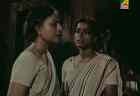
The image shows two women standing close to each other, engaged in a conversation. They are dressed in traditional attire, with one wearing a sari and the other a blouse and skirt combination. The setting appears to be indoors, with a rustic wooden background. The lighting is dim, giving the scene a warm and intimate atmosphere. The women seem to be in a serious or contemplative mood. The possible geographic location could be a rural or semi-urban area in South Asia, based on the traditional clothing and setting.
The image shows two individuals standing in a dimly lit room. One person is wearing a white sleeveless shirt, and the other is dressed in a light-colored shirt. The room appears rustic, with visible wooden beams and a stone wall. The lighting is low, creating a shadowy atmosphere. The setting suggests a rural or traditional environment, possibly in a region with a warm climate.
The image shows two individuals standing in a dimly lit environment. The lighting creates a silhouette effect, making it difficult to discern details about their appearance. The background appears to be indoors, possibly in a room with furniture or shelves. The setting suggests a casual or informal atmosphere.
The image shows a person standing in a dimly lit area, possibly a cave or a dark room. The person is wearing traditional clothing, and the background appears to be rough and textured, suggesting a natural or rustic setting. The lighting is low, creating a shadowy effect. The person seems to be gazing into the distance, possibly contemplating something. The environment suggests a rural or remote location.
The old woman's comments regarding the lives of women in such a society are extremely significant. The explicit indictment of the patriarchal set-up that refuses to acknowledge the role of women is reminiscent in many ways of the attitude survey conducted in 'Padatik', regarding the status of women in society and the nature of sexual division of labour.
The image shows two individuals sitting closely together in a dimly lit room. One person is older, with white hair, wearing a light-colored sari, and appears to be engaged in a conversation. The other person is younger, with dark hair, wearing a patterned sari, and seems to be listening attentively. The setting appears to be rustic, with visible walls and minimal furnishings. The lighting is soft, creating a warm and intimate atmosphere. The possible geographic location is rural, likely in a region where saris are commonly worn.
This is further foregrounded by the flashback sequence where Chinu had just gotten her job. The ease with which she is immediately elevated to the position of the primary caregiver and bread-earner is significant when contrasted with the role of the men in her life - her father and her brother - neither of whom are responsible for sustaining the family despite being the de facto heads of the household. In fact, 'Ek Din Pratidin' is as much a study of the men in the family as it is about the position of women within the oppressive petit bourgeois moral economy.
The image shows two individuals in close proximity, with one person's arm visible, suggesting a physical interaction. The lighting is dim, creating a shadowy and intimate atmosphere. The setting appears to be indoors, possibly in a rustic or rural environment, as indicated by the texture of the wall and the clothing worn by the individuals. The text in the image includes "ZEE5," a logo that suggests the image is from a digital platform.
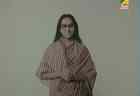
The image shows a person wearing a striped garment, standing against a plain background. The person appears to be smiling and has long hair. The setting seems to be indoors, and the person is positioned centrally in the frame. The image also includes a logo in the top right corner, which appears to be a television channel's emblem.
The image shows a person sitting in a dimly lit environment, possibly in a performance or recording setting. The individual appears to be holding a microphone, suggesting they might be speaking or singing. The background is dark, and there is a logo in the top right corner that reads "ZEE BANSA" in English. The setting seems to be indoors, and the person is dressed casually. The possible geographic location is not clearly discernible, but the logo suggests it could be related to a media or entertainment company based in India.
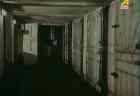
The image shows a dimly lit corridor with wooden doors on both sides. The corridor appears narrow, with a person standing in the distance near the end. The walls and ceiling are plain, and the lighting is minimal, creating a somber atmosphere. The setting seems to be indoors, possibly in a residential or institutional building. The doors are closed, and the corridor is quiet and empty.

The image shows a dark, dimly lit area with a few vertical objects that appear to be bookshelves or similar structures. The shelves are filled with books or other items, and the lighting creates a shadowy effect. The setting seems to be indoors, possibly in a library or a study room. The text in the image includes "Aahir" and "Dharan," which are likely names or titles.
The image shows a person standing in a dimly lit room. The individual is wearing a jacket and appears to be looking at a metallic door or panel. The setting seems to be indoors, possibly in a residential or industrial area. The lighting is low, and the overall atmosphere appears to be somber or serious.
The image shows a person lying on a stone slab, appearing to be in a state of rest or repose. The setting seems to be dimly lit, with the person's body partially illuminated by a light source. The stone slab looks aged and worn, suggesting it might be part of an ancient structure or tomb. The person's posture and surroundings hint at a historical or archaeological context.
The image shows a person standing in a dimly lit room, holding a cup to their mouth. The room appears to have a rustic or old-fashioned style, with visible wooden beams and a door with a latch. The lighting is soft, casting shadows on the walls. The person is wearing a shirt with rolled-up sleeves. The setting seems to be indoors, possibly in a rural or traditional environment.
The image shows a person lying on a bed or a similar surface, with another person standing beside them. The room appears dimly lit, and the setting suggests a modest or rural environment. The person standing is wearing a white garment, possibly a shirt or a robe. The scene seems to be indoors, and the overall atmosphere is calm and quiet.
The image shows a man standing in a dimly lit room. He is wearing a light-colored shirt and appears to be looking at a wall. The wall has a door with a latch, and there is a shadow of the man cast on the wall. The room seems to have a rustic or old-fashioned appearance, with visible wear on the walls and ceiling. The lighting suggests it might be evening or nighttime. The man's shadow is prominent, indicating a light source from above or behind him. The setting appears to be in a rural or semi-urban area, possibly in a region where such architecture is common.
The image shows a person wearing a traditional garment, possibly a shawl, in a dimly lit environment. The surroundings appear to be indoors, with visible pipes and a rustic setting. The person seems to be engaged in some activity, possibly cooking or preparing food. The setting suggests a rural or traditional area, possibly in a region where such attire is common.
The image shows a person standing in a dimly lit room. The individual is wearing a dark jacket and appears to be looking at something on the wall. The room has a rustic appearance, with visible wooden beams and a textured wall. The lighting is subdued, creating a somber atmosphere. The person seems to be in a contemplative or serious mood. The setting appears to be indoors, possibly in a rural or older building.
The image shows a person lying on a surface with a patterned cloth, possibly a bed or a blanket. The person appears to be in a state of rest or unconsciousness, with their face partially covered in dirt or mud. The surroundings suggest a rural or outdoor setting, possibly in a region with a warm climate.
The image shows a person standing in a dimly lit room, wearing a patterned shirt. The person appears to be holding something in their hand, possibly a phone or a small object. The background is dark, with some indistinct shapes and objects visible. The setting seems to be indoors, possibly in a residential or office environment. The lighting is low, creating a shadowy atmosphere.
An instance of the notion of masculinity that is also under critique: the friend rebukes Tapu for 'going soft' after the visit to the morgue, derisively deeming it to be a feminine affect.
The image shows a person wearing a patterned shirt with a mix of light and dark colors. The background is dark, and there is a faint light source visible at the top left corner. The person appears to be indoors, possibly in a dimly lit room. The setting seems to be a residential or casual environment.
The image shows a person with a serious expression, wearing a light-colored shirt. The background is dark, and the lighting is dim, creating a dramatic effect. The person appears to be indoors, possibly in a rustic or rural setting. The logo in the top right corner suggests this could be a scene from a television show or movie.
The image shows a person with dark hair and a mustache, wearing a light-colored shirt. The background is dimly lit, and the person appears to be in a serious or contemplative mood. The setting seems to be indoors, possibly in a rustic or rural environment. The logo in the top right corner suggests this could be a scene from a television show or movie.
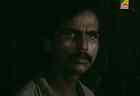
The image shows a person with a serious expression, wearing a simple shirt. The background is dark, and the lighting is dim, creating a somber atmosphere. The person appears to be indoors, possibly in a rustic or rural setting. The logo in the top right corner suggests this could be a scene from a television show or movie.
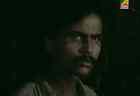
The image shows a person with dark hair and a mustache, wearing a light-colored shirt. The background is dimly lit, and the person appears to be in a serious or contemplative mood. The setting seems to be indoors, possibly in a rustic or rural environment. The person's expression suggests they might be engaged in a moment of reflection or concern.

The image shows a dark, nighttime scene with a few visible lights. There is a vertical line of lights on the right side, possibly representing a street or a row of buildings. The area appears to be urban, with the lights suggesting a populated area. The logo in the top right corner indicates a connection to a media organization.
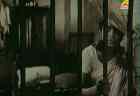
The image shows a person standing behind bars, wearing a traditional outfit, and looking out of a window or a barred opening. The room appears to be dimly lit, with a bed and some furniture visible in the background. The setting suggests a confined or restricted space, possibly a prison or a similar facility. The overall atmosphere is somber and quiet.
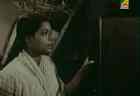
The image shows a person standing indoors, wearing a light-colored garment. The individual is holding a small object in their hand, possibly a tool or a piece of food. The background appears to be rustic, with wooden structures and a thatched roof visible. The setting suggests a rural or traditional environment, possibly in a tropical or subtropical region.
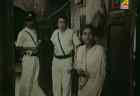
The image shows three individuals in what appears to be a dimly lit, rustic setting. Two of the individuals are dressed in white uniforms, possibly indicating they are guards or police officers, while the third person is wearing traditional attire, suggesting they might be a local resident or someone of significance. The background features wooden doors and walls, hinting at a rural or historical setting. The overall atmosphere suggests a scene of tension or confrontation.
The family is quite obviously distressed by the arrival of the police, considering the stigma regarding the legal and juridical system among the middle-classes (despite her excuse, it is quite obvious that Minu is unwilling to let the police into the inner quarters of the house). The police in this scenario is then seen primarily as a harbinger of bad news (for instance, the news about the unidentified pregnant woman who has tried to commit suicide) or as an agent of disruption that seeks to destabilize the 'bhadralok' status quo through scandal and crime.
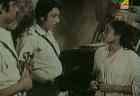
The image shows three individuals in a rustic setting. Two of them are dressed in white uniforms, holding tools, while the third person is wearing traditional attire. The background includes a wooden structure and a woven basket. The setting appears to be rural, possibly in a village or countryside area.
The image shows two individuals dressed in light-colored uniforms, with one of them wearing a hat. They appear to be engaged in a conversation or activity involving a small object, possibly a cigarette or a similar item. The setting seems to be indoors, with a rustic or industrial background. The lighting is dim, and the overall atmosphere suggests a casual or informal interaction. The location appears to be in a region where such uniforms are common, possibly in a country with a tropical or subtropical climate.
The image shows a person wearing traditional attire, with a white garment draped over their shoulders. The background appears to be rustic, with wooden structures visible. The person has a small bindi on their forehead and is wearing hoop earrings. The setting suggests a rural or village environment.
The image shows two individuals dressed in light-colored uniforms with shoulder epaulets and black belts. One of them is wearing a cap with a badge on it. They appear to be in a dimly lit room with wooden walls and some hanging objects in the background. The setting suggests a rustic or traditional environment. The text in the top right corner reads "Aahil" and "Aahil Sehgal," which may indicate a connection to a person or brand.
The image shows two individuals dressed in light-colored uniforms with shoulder epaulets, standing in what appears to be a dimly lit room. One of them is wearing a cap with a badge, while the other has a more casual hairstyle. The background includes a wooden structure, possibly a wall or a piece of furniture. The setting suggests a formal or official environment, possibly related to security or military. The text in the top right corner reads "ZEEBABU," indicating a possible connection to a media outlet.
The image shows a person wearing a white garment with a draped neckline, sitting indoors. The background includes a woven basket and a wooden structure, suggesting a rural or traditional setting. The person has dark hair styled in a simple manner and is wearing a small hoop earring. The setting appears to be modest, with earthy tones dominating the scene.
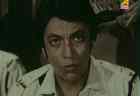
The image shows a person wearing a white uniform with visible insignia, standing in what appears to be a dimly lit environment. The background includes some ropes or cords and a structure that suggests an outdoor or industrial setting. The person's expression seems serious or focused.
The image shows a person wearing a striped garment, sitting in a dimly lit room. The person has a hoop earring and appears to be looking to the side. The background is plain and dark, with minimal details visible. The person's hair is tied back, and the setting suggests a modest or rural environment. The lighting is soft, and the overall tone is subdued.
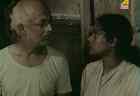
The image shows two individuals standing close to each other in what appears to be a dimly lit room. The person on the left is wearing a light-colored shirt, while the person on the right is dressed in a traditional garment. The background includes a wooden door and a wall with visible wear and tear. The setting suggests a modest or rural environment.
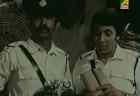
The image shows two individuals dressed in white uniforms with black shoulder straps, standing close to each other. One of them is holding a rolled-up document or paper, while the other appears to be holding a metallic object, possibly a cup or a small container. The background includes a woven basket and some hanging items, suggesting a rustic or rural setting. The overall environment appears to be indoors, with a dimly lit atmosphere. The text in the top right corner reads "ZEE TV," indicating that this scene is from a television program.
The image shows two individuals standing close to each other in what appears to be a rustic or rural setting. The man is wearing a plain white shirt, and the woman is dressed in a light-colored garment. The background suggests an indoor environment with a rough, textured wall. The lighting is dim, giving the scene a subdued and intimate atmosphere. The setting seems to be in a region with a warm climate, possibly in South Asia.
The image shows a dimly lit interior with stone walls and a carved pillar. There is a statue of a man in a hat and coat, holding a book. The setting appears to be historical, possibly medieval, with a rustic and aged appearance. The location seems to be in a European country, possibly in a castle or an old building.
The image shows a dimly lit, old-fashioned interior with wooden structures and a balcony. The walls appear to be made of stone or wood, and there are vertical wooden slats or bars visible. The lighting is low, creating a shadowy atmosphere. The setting seems to be historical or traditional, possibly from a rural or village area. The text in the image is in English, and it reads "ZEE5" in the top right corner.

The image shows a person lying on a bed with patterned bedding. The person appears to be resting or sleeping, with their head turned away from the camera. The setting seems to be indoors, possibly in a bedroom. The lighting is dim, creating a calm and quiet atmosphere.
The image shows a man and a woman standing indoors, engaged in a conversation. The man is wearing a sleeveless shirt, while the woman is dressed in a traditional sari. The setting appears to be a dimly lit room with wooden furniture in the background. The woman is looking at the man, who is facing her. The room has a rustic and possibly rural appearance, suggesting it might be in a village or small town. The text in the image is in English, and there is a logo in the top right corner.
The image shows a dark, rectangular structure with a black surface, possibly a wall or a door. To the left, there is a lighter-colored wall with circular patterns, likely a ventilation system. The scene appears to be indoors, possibly in a commercial or industrial setting. The logo in the top right corner suggests it could be a location in India.

The hospital sequence is reminiscent of Mrinal Sen's use of interruptive or non-linear form from his earlier phase of films. The characters, when they each recall their predicaments, seemingly break the fourth wall and address the viewers, serving to assimilate their stories within the larger social and economic narrative of the middle-class at the time. The sequence also foregrounds the blend of fact and fiction that has been one of central concerns of Sen's cinematic language, and which takes on interesting formal dimensions in his more narrative-driven later films.
About the sudden change in form in this sequence Mrinal Sen has remarked: 'But even there I have slipped out of the storytelling from time to time to make a comment, for example, about women at one point, or when one of the characters visit the hospital where a group of people wait to identify a girl, an accident victim. These characters do not belong to the story; in them and through them I try to capture the image of the larger society lying outside. From them I move to a sequence of newspaper headings, far beyond the scope of the storyteller who believes strictly in storytelling. As you see, for all practical purposes, I have not changed my style of treatment after all. I have continued mixing the two forms to ensure better communication. I have never really rejected the style which I developed a long time ago. I would characterize my style as basically non-narrative, a calculated mixture of the fictional and documentary, with actual coverage.' - (‘Interview: 1980’, ‘Montage – Mrinal Sen: Life, Politics, Cinema’, Seagull Books, Calcutta, 2002)
The image shows a person wearing a white garment, sitting with their head resting on their hand, appearing contemplative or distressed. The background is dark, and there is a logo in the top right corner that includes text in a non-English script. The person seems to be in a dimly lit indoor setting.
The image shows a person wearing a white garment, possibly a traditional headscarf, with a neutral expression. The background appears to be dimly lit, suggesting an indoor setting. The person seems to be seated, and the overall tone of the image is subdued and somber. The geographic location is likely in a region where such attire is common, possibly in South Asia or the Middle East.
The image shows a person with curly hair wearing glasses and a light-colored shirt. The background appears to be indoors, with dim lighting. There is a logo in the top right corner that includes text in a non-English script.
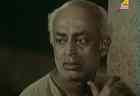
The image shows a person leaning against a textured wall, with a contemplative expression. The lighting is dim, creating a somber and introspective atmosphere. The person appears to be wearing traditional attire, suggesting a possible cultural or regional context. The background is dark, with minimal details visible.
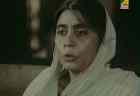
The image shows a person wearing a white garment, possibly a shawl or a headscarf, with a plain background. The person appears to be sitting or standing in a dimly lit area. The setting seems to be indoors, with a rustic or simple environment. The person's posture suggests they are seated, and their expression appears neutral or contemplative. The background is dark, with minimal details visible.
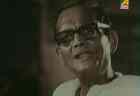
The image shows a person wearing glasses, dressed in a light-colored shirt, with a slightly serious expression. The background appears dark, possibly indoors. The person seems to be in a setting that could be a room or a hall. The logo in the top right corner suggests this could be a scene from a television show or movie.
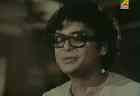
The image shows a person with curly hair wearing a light-colored shirt. The background appears to be indoors, with dim lighting. The person is wearing glasses and seems to be engaged in a conversation or activity. The setting suggests a casual or informal environment. The text in the image is in English, and there is a logo in the top right corner.
The image shows a person dressed in a white uniform, walking down a dimly lit hallway. The hallway has a series of chairs lined up against the wall, and the walls appear to be made of concrete. The lighting is subdued, and the overall atmosphere seems somber. The person appears to be a nurse, given the uniform and head covering. The setting seems to be a hospital or medical facility, possibly in a region where such attire is common.
The image shows a person wearing a light-colored shirt with a striped pattern. The background appears to be indoors, with visible electrical switches or outlets on the wall. The person is wearing glasses and has dark hair. The setting seems to be a modest or functional space, possibly a room or a small office. The lighting is soft, and the overall tone of the image is subdued.
The image shows a person dressed in white, wearing a head covering, leaning over a wooden railing. The setting appears to be indoors, possibly in a dimly lit room. The person seems to be observing something below or outside the frame. The background is dark, and there is a logo in the top right corner with text in a non-English language.
The image shows a person standing indoors, wearing a light-colored shirt with rolled-up sleeves. The background includes a dark cabinet and a wall-mounted object that appears to be a small shelf or a piece of equipment. The lighting is dim, giving the scene a somewhat subdued atmosphere. The person is facing slightly to the left, with their head turned to look in the direction of the camera. The setting appears to be a residential or domestic environment, possibly a kitchen or a living room.
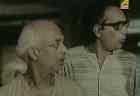
The image shows two individuals standing close to each other. One is older, with a bald head and a beard, wearing a simple, light-colored garment. The other is younger, wearing glasses and a striped shirt. The background appears to be indoors, with dim lighting. The setting seems to be in a rural or modest environment, possibly in a region with a warm climate.
The image shows a person peeking through a metal grill or gate, with a dark background. The person appears to be partially obscured by the grill, and there is some graffiti or writing on the metal. The setting seems to be indoors, possibly in a dimly lit area. The person is wearing a white shirt, and the environment appears to be a corridor or hallway. The lighting is low, and the overall atmosphere is somewhat mysterious or tense. The possible geographic location is a residential or commercial building in an urban area.
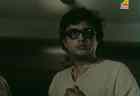
The image shows a person wearing a light-colored shirt, standing indoors. The individual appears to be holding something in their hand, possibly a small object or tool. The background is dimly lit, and there is a logo in the top right corner with text in a non-English script. The setting seems to be a modest indoor environment, possibly a room or a hall.

The image shows a dimly lit corridor with a bright light source at the end, creating a glowing effect. The ceiling has several circular lights, and the walls appear dark. The corridor seems to be indoors, possibly in a building with a modern design. The text in the image is in English, and it reads "ZEE5," which is a logo for a streaming platform.
The newspaper headings reveal the nature and forms of sexual violence rampant in society, and which are systematically silenced by the guardians of middle-class morality: 'Dismembered body of young woman found inside a box in Howrah Station', 'Body of a young woman found floating in the Ravindra Sarovar Lake', 'Call-girl's heartrending confessions in court', 'An account of the flesh trade'.
The image shows a dark, nighttime scene with scattered light sources, possibly stars or distant lights. There is a faint, linear pattern of light in the center, suggesting a structure or object. The overall setting appears to be rural or remote, with no visible buildings or urban features.
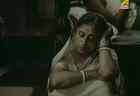
The image shows a woman sitting on the floor, leaning her head on her hand. She is wearing traditional attire, including a sari, and has bangles on her wrist. The setting appears to be indoors, with a dimly lit background. There is another person partially visible in the background, seated on a piece of furniture. The overall atmosphere seems somber or reflective. The geographic location appears to be rural, possibly in a region where traditional clothing is common.
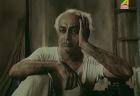
The tensions within the family come to the forefront when the desire to maintain appearances gives way under the strain of recent occurrences. The bitter episode where the family blames each other is reminiscent of many such cruel episodes in Mrinal Sen's earlier films (notably, 'Baishe Shravan', the 1943 episode of 'Calcutta 71') where family members turn on each other in moments of crisis. It is a culmination of the discontent brewing since the beginning - the clock ticking like in a bomb about to explode - which brings the entire family together. They air their grievances against each other, grievances which had been simmering under the surface and which they had carefully tried to conceal (Minu compares their crumbling lives with that of the morgue the brother has just visited). Interestingly, Minu is the voice of reason and self-criticism here, railing against her family for taking Chinu for granted and for taking advantage of her. At the same time, she too is plagued by the same insecurities; she is well-aware that Chinu's disappearance will pass the burden of the family onto her.
The image shows a woman in traditional attire, wearing a sari, standing in a room with a man seated nearby. The room appears to have a rustic or modest setting, with a curtain and some furniture visible. The woman is facing away from the camera, while the man is looking towards her. The setting suggests a domestic environment, possibly in a rural or semi-urban area.
The image shows a person with dark hair tied back, wearing a striped garment. They are seated indoors, with a wall and a framed picture visible in the background. The person appears to be engaged in an activity, possibly writing or reading. The setting seems to be a modest, possibly rural or semi-urban environment.
The image shows a person sitting in a relaxed posture, wearing a plain white shirt. The background includes a wooden door and a decorative screen with intricate patterns. The setting appears to be indoors, possibly in a traditional or rustic environment. The person seems to be in a calm and reflective state.

The image shows a young person lying down, wearing a white sleeveless shirt, and a bandage wrapped around their head. The setting appears to be indoors, with dim lighting and a dark background. The person seems to be resting or recovering. The visible text in the image is in English, and it reads "ZEE5," which is a logo indicating the platform or source of the content.
The image shows a person sitting indoors, with their head slightly tilted to the side. They are wearing a light-colored garment with a collar and have a large hoop earring. The background appears to be a plain wall with some faint markings or decorations. The person seems to be in a relaxed posture, possibly engaged in a quiet activity. The setting suggests a modest, possibly rural or semi-urban environment.
The image shows a young boy and an older woman sitting in a dimly lit room. The boy is wearing a white sleeveless shirt and a headband, while the woman is wrapped in a shawl. They appear to be in a relaxed posture, with the boy leaning on his hand and the woman resting her head on a pillow. The room has a rustic appearance, with a large clay pot visible on a wooden table to the left. The walls are plain, and there is a piece of cloth hanging in the background. The setting suggests a rural or traditional environment, possibly in a region where such attire is common.
The image shows a person sitting indoors, wearing traditional attire, with their head slightly bowed. The background includes a wall with a painting or poster, and a visible logo in the top right corner. The setting appears to be a modest room, possibly in a rural or semi-urban area.
The image shows two individuals in a modest room. One person is lying down on a bed, wrapped in a blanket, while the other is sitting nearby, leaning forward with a thoughtful expression. The room has a rustic appearance, with a clay pot on a table and a bed covered with a patterned blanket. The setting suggests a rural or traditional environment, possibly in a warm climate.
The image shows a person sitting indoors, wearing a white shirt and a dark shoulder bag. The background features a wall with a poster or painting, and the person is holding their hand near their face. The setting appears to be a modest or simple indoor environment, possibly in a residential or public space. The visible text in the image is in English, and it reads: "Aaj Kal" and "Zee TV."
The image shows a person lying down, wearing a traditional garment, with a calm and serene expression. The background includes a patterned fabric, possibly a curtain or wall covering, and a wooden or bamboo structure. The setting appears to be indoors, with a rustic or rural aesthetic. The person seems to be resting or sleeping.
The image shows a person sitting indoors, with a hand raised in front of them. The person is wearing a striped garment, and the background appears to be a plain wall with some visible wear and tear. The setting seems to be modest, possibly in a rural or semi-urban area. The person's posture and hand gesture suggest they might be engaged in a conversation or expressing something.
The image shows a group of people sitting in a dimly lit room. One person is seated on the floor, leaning forward, while others are sitting on chairs or the floor. The room appears to have a rustic or modest setting, with visible furniture like chairs and a table. The lighting is low, creating a somber atmosphere. The people seem to be engaged in a quiet activity or conversation. The possible geographic location is rural or semi-urban, based on the setting and furniture.
The image shows a person sitting on a wooden chair, leaning forward with their arms resting on the backrest. The background appears to be a rustic or traditional setting, with visible walls and possibly some decorative elements. The person is wearing a light-colored garment, and there is a visible logo in the top right corner of the image. The text in the image is in a script that appears to be South Asian, possibly Tamil or another language spoken in the region.
The image shows a person with dark hair and a beard, wearing a light-colored shirt. The background appears to be dimly lit, possibly indoors. The person seems to be leaning forward, possibly engaged in a conversation or focused on something. The setting suggests a rustic or rural environment.
The image shows a person sitting on a wooden chair, leaning forward with their arms resting on the backrest. The background includes a wall with some faded posters or decorations, and a visible logo in the top right corner. The person is wearing a light-colored garment, and their hair is neatly tied back. The setting appears to be indoors, possibly in a modest or rural environment.
The image shows a group of people gathered in a room. There are chairs and a table in the background, and a person is sitting on a chair, while others are seated on the floor. The room has a warm, earthy tone, with patterned curtains and a wall hanging. The people appear to be engaged in a conversation or activity. The setting suggests a rural or traditional environment, possibly in a South Asian country.
The image shows a person sitting with their arms crossed, appearing contemplative or reflective. The background includes a wall with a poster featuring text in a script that appears to be Bengali. The setting seems to be indoors, possibly in a modest or rural environment. The person is wearing a light-colored garment, and there is a small object on a table to the left.
The image shows a person sitting in a dimly lit room. The person is wearing traditional attire, and there is a large clay pot on a wooden stand nearby. The background appears to be a rustic setting, possibly in a rural or historical location. The lighting is soft, and the overall atmosphere suggests a quiet, reflective moment.
The image shows a person sitting with their hands clasped together, appearing contemplative. The background includes a poster with text in a script that appears to be Bengali, suggesting a possible geographic location in Bangladesh or India. The setting seems to be indoors, possibly in a modest or rural environment.
The image shows a person with dark hair and a mustache, wearing a light-colored shirt. The background appears to be indoors, with dim lighting. The person seems to be leaning forward, possibly engaged in a conversation or focused on something. The setting suggests a casual or domestic environment.
The image shows a person sitting indoors, with their hands clasped together. The individual is wearing traditional attire, including a sari, and appears to be in a contemplative or reflective state. The background features a poster with text in a script that appears to be Bengali, suggesting a possible geographic location in Bangladesh or a region where Bengali is spoken.
The image shows a person with a weathered appearance, wearing a simple shirt. The background appears to be a plain, possibly rustic setting, with a curtain or fabric visible. The person's posture suggests they are in a relaxed or contemplative state. The setting seems to be indoors, possibly in a modest or rural environment.
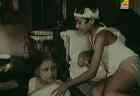
The image shows a dimly lit room with a woman sitting on a bed, looking distressed. A young girl is leaning over her, appearing to offer comfort or assistance. The room has a rustic appearance, with a wooden bed frame and a metal pot visible in the background. The setting suggests a rural or traditional environment.
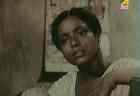
The image shows a person sitting indoors, wearing a white top and hoop earrings. The background appears to be a textured wall with some faint patterns or decorations. The lighting is soft, and the overall tone is muted. The person seems relaxed, with one arm resting on a surface. The setting suggests a modest, possibly rural or traditional environment.
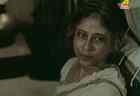
The image shows a person sitting indoors, wearing a white garment. The background includes a dark, wooden structure and a metallic object, possibly a lamp or a decorative item. The setting appears to be a modest, possibly rural or traditional environment. The person's posture suggests they are seated comfortably, possibly engaged in a conversation or resting.
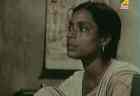
The image shows a person sitting indoors, wearing a light-colored garment. The background includes a wall with a poster or painting, and the person appears to be looking at something off-camera. The setting seems to be a modest room, possibly in a rural or semi-urban area.
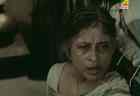
The image shows a person sitting indoors, wearing a traditional outfit. The setting appears to be a dimly lit room with a rustic or rural ambiance. The person is seated on a wooden chair, and there is a visible cloth or fabric draped over the back of the chair. The background includes a blurred object, possibly a piece of furniture or a container, and the lighting suggests a warm, earthy environment. The person's posture and attire suggest a casual or domestic setting.
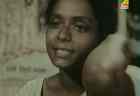
The image shows a person with dark hair, wearing a light-colored top, gesturing with their hand. The background appears to be a wall with some faded writing or markings on it. The person seems to be in an outdoor or semi-outdoor setting, possibly in a rural or urban area. The text visible in the image is in English and reads, "Asha TV" and "आशा टीवी."
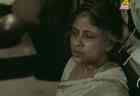
The image shows a woman sitting indoors, wearing traditional attire. She appears to be in a dimly lit room with a rustic setting, possibly a kitchen or a living area. The background includes a pot and some hanging items, suggesting a rural or traditional environment. The text in the image is in English.
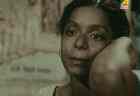
The image shows a person with dark hair, wearing a white garment, and resting their head on their hand. The background appears to be a textured wall with faint patterns or designs. The person seems to be in a relaxed or contemplative pose. The setting looks like it could be a traditional or rustic environment, possibly in a rural or historical area.
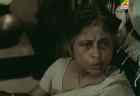
The image shows a person sitting indoors, wearing a light-colored traditional outfit. The background includes a dark pot and a cloth-covered object, suggesting a domestic setting. The lighting is dim, and the person appears to be engaged in a conversation or activity. The setting seems to be in a rural or semi-urban area, possibly in South Asia, based on the attire and surroundings.
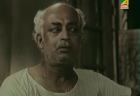
The angry and bitter exchange also reveals other secrets which had been carefully protected thus far. Sanjeev, Chinu's alleged ex-suitor, had perhaps been a political activist which would explain the family's reluctance to let them marry. Besides, given the milieu within which 'Ek Din Pratidin' has been conceived, this conclusion is even more likely. At the same time, the inefficacy of the male figure in such a social unit is further underlined. In a moment of crisis, the wife, labouring under guilt, anger and anxiety, accuses her husband of a life-long passivity that is, at least partially, responsible for this night. As mentioned before, the passive male figure, the middle-class patriarch (both the father and the son), ineffectual, powerless but still the figurehead, is as much the subject of critique here. Mrinal Sen has often remarked about his preoccupation with exposing the hypocrisies of the male-dominated, conformist, middle-class society of his time in 'Ek Din Pratidin'.
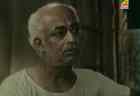
The image shows a person with white hair, wearing a simple white garment. The background appears to be indoors, with a wooden structure visible. The lighting is dim, giving the scene a muted and subdued atmosphere. The person seems to be seated, with a thoughtful expression on their face. The setting suggests a rustic or rural environment, possibly in a region with a warm climate.
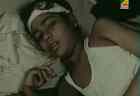
The image shows a person lying on a bed, wearing a white sleeveless top and a headband. The surroundings include a white blanket or sheet, and the lighting is dim, creating a soft and relaxed atmosphere. The person appears to be resting or sleeping. The setting seems to be indoors, possibly in a bedroom. The text in the image includes a logo in the top right corner, which appears to be a TV channel logo.
The image shows a person with dark hair, wearing a light-colored garment, sitting in a dimly lit room. The background is blurred, but it appears to include some furniture or objects. The setting seems to be indoors, possibly in a residential or casual environment. The lighting is soft, and the overall tone is subdued.
The image shows a person sitting indoors, wearing a light-colored garment. The setting appears to be a modest room with a wooden structure visible in the background. The lighting is dim, and the person seems to be engaged in a quiet moment. The visible text in the image is in English, and it reads: "ZEE5."
The image shows a person leaning on a wooden chair, with a background that includes a wall with faded posters or signs. The person appears to be wearing a light-colored garment, and there is a visible earring on one ear. The setting seems to be indoors, possibly in a modest or rural environment. The text in the background appears to be in a script that is not English, but it is difficult to read due to the faded nature of the writing.
The image shows a person wearing a white garment, with visible wrinkles and a slightly disheveled appearance. The background is dark, and there is a faint light source visible in the upper left corner. The person appears to be in a state of distress or discomfort, with a tense facial expression. The setting seems to be indoors, possibly in a dimly lit room. The person's attire and surroundings suggest a rural or traditional environment.
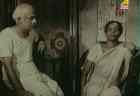
The image shows two individuals seated indoors, with one person wearing a white garment and the other dressed in a traditional sari. The room has a rustic appearance, with a wooden door and a decorative wall hanging visible in the background. The setting suggests a rural or traditional environment, possibly in South Asia.
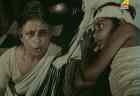
The image shows two individuals in what appears to be a dimly lit room. One person is lying on a bed or couch, wrapped in a white cloth, while the other person is sitting nearby, wearing a traditional garment. The setting suggests a rural or modest environment, possibly in a region where such attire is common. The text in the image includes "ZEE BANJA SAHAI," which is in English and Hindi, indicating a possible connection to a cultural or regional context.
The image shows a person with dark hair, wearing a light-colored shirt, sitting in a dimly lit room. The background is slightly blurred, but it appears to be indoors, possibly in a rustic or rural setting. The person seems to be engaged in a conversation or activity, with a focused expression. The lighting is soft, creating a warm and intimate atmosphere. The setting suggests a modest environment, possibly in a village or countryside area.
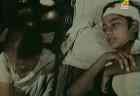
The image shows two individuals lying down, one on a bed and the other on a mat. The person on the bed appears to be resting or sleeping, while the other person is sitting nearby. The setting seems to be indoors, with a basket of fruits visible in the background. The lighting is dim, suggesting a quiet and calm environment. The possible geographic location could be a rural or village area, given the simplicity of the surroundings.
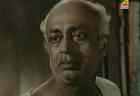
The image shows a person with a bald head and white hair on the sides, wearing a light-colored garment. The background appears to be indoors, with a dark, wooden structure visible. The person's expression seems serious or contemplative. The setting suggests a rustic or rural environment, possibly in a region with a warm climate.
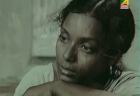
The cyclical nature of the oppression that structures the lives in such a social formation is amply revealed through the younger sister's monologue in the very next sequence. Sen remarks: 'Again, a little before the curtain was drawn, and the family lost all hopes of the return of the sole breadwinner, the second daughter in the family, still in her college, having had a fight with the mother, hurling against each other in dreadful frustration, indulged in a kind of what one could as well call a monologue. This, again, sounded like the voice of a chronicler, looking beyond and building history that would come to be – the story of the family, not of seven anymore, but of six, when they would shift to a still cheaper place to live in and breathe stink, when she would have no choice but to discontinue her studies and would manage to get a modest job in an office. And when, on a disastrous night, a similar story of a long wait would be repeated. A dead end! All that happened in Ekdin Pratidin was set between the two – it was like treating the main story as an extension of socio-political history that was, and a prelude to another story that would soon be told. After all, nothing would happen in void, nothing would drop out of vacuum, nothing would grow in isolation. The dressing, as just described, was to put the film in a perspective suggesting the continuity of history.' - (‘Always Being Born: Mrinal Sen, A Memoir’, Stellar Publishers Pvt Ltd., 2004)
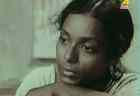
The image shows a person with dark hair, wearing a light-colored garment, and resting their head on their hand. The background appears to be a plain wall with some faint markings or textures. The person seems to be in a relaxed or contemplative state. The setting appears to be indoors, possibly in a modest or rural environment.
The image shows a rustic indoor setting with earthen walls and a wooden table. There are two pottery vessels on the table, one larger and one smaller, along with a small cup. The lighting is dim, casting shadows across the room. The setting appears to be in a rural or traditional environment, possibly in a village or countryside. The visible text in the image is in English, and it reads "Aahista Aahista."
The image shows a man sitting in a dimly lit room, with a contemplative expression. The room appears to be rustic, with a simple wooden table and a clay pot visible in the background. The man is dressed in traditional attire, and the setting suggests a rural or village environment. The lighting is soft, and the overall atmosphere is calm and introspective.
The image shows a person in a prison cell, with bars in the foreground. The individual is wearing a white headband and a white shirt, and appears to be gesturing with their hand. In the background, there are clothes hanging on a rack and a child sitting on the floor. The setting appears to be a modest, possibly rural, environment.
The image shows a person in a room with a bed, pillows, and a blanket. The person appears to be bending over, possibly interacting with the bed or its surroundings. The room has a dark, muted tone, and there is a visible logo in the top right corner. The logo includes text in a non-English script.
As mentioned before, Chinu is discussed throughout the film though she herself is almost entirely absent. The confrontation that ensues once she returns home, is thus crucial. No one is willing to listen to her: partly perhaps out of fear regarding what she has been up to, and partly because hearing her version of events is irrelevant in this conformist, patriarchal scenario. In fact, the dramatic confrontation, where the entire household is immediately drawn in (the imposing low-angle shot where the lights of the building switch on, one after another), serves to destabilize the separateness that has been built around her throughout the film by making her as susceptible to the moral economy that defines the middle-class. She may have been the sole bread-earner of the family, but no one really manages to climb out of this corrosive social formation. The structural separateness that defines her, the figure of the independent working woman, is thus effectively brought down.
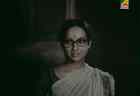
The image shows a person wearing a traditional garment, possibly a sari, with a white and dark-colored drape. The person is standing in a dimly lit room with a wooden background. The setting appears to be indoors, possibly in a rural or traditional environment. The person's attire and surroundings suggest a cultural or regional context, potentially in South Asia.
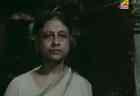
The image shows a person wearing a white garment with a visible border, standing in a dimly lit environment. The background appears to be dark, possibly a wall or a structure. The person's hair is visible, and they seem to be in a relaxed posture. The setting suggests a traditional or rural area.
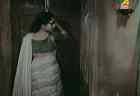
The image shows a person standing in a dimly lit room, wearing traditional attire. The walls appear aged and worn, and the door behind the person is wooden and slightly ajar. The person is leaning against the door, with one hand resting on their head. The setting suggests a modest, possibly rural environment.
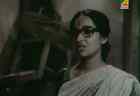
The image shows a person wearing a traditional garment, possibly a saree, with a white and greenish pattern. The person is indoors, with a wooden structure visible in the background. The lighting is dim, and the setting appears to be rustic or historical. The person is looking slightly to the side, and there is a red mark on their forehead. The environment suggests a rural or traditional setting, possibly in South Asia.
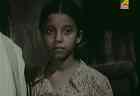
The image shows a young girl with dark hair, wearing a patterned shirt. She appears to be indoors, with a wooden surface and a wall in the background. The lighting is dim, and the setting seems rustic. The text in the top right corner is in English, and it reads "ZEE BANIA" with a logo.
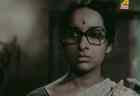
The image shows a person wearing glasses, dressed in traditional attire, with a bindi on their forehead. The background appears to be indoors, with a dimly lit setting. The person is holding a piece of fabric or garment in their hand. The setting suggests a cultural or historical context, possibly in South Asia.
The image shows two individuals standing in what appears to be a dimly lit, narrow alleyway. The person on the left is wearing a light-colored shirt, while the person on the right is wearing a white top. The background is dark, with some indistinct structures visible. The setting suggests an urban environment, possibly in a densely populated area.
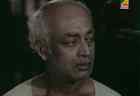
The image shows a person with a bald head and white hair on the sides, wearing a light-colored garment. The background is dark, and the person appears to be in a dimly lit environment. There is a logo in the top right corner with text in a non-English script.
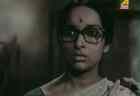
The image shows a person wearing glasses, dressed in traditional attire, with a bindi on their forehead. They are holding a piece of fabric, possibly a sari, and appear to be indoors. The lighting is dim, suggesting a quiet or intimate setting. The person's expression seems thoughtful or contemplative. The background is blurred, but it appears to be a room with wooden elements. The possible geographic location could be in a region where traditional attire like saris is common, such as South Asia.
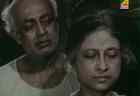
The image shows two individuals, one older man and one younger woman, standing close together. The man has white hair and is wearing a light-colored shirt, while the woman has dark hair and is wearing a darker outfit. They appear to be in a dimly lit environment, possibly outdoors. The background is dark, and there is a logo in the top right corner with text in a non-English script.
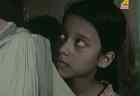
The image shows a young child with dark hair, wearing a traditional garment, looking intently at something off-camera. The background appears to be a rustic or rural setting, possibly with a wall or structure nearby. The lighting is dim, suggesting an indoor or shaded environment. The child's expression seems curious or contemplative.
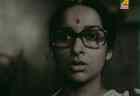
The image shows a person with dark hair, wearing glasses, and a small red mark on their forehead. They are dressed in traditional attire, and the background appears to be dimly lit. The person seems to be indoors, possibly in a room with a rustic or vintage setting. The text in the image includes a logo in the top right corner, which reads "ZEE BANK" in English.
The image shows a dimly lit room with a rustic appearance. There is a person sitting on a chair, facing away from the camera. The room has a wooden table, a bucket, and a chair in the background. The lighting is low, creating a shadowy atmosphere. The setting appears to be in a rural or traditional area, possibly in a village or countryside.
The image shows a person standing in front of a wall, with another figure appearing to be in motion or blurred in the background. The person in the foreground is wearing glasses and has their hair tied back. The setting appears to be indoors, with a stone or brick wall visible. The scene seems to be in a rustic or historical location, possibly in a region with a warm climate.
The image shows a dimly lit interior with wooden beams and a ceiling that appears to have a grid-like structure. There are visible light patterns on the floor, suggesting a source of light outside the frame. The setting seems rustic, possibly a traditional or rural structure. The visible text in the image is in English, and it reads "ZEE5," which is a streaming platform logo.
The image shows a rustic setting with a stone structure that appears to be part of an old building. There are three individuals present, dressed in traditional attire, with one person standing in a niche and two others in the foreground. The environment suggests a historical or rural setting, possibly in a region with a warm climate. The stonework and clothing hint at a location in South Asia.
The image shows a person wearing a traditional outfit, standing in a dimly lit room with wooden structures visible in the background. The person appears to be looking at something off-camera. The setting seems to be indoors, possibly in a rustic or historical location. The lighting is low, creating a shadowy atmosphere.
The image shows a room with a wooden door, a bed, and a table. There are three people in the room, one sitting on the bed, one standing near the door, and one standing near the table. The room appears to have a rustic or traditional style, with a curtain hanging over the door and a globe on the table. The walls are plain, and there is a window with bars visible in the background. The text in the image is in English, and it reads: "Aahil" and "Aahil Firdousi."
The image shows a woman dressed in traditional attire, standing in what appears to be an old, rustic setting with stone walls and arched doorways. Behind her, a child is visible, standing in a dimly lit area. The environment suggests a historical or rural setting, possibly in a region with a warm climate. The text in the image is in English, and it reads: "A.R. Rahman Music Label."
The image shows a person with dark hair, wearing a light-colored garment, sitting in a room with a patterned wall in the background. The wall has a floral design with circular patterns. The person appears to be seated on a wooden chair. The setting suggests a traditional or cultural environment, possibly in a region where such designs are common.
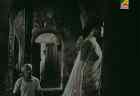
The image shows a dimly lit interior with stone walls and arched doorways. A woman in traditional attire is walking forward, while a man stands in the background. The setting appears to be rustic, possibly in a rural or historical area. The text in the image is in English, and there is a logo in the top right corner.
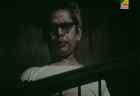
The image shows a person standing in a dimly lit area, possibly indoors. The individual is wearing a white garment and appears to be looking towards the camera. The background is dark, and there is a railing in the foreground. The setting seems to be a place with limited lighting, possibly a room or a corridor. The person's posture suggests they are standing still, and the overall atmosphere appears to be quiet and subdued.
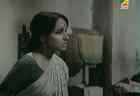
The image shows a person standing indoors, wearing a traditional garment. The room appears modest, with a woven basket and a blanket visible in the background. The setting suggests a rural or semi-urban environment, possibly in a region where such attire is common.
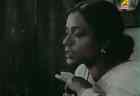
The image shows a person sitting indoors, dressed in traditional attire, with their hand raised as if gesturing or holding something small. The background appears to be a dark, wooden interior, possibly a room with minimal lighting. The person's posture and expression suggest they might be engaged in a conversation or performing a task. The setting seems to be in a rural or traditional area, possibly in South Asia, based on the attire and interior design.
The image shows a dimly lit room with a group of people gathered around a window. The room appears to be decorated with traditional elements, possibly indicating a cultural or historical setting. The people seem to be engaged in conversation or observing something outside. The lighting is low, creating a sense of mystery or intimacy. The scene is likely set in a region with a rich cultural heritage, possibly in South Asia.
The image shows a person standing indoors, with a plain wall in the background. The lighting is dim, and the person appears to be wearing a white shirt. The setting seems to be a simple room, possibly in a residential or institutional environment. The person's hair is dark and slightly curly, and they are facing the camera directly. The overall atmosphere appears to be calm and neutral.
The image shows a person in a dimly lit room, possibly engaged in an activity involving a small object in their hand. The room has a rustic appearance, with visible furniture and framed pictures on the walls. The lighting suggests an indoor setting, and the overall ambiance appears to be cozy but somewhat old-fashioned. The person seems to be focused on their task, and the room has a warm, lived-in feel. The text in the image is in English, and it reads, "ZEE5 Original."
The image shows a person wearing traditional attire, with a shawl draped over their shoulders. The background includes a wooden door with intricate carvings and a wall that appears to be made of stone or plaster. The setting suggests a rural or historical location, possibly in a region with a warm climate.
The image shows a narrow alleyway with a man and a child walking away from the viewer. The man is wearing a white shirt and white pants, while the child is dressed in a white outfit. The alley is flanked by brick walls, and there is a wooden door on the right side. The atmosphere appears to be rustic, and the setting suggests a rural or traditional environment. The possible geographic location could be a village or small town in a region with a warm climate.
The image shows a dimly lit room with a person sitting on a wooden bench or chair. The person appears to be wearing a white garment, possibly a sari or similar attire. The room has a rustic appearance, with wooden walls and a window that lets in some light. The overall atmosphere is dark and somber. The person seems to be in a contemplative or resting state. The setting appears to be in a rural or traditional area, possibly in a region where such attire is common.
As expected, the landlord becomes the ultimate voice of patriarchal and social rebuke, by invoking notions of appearances, decency and sexual morality - he mentions the 'bhadralok', the quintessential technical term for the middle-class in Bengal and their stringent moral economy. It will be interesting to note that it is never made clear where Chinu had been throughout the night, the narrative constantly interrupts her attempts to furnish an excuse. Mrinal Sen has remarked this to be deliberate authorial device, to constantly cause discomfort to those who wish to be assured that she has not been doing anything wrong.
In his memoirs, he recalls an incident: 'The release was well timed and in good theatres, and centrally, at Metro. The response was positive when the viewers were seen identifying themselves with the characters...But a large number among them had a question for me. The same question every time and everywhere, What happened to her? Why didn’t she come home? Where had she been? And, interestingly, most of them were working women! Yes, they liked the film, they loved it, and yet, they had the question. They were just curious, they said...I was not quite sure. Could it be that they wanted me to assure them that she did not do anything not acceptable to the conformist society? That she did not violate the social norms? A certificate from me testifying her character?...One evening, when I was mobbed by viewers, the larger chunk being women, a man looking very respectable, should be of my age, presumably a thoroughbred Bengali, asked me in English, assuming a tone that was distinctly superior, “Mr Sen, it is important that we know what happened to the woman.” Sounding much less than superior, I said in Bengali, “Dekhun, Sir, aamar to mone hochhe, chhobi’ta aami aapnar moto darshak’r jonye baaniechhi. Aapnaara dekhben aar jantrona paaben. Jantrona paaben kaaron aapnaara jobaab paaben naa.” (My dear Sir, I made this film for you. For you to watch and suffer. You’ll suffer because you will not know the answer.) I added, “If you ask me again, my answer will be – I do not know myself. I do not want to.”' - (‘Always Being Born: Mrinal Sen, A Memoir’, Stellar Publishers Pvt Ltd., 2004)
The image shows two individuals engaged in a conversation. One is a younger man with curly hair wearing a plain white shirt, while the other is an older man with white hair, also dressed in a plain white shirt. They appear to be in a dimly lit indoor setting, possibly a room with potted plants in the background. The setting suggests a casual or informal environment. The younger man seems to be speaking or expressing something, while the older man is facing him, listening. The image has a vintage or retro feel, possibly from a film or television show.
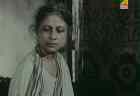
The image shows a person wearing a light-colored garment with a striped scarf draped over their shoulders. The background features a patterned wall with intricate designs, possibly indicative of a traditional or cultural setting. The person appears to be indoors, possibly in a room with wooden furniture. The overall ambiance suggests a warm and culturally rich environment.
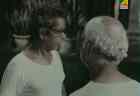
The image shows two individuals standing close to each other, engaged in a conversation. One person has curly white hair and is wearing a light-colored shirt, while the other person has short hair and is also dressed in a light-colored shirt. The background includes potted plants and a dimly lit setting, suggesting an indoor environment. The setting appears to be in a region with a warm climate, possibly in a tropical or subtropical area.
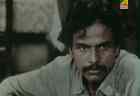
The image shows a person with dark hair and a mustache, wearing a light-colored shirt. The background appears to be indoors, with a window or door visible behind them. The setting seems to be rustic or rural, possibly in a village or countryside area.
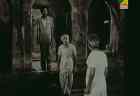
The image shows three individuals in what appears to be an ancient or historical setting. The person in the foreground is wearing a white garment, while the other two individuals are dressed in traditional attire. The background features stone arches and a dimly lit environment, suggesting an old structure or temple. The setting appears to be in a region with a warm climate, possibly in South Asia.

The image shows two individuals engaged in a conversation. One person is facing the camera, wearing glasses and a white shirt, while the other person is partially visible, with dark hair and a light-colored shirt. The background appears to be outdoors, with foliage visible. The setting seems to be in a rural or semi-urban area, possibly in a tropical or subtropical region.
The image shows a person standing in front of a rough, textured wall, possibly made of stone or brick. The person is wearing a traditional garment, which appears to be a sari, and is holding onto the wall with one hand. The setting seems to be indoors or in a shaded area, as the lighting is dim. The wall has a rugged, uneven surface, suggesting it might be part of an older or rustic building. The person's posture and the setting suggest a moment of contemplation or waiting.
The image shows a person standing near a brick wall, possibly in an urban setting. The person appears to be interacting with the wall, possibly touching or pointing at it. The wall has a rough texture and is made of bricks. The person is wearing a light-colored shirt. There is a logo in the top right corner of the image.
The image shows two individuals engaged in a conversation. One is wearing a light-colored shirt, and the other is wearing a white shirt. The background includes a plant and a wooden structure, suggesting an indoor setting. The lighting is dim, giving the scene a somewhat intimate or serious tone. The text in the top right corner reads "Aahir" and "अहिर," which may indicate a regional or cultural context.
The image shows a person wearing a traditional garment, with visible wrinkles and a weathered appearance. The background appears smoky or hazy, and the person seems to be in a dimly lit environment. The setting suggests a rural or traditional area, possibly in a region where such attire is common.
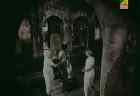
The image shows a dimly lit, arched stone structure with three individuals standing inside. The walls are made of rough, aged stone, and the arches suggest an old, possibly historical building. The individuals appear to be engaged in a conversation or interaction, with one person gesturing with their hands. The setting seems to be a place of significance, possibly a temple or a historical site. The text in the image is in English, and it reads "Zee TV" in the top right corner.
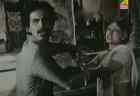
The image shows two individuals in a rustic setting. One person is holding a piece of cloth or fabric, while the other appears to be pulling it away. The background includes a stone wall and a wooden table, suggesting a rural or traditional environment. The text in the top right corner reads "अंग्रेजी भाषा" (English Language), indicating that the content may be related to an English-language program or broadcast.
The image shows a narrow, dimly lit corridor with stone walls. There is a wooden cabinet against one wall, with several small bottles placed on top. A person in traditional attire, wearing a shawl, is standing in the corridor, facing another individual who is partially visible. The setting appears to be rustic, possibly in a rural or historical area. The text in the image is in English, and it reads "Aaj Kal" in the top right corner.
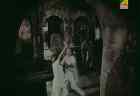
The image shows a group of people in a dimly lit, arched corridor with stone walls. The individuals appear to be engaged in a physical activity, possibly a game or a form of exercise. The setting seems to be historical or traditional, with a rustic and aged appearance. The scene is likely set in a region with a warm climate, possibly in a Middle Eastern or South Asian country, given the architectural style and attire of the individuals.

The image shows a person wearing glasses and a striped shirt, appearing to be in a conversation or reacting to something. The background is dark, and there is another person partially visible on the left side. The setting seems to be indoors, possibly in a dimly lit room. The person on the right appears to be speaking or reacting with an open mouth.
The image shows two individuals in a dimly lit room. One person is standing with their hands clasped in front of them, while the other person is facing them. The background appears to be a wooden structure, possibly a wall or door. The lighting is low, creating a shadowy atmosphere. The setting seems to be indoors, possibly in a rustic or traditional environment.
The image shows a person standing in a dimly lit area, wearing a white garment. The background appears to be a rough, textured wall, possibly made of stone or concrete. The lighting is low, creating a shadowy and somber atmosphere. The person seems to be standing near a doorway or entrance.
The image shows a group of people in a dimly lit, arched corridor with stone walls. The setting appears historical, possibly medieval or ancient, with a rustic and aged appearance. The people are dressed in simple, light-colored clothing, and they seem to be engaged in conversation or activity. The corridor has a series of arches, and the lighting suggests it is either nighttime or a poorly lit area. The overall atmosphere is somber and quiet.
The image shows a man with dark hair and a mustache, wearing a light-colored shirt. He appears to be in a room with several people around him, including a woman in a white outfit standing behind him. The background is somewhat blurred, but it seems to be an indoor setting with a rustic or traditional appearance. The lighting is dim, giving the scene a somber or serious tone. The people in the background seem to be engaged in conversation or observing the man. The setting could be in a rural or traditional area, possibly in South Asia, based on the clothing and architecture visible.
The image shows a group of people walking through a dimly lit, arched corridor. The walls appear to be made of stone, and the lighting is soft, creating a shadowy atmosphere. The people are dressed in traditional attire, and the setting suggests an old or historical structure. The scene appears to be in a region with a warm climate, possibly in South Asia.
The image shows a person peeking from behind a brick wall, with a white headband visible. The background appears to be a mix of stone or concrete structures, possibly in an urban or rural setting. The person seems to be in a shaded area, with the wall casting a shadow.
The image shows a person with dark hair and a mustache, wearing a light-colored shirt. The background appears to be a dark, textured wall, possibly made of stone or wood. The person is looking slightly upward, with a neutral expression. The setting seems to be indoors, possibly in a rustic or traditional environment. The lighting is dim, giving the scene a somber or serious tone.
The image shows a person leaning against a wooden door, with their back turned to the viewer. The person is wearing a light-colored shirt, and their posture suggests they are resting or in a state of contemplation. The setting appears to be indoors, with a rustic or aged appearance. The lighting is dim, giving the scene a somber or reflective mood. The wooden door has visible wear and tear, indicating it might be part of an older structure. The person's position and the door's condition suggest a rural or traditional environment.
The image shows a dimly lit, narrow staircase with stone walls. A person is seen leaning over the railing, looking down. The setting appears to be an old, possibly historical building, with rough stonework and a rustic atmosphere. The scene is likely in a European or Mediterranean region, given the architectural style.
The image shows a woman in traditional attire, walking away from the camera. She is wearing a sari and has her hair tied back. The setting appears to be indoors, with wooden furniture and a curtain visible in the background. The lighting is dim, giving the scene a somewhat vintage or nostalgic feel. The woman seems to be in a domestic environment, possibly a living room or bedroom. The overall ambiance suggests a rural or traditional setting, possibly in South Asia.
The image shows a person with dark hair, wearing a light-colored garment, resting their head on their hand. The background appears to be plain and muted, with a wall visible in the background. The person seems to be in a contemplative or tired state. The setting appears to be indoors, possibly in a modest or rural environment. The visible text in the image is in English, and it reads "ZEE5," which is a streaming platform.
The image shows a person with dark hair, wearing a light-colored garment, sitting in a dimly lit environment. The person appears to be holding their chin with one hand, and there is a visible red mark on their forehead. The background is blurred, but it seems to be indoors, possibly in a rustic or traditional setting. The person's expression is contemplative or serious. The image has a muted color palette, giving it a somber tone.
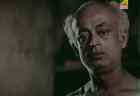
The image shows a person with white hair, wearing a simple garment, standing in a dimly lit environment. The background appears to be a plain wall, possibly indoors. The lighting is low, creating a shadowy effect. The person seems to be in a contemplative or serious mood. The setting suggests a rural or modest location, possibly in a region with a warm climate.
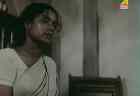
The image shows a person wearing a traditional garment, sitting indoors. The setting appears to be a modest room with plain walls and a wooden chair visible in the background. The person is seated, facing slightly to the left. The lighting is soft, and the overall tone of the image is subdued. The person's attire and the room's decor suggest a rural or traditional environment.
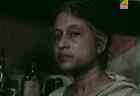
The image shows a woman standing indoors, surrounded by various objects. She appears to be wearing traditional attire, and her expression seems contemplative. The background includes bottles and other items, possibly indicating a kitchen or storage area. The lighting is dim, giving the scene a somewhat somber tone. The setting appears to be in a rural or modest environment, possibly in South Asia, based on the attire and surroundings.
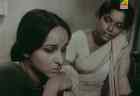
The image shows two women in traditional attire, with one leaning forward and the other standing behind her. The woman in the foreground is wearing a dark green outfit, while the woman in the background is dressed in a light-colored sari. The setting appears to be indoors, with a plain wall in the background. The image has a vintage feel, suggesting it might be from an older time period. The logo in the top right corner indicates that this is a scene from a television show or movie.
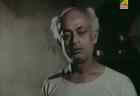
The image shows a person with white hair, wearing a light-colored shirt, standing in a dimly lit environment. The background appears to be plain and dark, with a few faint light spots. The person seems to be looking slightly downward. The image has a logo in the top right corner with the text "ZEE5" and "जय भारत" written in Hindi.
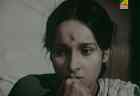
The image shows a person with dark hair, wearing a traditional outfit, sitting in a dimly lit room. The person appears to be deep in thought, with their hand near their mouth. The background is plain, with a wall visible behind them. The person's attire and surroundings suggest a rural or traditional setting.
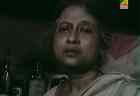
The image shows a person in a dimly lit room, surrounded by various objects. The person appears to be wearing traditional attire, and there are bottles and containers visible in the background. The setting seems to be a modest living space, possibly in a rural or semi-urban area. The lighting is low, and the overall atmosphere appears to be somber or reflective.
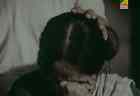
The image shows a person with their head bowed, appearing to be in distress or deep thought. Another person is gently placing their hand on the head of the individual, possibly offering comfort. The setting appears to be indoors, with muted lighting. The clothing suggests a traditional or cultural context. The text in the image is in English, and it reads: "Aaj Kal."
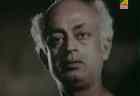
The image shows a person with white hair, wearing a dark outfit, and looking directly at the camera. The background is dark, and the lighting is focused on the person's face. The person appears to be in a formal setting, possibly indoors. The image has a logo in the top right corner, which includes text in a non-English script.
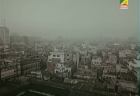
After the release of the film, many viewers and critics alike pointed out the hopelessness of the final scene which apparently undercuts the 'feminist' outlook that pervades the rest of the narrative. Sen, typically, has defended the end, stating how it evokes a sense of inner strength, even in the face of overwhelming odds. Regardless of the view one ascribes to, the calm of the morning after foregrounds the re-establishment of the appearances that have been shattered the night before.
Sen recollects in his memoirs: 'THE FIRST DAY OF THE RELEASE. The house was packed at the big theatre, Metro. I was the first to come out at the end of the show and take my position at a quiet corner. Whilst I found the crowd emotionally charged, and that was what I felt, the ones who came first to me was a group of my old friends, all firebrand militants, now retired, but still believing that the fire was within. They felt that I had grown old and had, therefore, mellowed down. Which was why the end was so depressing. It was evident, they said, in the mother’s expression...They saw just that – the face of the mother, sad and forlorn, nothing of the inner strength hidden behind the façade...Very early in the morning, the mother stepped into another day. When the plane flew across the sky, it meant nothing but the beginning of a day like any other. When she lighted the stove, she did not forget to gently shut the door behind her to prevent the smoke from going inside. A daily habit. Nothing more, nothing less. Just ordinary, as always. But the night was very different. Throughout the night, the mother was facing chilling situations, one after another, and she was drained of all hope. She survived, nevertheless, and felt stronger. And that was the only logic of one’s existence, that was the only hope for sustenance, that was only how the mother and the rest of the family members could still dream and look beyond. Fighting back on one’s own strength. With no promissory notes from the heavens!' - (‘Always Being Born: Mrinal Sen, A Memoir’, Stellar Publishers Pvt Ltd., 2004)
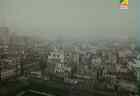
The image shows a densely packed urban area with numerous buildings of varying heights. The structures appear to be residential and commercial, with some taller buildings in the background. The area is enveloped in a haze, possibly due to pollution or fog, which limits visibility. The overall scene suggests a busy city environment. The geographic location appears to be in a region with high urban density, possibly in a city with significant industrial activity.
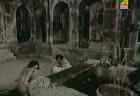
The image shows a stone-walled courtyard with arched openings, possibly part of an old building or structure. There are two individuals in the scene, one sitting on a stone bench and the other leaning forward. The setting appears to be historical, with a rustic and aged appearance. The location seems to be in a region with a warm climate, possibly in South Asia.
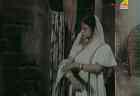
The image shows a woman dressed in traditional attire, standing in a dimly lit room. She appears to be engaged in a task, possibly washing or handling fabric. The room has a rustic appearance, with visible walls and a curtain in the background. The setting suggests a rural or traditional environment, possibly in South Asia.
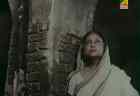
The image shows a person standing in front of a brick wall, wearing a white garment with a light-colored border. The person appears to be looking upwards, possibly at something out of the frame. The setting seems to be indoors, with a rustic and aged appearance. The lighting is dim, suggesting a low-light environment. The person's posture and expression suggest contemplation or concern. The brick wall behind them is textured and uneven, indicating an older or less maintained structure. The overall scene gives a sense of a rural or traditional setting.
The image shows a group of people in what appears to be an old stone structure, possibly a temple or a historical building. The setting is dimly lit, with visible stone pillars and a rustic atmosphere. The people are engaged in various activities, such as sitting and working with tools. The location seems to be in a region with a warm climate, likely in South Asia, given the attire and architectural style.
The image shows a person sitting in a dimly lit room, wearing traditional attire. The person appears to be seated on a low platform or floor, with their hands resting on their lap. The surroundings are dark, and the walls seem to be made of stone or a similar material. The person's clothing is light-colored, and they are wearing a head covering. The setting suggests a rural or historical environment, possibly in a region with a warm climate.
The image shows a dilapidated building with a wooden window frame that appears to be broken and damaged. The window has bars, and through the gaps, you can see a person sitting inside, partially obscured by the frame. The structure looks old and weathered, with visible signs of decay. The person inside seems to be sitting on a chair or a similar piece of furniture. The setting appears to be in a rural or less-developed area, possibly in a region with a warm climate, as suggested by the worn-out appearance of the building.

The image shows a dark background with a stylized white text in the center. The text appears to be written in a script that resembles Bengali. The text is bold and artistic, with a unique font style. The possible geographic location is Bangladesh, as the script resembles Bengali, a language spoken there.
Indiancine.ma requires JavaScript.
