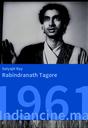
Rabindranath Tagore (1961)
Director: Satyajit Ray; Writer: Satyajit Ray; Producer: Satyajit Ray, Films Division, Anil Choudhury; Cinematographer: Soumendu Roy; Editor: Dulal Dutta; Cast: Raya Chatterjee, Shovanial Gangopadhyay, Smaran Ghoshal, Purnendu Mukherjee, Kallol Bose, Subir Bose, Phani Nan, Norman Ellis
Duration: 00:53:39; Aspect Ratio: 1.333:1; Hue: 188.861; Saturation: 0.016; Lightness: 0.293; Volume: 0.270; Cuts per Minute: 11.519; Words per Minute: 70.062
Summary: Ray’s semi-documentary on his mentor commissioned for the centenary of Tagore’s birth. The extraordinarily diverse literary and visual output of Tagore, the Shantiniketan experiment and the Tagore family’s contributions to India’s freedom struggle are condensed into one hour, relying on a voice- over commentary that eschews historical analysis in favour of a fairly reverential approach. Ray includes some re-enactements of episodes in Tagore’s life together with images of paintings, photographs, documents, etc. The best moments are the reconstructed Balmiki Pratibha, and the song
Tobu mone rekho (‘Yet remember me’) in Tagore’s own voice.

Tagore's funeral procession, and Ray's tribute to him

Colonial history of Calcutta
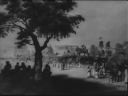
History of the Tagore family
Dwarkanath Tagore's world and business interests
in thi sclon

Debendranath Tagore: story of his grandmother's funeral, his spiritual awakening, and engagement with Ram Mohan Roy

Rabindranath's birth and childhood education

Chind Rabindranath accompanies his father to the hills of North india, near Dalhousie
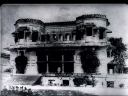
Rabindranath's first publications
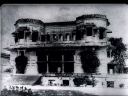
First visit to England, incomplete education there, learning of Western music and opera, and its impact on his early theatre
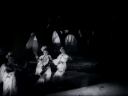
Balmikipratibha, Bankim's access, and that of his elder brother, living in Sudder Street, Calcutta

Tagore's mystical 'awakening'
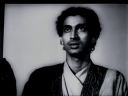
of the world

Marriage, takeover of the family estates near the Padma river, first access to the peasantry and fisherfolk. Early stories and songs inspired by this

Tagore's first major publications: Sonar Tori, and his first set of compilations

Founding of Shantiniketan, with money from copyright and his wife's wedding ornaments

Wife's death and other personal family tragedies

Partition of Bengal and the origins of Swadeshi
Tagore steps out of the Swadeshi movement, expresses criticism

Withdrawal from politics, rise to literary fame in India
Visit to England, publication of Gitanjali there, endorsement from Yeats and bestowal of Knighthood
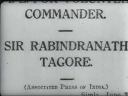
Tagore's visit to Japan and the USA, and lectures on nationalism: and his denunciation of the 'Nation'

Vishwabharati founded within context of world peace. Rowlatt Act, Jallianwala Bagh, Tagore's return of Knighthood

Travels to many parts of the world, primarily to raise funds for the University, and friendships with major thinkers

Shantiniketan grows: new disciplines in visual arts and Oriental Studies

Final travels abroad, visit to Moscow
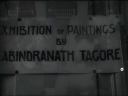
Tagore turns painter

Tagore's 70th birthday and the sponsors:Romain Rolland, Albert Einstein and Kostis Palamas, and J.C. Bose and Mahatma Gandhi
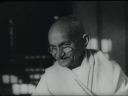
Tagore and Gandhi

Years in Shantiniketan, production of his most 'striking' and 'mature' works
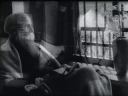
Song: Tobu mone rekho (‘Yet remember me’)
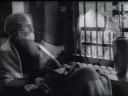
Tagore's last year and final tribute by Ray: 'Tobu mone rekho'
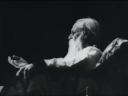
World War II and the 'Crisis of Civilisation'
Indiancine.ma requires JavaScript.